After SC Snub, Trump Slaps 10% More, Exempts India

US President Strikes Back Supreme Court Invalidates His Powers to Tax
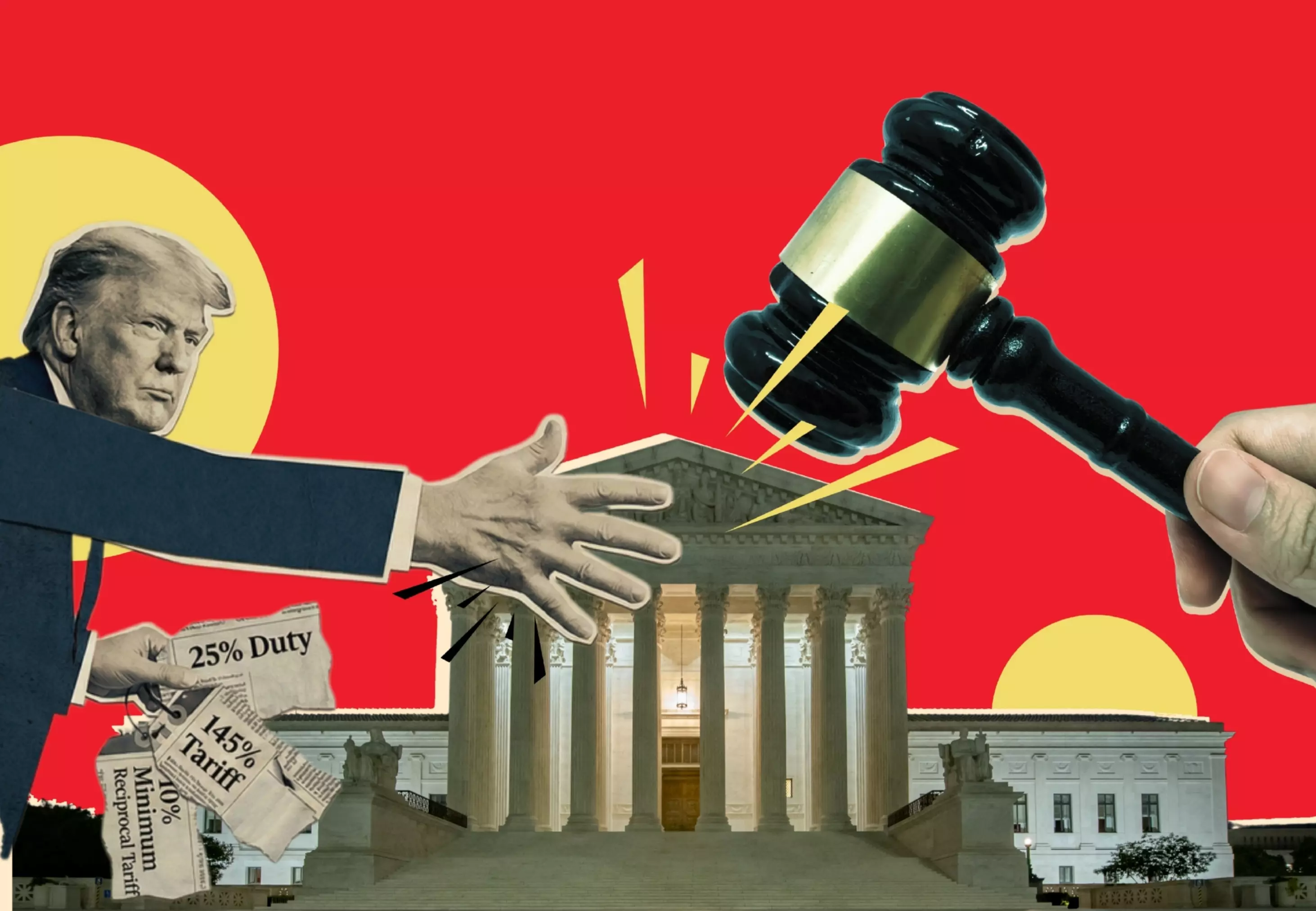
Washington: US President Donald Trump on Friday imposed an additional 10 per cent reciprocal tariffs on all countries after the US Supreme Court invalidated the imposition of tariffs from April 2, 2025, under emergency provisions of a 1977 law. India, he insisted, will continue to pay an 18 per cent tariff.
"Today, I will sign an order to impose a 10 per cent global tariff under Section 122, over and above our normal tariffs already being charged," Trump said, calling the US court judgment a disgrace. He also said all national security tariffs under a US law known as Section 301 would remain in place, and several investigations will be initiated.
Stating that tariffs were vital for US economic security and that the country would be defenceless and ruined without them, Trump said, "Foreign countries that have been ripping us off for years are ecstatic.. They're so happy, and they're dancing in the streets, but they won't be dancing for long that, I can assure you."
Asked about the impact of the Supreme Court verdict on the India-US trade deal that is in the works, Trump said there was no change in the trade deal with India and emphasised that the “India deal is on”.
"Nothing changes. They will be paying tariffs. We will not be paying tariffs… This is a reversal of what it used to be." He called Prime Minister Narendra Modi "a great gentleman, a great man". “But he (Modi) is much smarter than the people he was against in terms of the United States. He was ripping us off. So we made a deal with India, it is a fair deal and we are not paying tariffs to them. We did a little flip.”
“I think my relationship with India is fantastic and we're doing trade with India. India pulled out of Russia. India was getting its oil from Russia. And they pulled way back at my request, because we want to settle that horrible war where 25,000 people are dying every month,” Trump said.
He said his relationship with Prime Minister Narendra Modi “is, I would say, great.”
During the press conference, Trump also gave credit to his tariff powers for stopping a war between India and Pakistan - repeating a claim that India denied for the second time in 24 hours.
Earlier in the day, the US Supreme Court struck down Trump's global tariffs on Friday, upending his economic agenda that led to America imposing tariffs on almost all countries. The US has collected $133 billion in import taxes in "reciprocal tariffs" from countries in what was a centrepiece of Trump's election campaign.
Six out of the nine-judge bench of the US court, including two out of three appointed by Trump, found that it was unconstitutional for the US President to unilaterally set and change tariffs because the taxation power clearly belonged to the US Congress. "The framers (of the US Constitution) did not vest any part of the taxing power in the executive branch," Chief Justice John Roberts wrote.
While other US Presidents have used the law - the 1977 International Emergency Economic Powers Act - dozens of times, often to impose sanctions, Trump was the first to invoke it on import taxes. The law contains no mention of tariffs.
Trump in his defence had said the US trade deficit was so serious, it too qualified as an emergency, a contention the court dismissed.
In a minority, three judges held the tariff lawful. "The tariffs at issue here may or may not be wise policy. But as a matter of text, history, and precedent, they are clearly lawful," Justice Brett Kavanaugh wrote.
In his first reaction, Trump called the majority decision "a disgrace", after he was handed a note informing him of the Supreme Court decision during a private meeting with several US governors
The Supreme Court did not address whether the companies and individuals who paid those tariffs could be refunded. Many companies, including the big-box warehouse chain Costco, have lined up to demand refunds in lower courts.
Asked about the refund process for the tariff revenue, Trump at his press conference said the US could end up being in court "the next five years."
The Supreme Court decision doesn't stop Trump from imposing duties under other laws. While those have more limitations on the speed and severity of Trump's actions, top administration officials have said they expect to keep the tariff framework in place under other authorities.
While it wasn't immediately clear how the judgment might affect trade deals with other countries, the invalidation of Trump's sweeping tariffs could open floodgates of refund pleas. The court, however, did not address whether companies could get refunded for the billions they have collectively paid in tariffs.
The White House plans to use alternative laws to preserve its tariffs, but those policies will only prolong the debate and keep alive an issue that is largely unpopular with voters.
At various points during Trump's second term, at least seven senators from the president's party have voiced their concerns. Earlier this month, six House Republicans joined with Democrats to vote for a resolution against Trump's tariffs on Canada.
Trump has claimed that his tariffs were the difference between national prosperity and deep poverty, a pitch he made on Thursday night to voters in the swing state of Georgia.
The President used the word "tariff" 28 times in his speech on Thursday at a Georgia steel company, Coosa Steel, which credited the import taxes as making its products more competitive with goods from China. "Without tariffs, this country would be in such trouble right now," Trump charged.
India will continue to 18 per cent tariff, as per the trade deal, and the US will pay zero per cent.
India was slapped with 50 per cent tariffs under the emergency law in two tranches - a 25 per cent tariff as a reciprocal tariff and a 25 per cent tariff as a secondary tariff for India purchasing Russian oil.
After months-long negotiations, Trump reduced the reciprocal tariff on India recently to 18 per cent and ended the secondary tariff, citing India's commitment to lower its Russian oil purchases. The judgment will invalidate the 18 per cent tariff currently being levied on India. Trump insisted the tariff will continue but New Delhi would not have to pay the additional 10 per cent that he proposed. Tariffs on steel and other metals imposed under laws will continue.
Live Updates
- 21 Feb 2026 6:27 AM IST
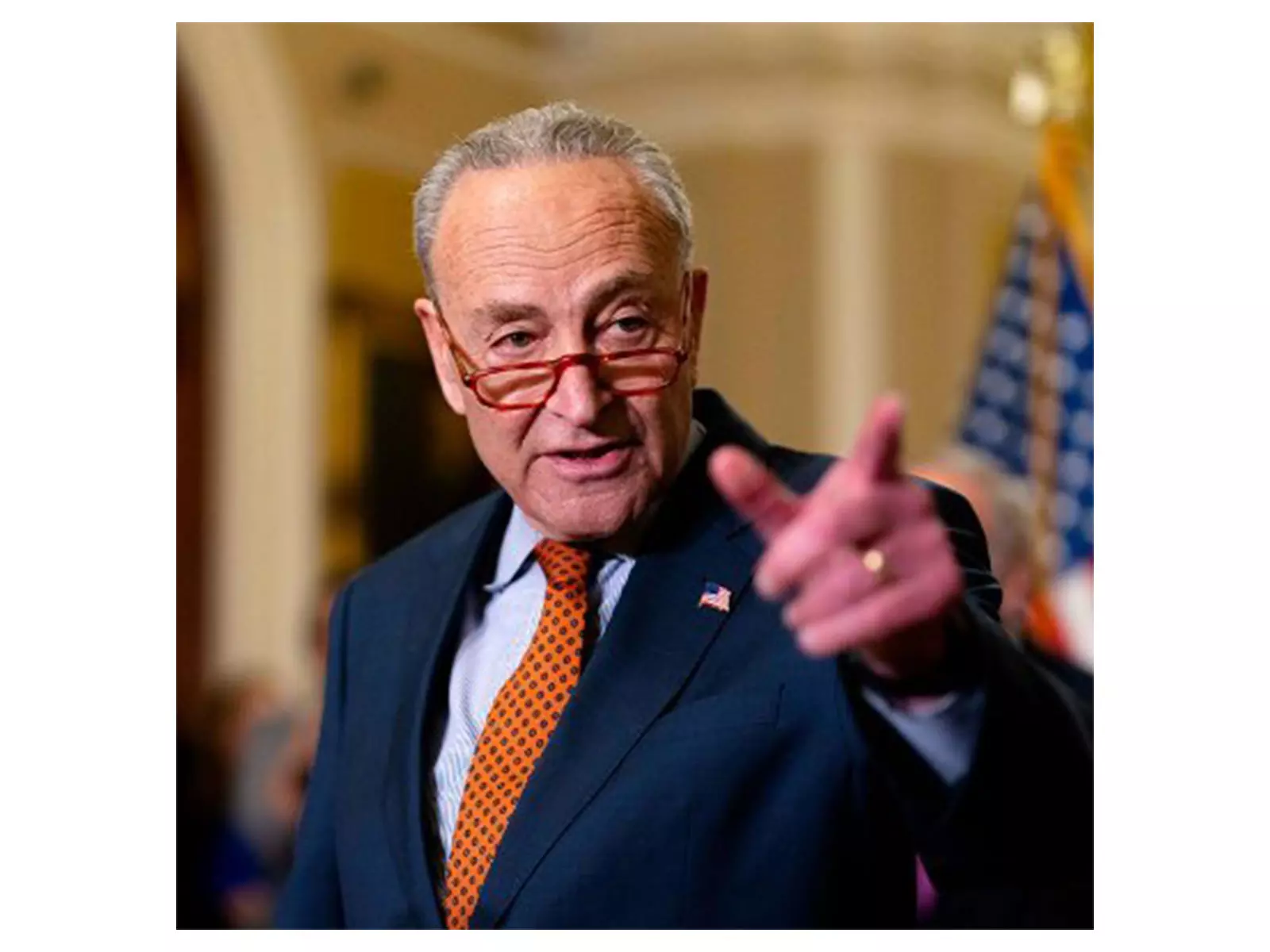
New York's Senator and Senate Democratic leader Chuck Schumer called the US Supreme Court ruling against Trump's tariffs on Friday a "victory for the wallets of every American consumer." He further called the ruling the "end of trade war". In a post on X, he said, "A victory for the wallets of every American consumer. Trump's illegal tariff tax just collapsed--He tried to govern by decree and stuck families with the bill. Enough chaos. End the trade war."
- 21 Feb 2026 12:35 AM IST
Too Big to Rig': Trump claims court was 'swayed by foreign interests'
#WashingtonDC | 'Too Big to Rig': Trump claims court was 'swayed by foreign interests'
— Deccan Chronicle (@DeccanChronicle) February 20, 2026
U.S. President Donald Trump on Friday alleged, without evidence, that the Supreme Court had been influenced by foreign interests in striking down his tariffs.
"The Court has been swayed by… pic.twitter.com/ZhsGl8jHps - 21 Feb 2026 12:34 AM IST
Trump claims Justices 'Afraid' of political pressure in tariff ruling
#WashingtonDC | Trump claims Justices 'Afraid' of political pressure in tariff ruling
— Deccan Chronicle (@DeccanChronicle) February 20, 2026
President Donald Trump on Friday alleged that the Supreme Court had been influenced by political pressure in striking down his tariffs, accusing certain justices of lacking the resolve to rule… pic.twitter.com/GxTPGT4Pbx - 21 Feb 2026 12:33 AM IST
Trump praises dissenting Justices, vows alternative tariff routes
#WashigntonDC | Trump praises dissenting Justices, vows alternative tariff routes
— Deccan Chronicle (@DeccanChronicle) February 20, 2026
President Donald Trump on Friday praised the three justices who dissented in the tariff ruling, saying he held them in high regard. "Those three people, such respect. I've had a lot of respect for… pic.twitter.com/FDj6LE6cSA - 21 Feb 2026 12:32 AM IST
'Automatic No': Trump attacks court's liberal justices over tariff ruling
#WashingtonDC | 'Automatic No': Trump attacks court's liberal justices over tariff ruling
— Deccan Chronicle (@DeccanChronicle) February 20, 2026
U.S. President Donald Trump accused U.S. Supreme Court's Democratic-appointed justices of voting against his tariffs on reflex, not on law. "The Democrats on the Court are thrilled, but… pic.twitter.com/DwW8MtIaTa - 21 Feb 2026 12:08 AM IST
Trump says he’s ‘absolutely ashamed’ of Supreme Court justices who issued ‘deeply disappointing’ tariff decision
Trump says he’s ‘absolutely ashamed’ of Supreme Court justices who issued ‘deeply disappointing’ tariff decision. - AP
- 20 Feb 2026 11:58 PM IST
Refunds may be available on some tariffs applied to goods from India: US Chamber of Commerce after SC ruling
New York/Washington: A leading US business chamber on Friday said refunds would be available for some levies applied to goods from Brazil and India after the Supreme Court struck down President Donald Trump's sweeping tariffs.In a 6-3 vote, the judges found that the International Emergency Economic Powers Act (IEEPA) does not authorise the imposition of duties. Justices Clarence Thomas, Samuel A Alito Jr. and Brett Kavanaugh dissented in the court's decision.
The US Chamber of Commerce welcomed the Supreme Court's decision to strike down Trump's sweeping tariffs, calling on the administration to use this opportunity to reset the overall tariff policy to lower costs for families.
Executive Vice President and Chief Policy Officer at the US Chamber of Commerce Neil Bradley said the Supreme Court's decision is "welcome news" for businesses and consumers.
"Over the past year, the Chamber has been working with small and midsize businesses around the country that have seen significant cost increases and supply chain disruptions as a result of these tariffs," Bradley said in a statement.
"Swift refunds of the impermissible tariffs will be meaningful for the more than 200,000 small business importers in this country and will help support stronger economic growth this year," he added.
It noted that the Court's decision has "opened the door" for many US small businesses to seek refunds, but added that determining whether a business qualifies for the refund -and understanding what steps to take next-can be challenging.
US importers of record who directly paid the tariffs or the person who takes ownership of the goods once they have cleared customs (the "consignee") may be eligible for a refund, it said in an FAQ about who could be eligible for the tariff refunds.
"Businesses that did not directly pay the tariffs are not eligible for a refund. Refunds are only available for tariffs applied under the International Economic Emergency Powers Act (IEEPA). This includes tariffs commonly known as "fentanyl," "trafficking," "reciprocal," or "baseline" tariffs, as well as some other tariffs applied to goods from Brazil and India," it said.
Trump had imposed 25 per cent reciprocal tariffs on India and an additional 25 per cent punitive tariff for Delhi's purchases of Russian oil.
While he slashed the reciprocal tariffs to 18 per cent, the 25 per cent levies imposed for Russian oil purchases were removed, with Trump noting the commitment by India to stop directly or indirectly importing energy from Moscow and purchasing American energy products.
The chamber added that refunds are not available for so-called Section 232, Section 301, Section 201, anti-dumping and countervailing duties, or most-favoured nation (MFN) tariffs.
It noted that the process for obtaining tariff refunds remains uncertain. "We expect to learn more from the courts and from the administration in the days ahead," it said.
It encouraged the Trump administration to use this opportunity to reset overall tariff policy in a manner that will lead to greater economic growth, larger wage gains for workers, and lower costs for families.
It had filed an amicus brief arguing that the challenged tariffs were enacted in excess of statutory authority and are causing irreparable harm to businesses of all sizes. — PTI
- 20 Feb 2026 11:47 PM IST
President Donald Trump learned of the ruling mid-meeting. He was at a working breakfast with state governors at the White House when the decision came through. CNN reported that the breakfast had been going well until that moment. Trump then turned furious, calling the ruling "a disgrace" and attacking the courts directly, saying: "these f***ing courts," according to the network.
CNN: Apparently the breakfast had been going well. Then Trump became enraged. He started ranting about the decision, not only calling it a disgrace, but started attacking the courts at one point saying: these f’ing courts pic.twitter.com/p7aR2LiXVV
— Acyn (@Acyn) February 20, 2026 - 20 Feb 2026 11:25 PM IST
US ambassador calls the tariff decision a ‘victory for the Constitution’
Norm Eisen, a former U.S. ambassador to the Czech Republic who was a legal adviser to Democrats during Trump’s first impeachment, called the tariff decision a “victory for the Constitution and for Congress’ Article I authority over taxes and tariffs. The International Emergency Economic Powers Act provides limited authority to the President to take actions to regulate imports to respond to unusual and extraordinary threats.”
Eisen, the executive chair of the Democracy Defenders Fund, said in a statement that the administration had tried to distort the emergency powers act to address routine trade deficits and disagreements “and the Supreme Court correctly smacked that down.”
Economist: Tariff ruling to provide modest benefit to businesses Sarah House, a senior economist at Wells Fargo, said the ruling will provide some additional certainty for companies, many of which have already adjusted to the tariffs, by shifting their supply chains to lower-tariffs countries.
The additional certainty could lead to modestly higher investment and job creation by businesses, after they slammed the brakes on hiring last year in part because of tariff uncertainty. The economy added less than 200,000 jobs in 2025, the government said last week, the fewest since the pandemic.
“Uncertainty hasn’t gone away,” she cautioned. “There are still a lot of questions out there: What about refunds? What other statutes will the administration use to impose the tariffs? Will your products fall under those?”
Mexico’s president on tariff ruling: ‘We’re going to wait and see its reach’ In Mexico, which has been vigorously negotiating on tariffs with the administration, President Claudia Sheinbaum noted the ruling in her morning press briefing, saying “We’re going to wait and see its reach.”
Mexico, whose biggest trading partner is the U.S., has been able to dodge the brunt of the tariffs by more aggressively going after drug cartels under pressure from the Trump administration. The country recently stopped sending oil to its ally Cuba around the same time Trump threatened to impose tariffs on countries that sent gas to the island.
Mexican President Claudia Sheinbaum speaks at the National Palace in Mexico City, Nov. 7, 2025. (AP Photo/Marco Ugarte, File)
While uncertainty simmered in Latin America, Gabriella Siller, analyst for the Mexican financial group Banco Base, said that the order was “good news” for Mexico. The Mexican pesos jumped Friday morning.
Siller added that Trump can still use other tariff measures and pull other political levers to pressure Mexico, especially in the lead up to renegotiations of the United States-Mexico-Canada Agreement.
“It’s a pressure cooker. We’ll see how Trump responds. His responses are usually strong and aggressive, and could trigger a new episode of high volatility” for Mexico, Siller said.
British government expects its ‘privileged trading position’ to continue The British government said it expects the U.K.’s “privileged trading position” with the U.S. to continue after Trump’s tariffs were struck down by the country’s Supreme Court.
The U.K. received the lowest reciprocal tariff rate of 10% from the U.S. A subsequent deal saw further carve-outs for Britain’s steel industry and car manufacturers.
“The U.K. enjoys the lowest reciprocal tariffs globally, and under any scenario we expect our privileged trading position with the U.S. to continue,” a government spokesman said. “We will work with the Administration to understand how the ruling will affect tariffs for the U.K. and the rest of the world.”
Trump reacts to SCOTUS decision in real time President Trump described the Supreme Court decision as “a disgrace” when he was notified in real time during his morning meeting with several governors.
That’s according to someone with direct knowledge of the president’s reaction, who spoke on the condition of anonymity to discuss the private conversation. Trump was meeting privately with nearly two dozen governors from both parties when the decision was released.
Trading partners are prepared and are unlikely to walk away from recent deals, says a former trade official Wendy Cutler, a former U.S. trade negotiator, said U.S. trading partners were aware of the risks Trump faced in using the emergency clause to impose tariffs.
“Nevertheless, they chose to conclude deals with Washington, convinced that other statutes would be utilized to keep the tariffs in place,” said Cutler, now vice president of the Asia Society Policy Institute.
“They are waiting to see the Administration’s Plan B,” she said. “Walking away from the deals announced in recent months does not seem to be in the cards.”
The Trump administration this month signed trade deals with Taiwan and Indonesia.
Neal Katyal, who argued the case at SCOTUS, calls decision ‘complete and total victory’ Katyal, the former Acting Solicitor General of the United States, told The Associated Press: “the decision today is everything we asked the Supreme Court to do.”
“It is a complete and total victory for the challenge to President Trump’s tariffs. It’s a reaffirmation of our deepest constitutional values and the idea that Congress, not any one man, controls the power to tax the American people.
Canada’s Chamber of Commerce CEO says this is not a reset of US trade policy “The Supreme Court’s decision to strike down the use of IEEPA tariff powers is a legal ruling, not a reset of U.S. trade policy. This is certainly not the last chapter of this never-ending story,” Candace Laing, the President and CEO of the Canadian Chamber of Commerce said in a statement.
“Canada should prepare for new, blunter mechanisms to be used to reassert trade pressure, potentially with broader and more disruptive effects,” Laing said.
Cornell economist expects the ruling to weaken Trump’s hands in trade talks but not to fundamentally alter the process Eswar Prasad, an economist at Cornell University, said the the decision will create procedural delays and complicate the process of imposing tariffs. But, it is unlikely to alter the course, he said.
“The ruling sharply constrains the Trump administration’s aggressive use of tariffs without Congressional approval. Still, it is unlikely to deter the administration from pursuing other avenues to impose tariffs,” he said, noting the Trump administration has made it clear that it is prepared to re-impose similar levels of tariffs using other tools.
Senate Democratic Leader Schumer says tariff ruling is ‘win for the wallets’ of American consumers Senate Democratic Leader Chuck Schumer said in a statement that the Supreme Court’s ruling striking down President Donald Trump’s tariffs on Friday will “finally give families and small businesses the relief they deserve” and that Trump should end “this reckless trade war for good.”
He said the president’s “overreach failed.”
“We’ve said from day one: a president cannot ignore Congress and unilaterally slap tariffs on Americans,” Schumer said.
What’s next for tariffs Experts say tariffs in some form are likely to be here to stay, and a refund process to refund the tens of billions of dollars collected under the tariffs might be cumbersome.
“That refund process could be easy, but it appears more likely that more litigation and paperwork will be required – a particularly unfair burden for smaller importers that lack the resources to litigate tariff refund claims yet never did anything wrong,” said Scott Lincicome, vice president of general economics at libertarian think tank Cato Institute.
He said Congress should provide lasting protection against tariffs.
“The tariff beatings will continue until Congress reclaims some of its constitutional authority over U.S. trade policy and checks the administration’s worst tariff impulses.”
Democratic lawmakers applaud Supreme Court ruling on tariffs Some of the top Democratic lawmakers in the House are celebrating the Supreme Court’s decision striking down President Donald Trump’s global tariffs.
Rep. Richard Neal, the ranking Democratic lawmaker on the House Ways and Means Committee, calls the decision “a victory for the American people, the rule of law, and our standing in the global economy.”
Neal says the tariffs drove up grocery and energy prices and destabilized small businesses. He also says the administration must make consumers and businesses whole.
Rep. Brendan Boyle, the ranking Democrat on the House Budget Committee, said the tariffs weakened the economy and made it harder for families to make ends meet.
“Today’s decision is an important step toward protecting families and restoring basic economic fairness,” Boyle said.
Ruling helps provide certainty Dave French, executive vice president of government relations for The National Retail Federation, the nation’s largest retail industry trade group, said Friday the ruling provides “much-needed certainty for U.S. businesses and manufacturers.”
“Clear and consistent trade policy is essential for economic growth, creating jobs and opportunities for American families,” he said.
The trade group urged the lower court to ensure “a seamless process” to refund the tariffs to U.S. importers. It noted that the refunds will serve as an economic boost and allow companies to reinvest in their operations, their workers and their customers.
House Democrats’ Super PAC vows to continue campaigning on Trump’s tariffs despite decision “The Supreme Court’s decision clarifies the law, but it doesn’t rewrite history,” House Majority PAC, one of the main political action committees backing House Democratic candidates, said in a statement.
“Vulnerable House Republicans repeatedly voted to enable Trump’s tariffs, which raised prices and wreaked economic havoc on American families and businesses. Their constituents have paid the price, and House Majority PAC will ensure Republicans are held accountable for their votes come November,” the organization said in a statement.
Doing a ‘happy dance’ Ann Robinson owns Scottish Gourmet in Greensboro, N.C., which sells imported food and gifts from the U.K. as well as some items from India and China. She said she was “doing a happy dance” when she heard the news.
“I am overjoyed, but nervous about what new method the current administration will take to cover the deficit spending caused by the Big Beautiful Bill,” she said. “Tariffs were the easy answer -- now that is gone.”
The 10% baseline tariff on U.K. goods put pressure on Robinson’s business.
“I ended up spending about $30,000 on tariffs in the fall season,” she said. Now she is wondering how long it will take to unwind the tariffs.
“I have goods flying in next week, and a container docking next Friday,” she said. “Time to schedule my ′ Say Goodbye to Tariffs Sale’!”
The court majority did not address whether companies could get refunds Companies have collectively paid billions in tariffs. Many companies, including the big-box warehouse chain Costco, have already lined up for refunds in court, and Kavanaugh noted the process could be complicated.
“The Court says nothing today about whether, and if so how, the Government should go about returning the billions of dollars that it has collected from importers. But that process is likely to be a ‘mess,’ as was acknowledged at oral argument,” Justice Kavanaugh wrote in the dissent.
Small businesses hope for a quick refund We Pay the Tariffs, a coalition of more than 800 small businesses that has been advocating against the tariffs, said a process for refunding the tariffs is imperative.
“A legal victory is meaningless without actual relief for the businesses that paid these tariffs,” executive director Dan Anthony said in a statement. “The administration’s only responsible course of action now is to establish a fast, efficient, and automatic refund process that returns tariff money to the businesses that paid it.”
‘Welcome news for American importers’ Scott Lincicome, at Cato’s Herbert A. Stiefel Center for Trade Policy Studies said the Supreme Court’s decision “is welcome news for American importers” and the U.S. economy, however “the federal government must refund the tens of billions of dollars in customs duties” that it collected pursuant to its perceived International Emergency Economic Powers Act power authority that the court says it does not have.
“That refund process could be easy, but it appears more likely that more litigation and paperwork will be required,” Lincicome said.
No immediate White House response Trump had been steeling himself for the possibility that the Supreme Court could reject his power to declare an emergency and impose tariffs — but the White House stayed conspicuously quiet in the roughly 20 minutes after the court ruled against Trump.
The ruling delivered a colossal blow to Trump’s belief that he could impose import taxes without needing to go through Congress, adding to the chaos that Trump’s back and forth over tariffs since his return to the White House have provoked.
The president has previously said that losing the case would derail the U.S. economy and cause the budget deficit to explode without the tariff revenues.
Small business group applauds ruling The CAMEO Network, a small business organization, praised the Supreme Court’s ruling Friday.
“Tariffs are holding back U.S. manufacturing, driving up costs for businesses and consumers, and slowing our economy,” said Carolina Martinez, CEO of CAMEO. “Our hope is that this ruling provides relief for business owners who have been navigating supply chain shocks and uncertainty over the past year.”
Previous rulings from the emergency docket The Supreme Court ruling comes despite a series of short-term wins on the court’s emergency docket that have allowed Trump to push ahead with extraordinary flexes of executive power on issues ranging from high-profile firings to major federal funding cuts.
US stocks hold relatively steady U.S. stocks are edging higher in tentative trading after the Supreme Court struck down President Trump’s sweeping tariffs, which had been a source of volatility for the market.
The S&P 500 was 0.1% higher a few minutes after the court announced its ruling. It had been drifting between small gains and losses earlier in the morning, after discouraging reports showing slowing growth for the economy and faster inflation created relatively few ripples in the market.
The Dow Jones Industrial Average added 20 points, or less than 0.1%, and the Nasdaq composite rose 0.1%. Treasury yields also remained fairly muted in the bond market.
Can Trump still impose tariffs? Yes, but not under the fast-acting law he previously used. Top administration officials have said they expect to keep the tariff framework in place under other authorities, though alternative laws carry greater limitations on the speed and severity of Trump’s actions.
What was the impact of Trump’s tariffs? They were estimated to have an economic impact of some $3 trillion over the next decade, according to the Congressional Budget Office.
What did each side argue? The Justice Department argued that a 1977 law allowing the president to regulate imports during emergencies also includes setting tariffs. The challengers argued that the law doesn’t even mention tariffs and that Trump’s use of it fails several legal tests, including one that doomed then-President Joe Biden’s $500 billion student loan forgiveness program.
The chief justice and 2 Trump appointees ruled against the president’s tariffs Chief Justice John Roberts wrote the court’s majority opinion, joined by Justices Neil Gorsuch and Amy Coney Barrett, two of Trump’s three Supreme Court picks. The three liberal justices were also part of the majority.
Justice Brett Kavanaugh, Trump’s other appointee, wrote the main dissent, joined by Justices Clarence Thomas and Samuel Alito.


