The Hakka Table with Chef Katherine Lim at Novotel HICC

5 Oct 2025 12:41 PM IST5 Oct 2025 12:41 PM IST
Third-generation Hakka Chinese chef Katherine Lim brings her culinary heritage to Hyderabad. From handmade yam abacus beads to cooling herbal teas, each dish at The Hakka Table tells a story of migration, memory, and rediscovery
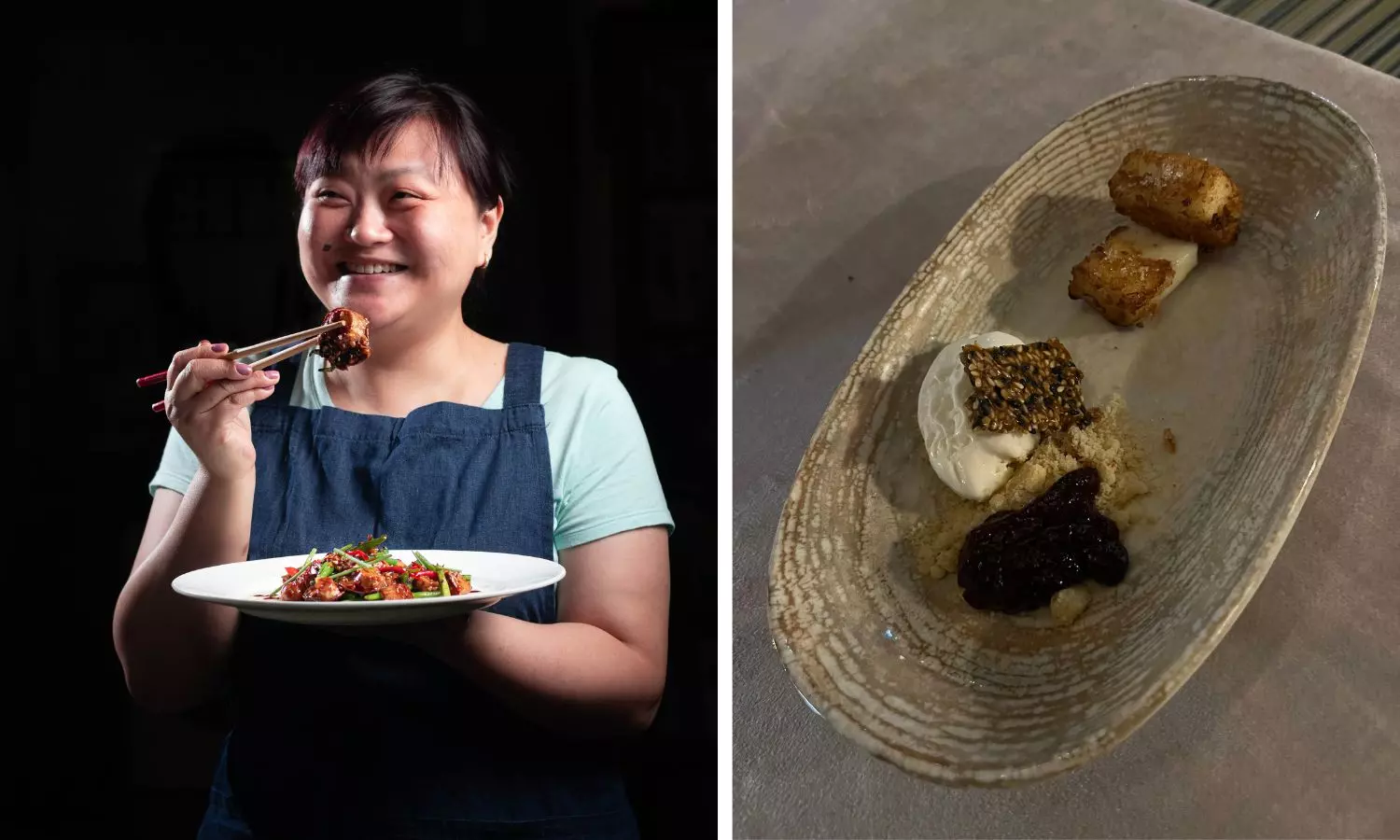
Third-generation Hakka Chinese chef Katherine Lim serves nostalgia and heritage on a plate at The Hakka Table pop-up, blending family memory, migration, and authentic Hakka flavours.
Third-generation Hakka Chinese chef Katherine Lim brings to Hyderabad not just a menu but a story — one of migration, adaptation, and culinary memory. At The Hakka Table pop-up at Novotel HICC, each dish carries the taste of home, migration, and reinvention.
Tales of Migration on a Plate
When Chef Katherine Lim talks about food, it is as if she is tracing a map — one that winds through China, Calcutta, Amritsar, and now Hyderabad. “I am a third-generation Hakka Chinese,” she says, as she recalls the family’s journey. “My grandfather came from China to Calcutta, and later to Amritsar. Unlike the Chinese in Calcutta who had access to all the authentic ingredients, we had none. Everything — tofu, soy sauce, even noodles — had to be made from scratch. I grew up watching my mother and grandmother make everything by hand. That’s where my fascination with food and fermentation began.”
That legacy comes alive at ‘The Hakka Table’, her pop-up at Novotel Hyderabad Convention Centre, a culinary exploration of Hakka migration told through a thoughtfully curated set menu. What sets it apart is not just its authenticity but its quiet confidence — the way it carries memories of home and adaptation with every bite.
The experience begins with Liang Cha, a herbal tea. “It’s literally translated as ‘cooling tea,’” she explains. “We make it with hawthorn, and monk fruit. Monk fruit is now trending because it’s naturally sweet — a thousand times sweeter than sugar — but with no side effects. In Calcutta, we always kept it in the fridge during summer to dispel heat.” It’s light, subtly sweet, and immediately soothing — a prelude to the meal’s balance between comfort and surprise.
The next course arrives — Shiitake mushrooms with wood ear, bean sprouts, and chives alongside Hong Kong Typhoon Shelter corn ribs and Xinjiang mushroom skewers. Each element carries a story of migration and geography. “The Typhoon Shelter dish comes from Hong Kong,” Katherine explains. “It’s usually made with seafood, but here I have adapted it with corn — still retaining that garlicky, spicy kick. And the Xinjiang skewers are inspired by the Muslim-majority northern regions of China, where they use a lot of cumin, sesame, and Sichuan peppercorns. I use lion’s mane mushrooms that I source from Delhi — rare, but absolutely worth it.”
Her food walks the line between memory and innovation — reimagined for modern palates but never stripped of its soul. “When I started doing pop-ups, people would say ‘Oh, Hakka? Like Hakka noodles?’” she laughs. “That’s why I named my brand ‘I Am Not a Noodle’: I wanted people to know that Hakka food goes far beyond what we call ‘Chindian’ cuisine. There’s no chilli chicken here, no Manchurian. These are dishes Hakkas around the world eat.”
Among them is a dish that has now become her signature — the Yam Abacus Beads. “It’s my home food,” she smiles. “I was very reluctant to put it on a menu because it’s so rustic. Traditionally, it’s made with pork, dried prawns, and cuttlefish, but I make it completely vegetarian — just yam, tapioca flour, mushrooms, and chives. People mistake it for scallops or squid because of the texture, but it’s pure yam.” The symbolism behind the dish is as beautiful as its flavour. “It’s eaten during Chinese New Year for prosperity — because the beads resemble the ones on an abacus. Everything comes back to money!” she laughs. “Now it’s my number one bestseller. You won’t find this dish anywhere else in India.”
Her Tomato Soup with Zha Cai (pickled mustard tuber) surprises everyone. Most people expect that thick, starchy Indo-Chinese version. But this is completely home-style. The Zha Cai adds that crunchy, pickled texture — almost like achar. It’s fermented, probiotic, and deeply comforting.
Then comes the Twice-Cooked Tofu with Leeks and Ma’la French Beans, each dish a lesson in balance and restraint. “Hakka cuisine is big on mushrooms and umami,” she notes. “When people say they are vegetarian but don’t eat mushrooms, eggplant, or okra, I don’t know what to cook for them!” she laughs. “For me, mushrooms are essential — they give that depth, that ‘moreish’ feeling.”
The finale — Fried Milk Custard— is a revelation. Crisp on the outside, silken within, it’s an understated yet elegant way to close the meal. It’s the perfect ending. Comforting, nostalgic, and simple.
The chef’s approach to the pop-up menu, she explains, is guided as much by emotion as by audience. “Every city is different. In Bangalore, they didn’t want pork; here, too, we have kept it vegetarian. I don’t compromise on authenticity — but I play with the plating, the accompaniments, the sauces. Like with my roast pork, I wouid serve it with kashundi instead of mustard — that’s my Calcutta touch.”
Katherine’s story is not just about food — it’s about survival, reinvention, and cultural memory. From fermenting her own rice wine with yeast from Kalimpong to handcrafting Chinese sausages, she carries forward the spirit of generations who made home wherever they went. “My grandfather made shoes,” she says. “But my legacy is food — food that tells the story of where we came from and how we adapted.”
At The Hakka Table at Novotel HICC that story unfolds one dish at a time — not as fusion, but as evolution. It’s a reminder that migration doesn’t just change where we live; it changes what we taste, what we cook, and how we remember.
( Source : Deccan Chronicle )

Next Story