In a world of constant stimulation, ‘grounding’ is gaining ground for emotional, mental and physical balance
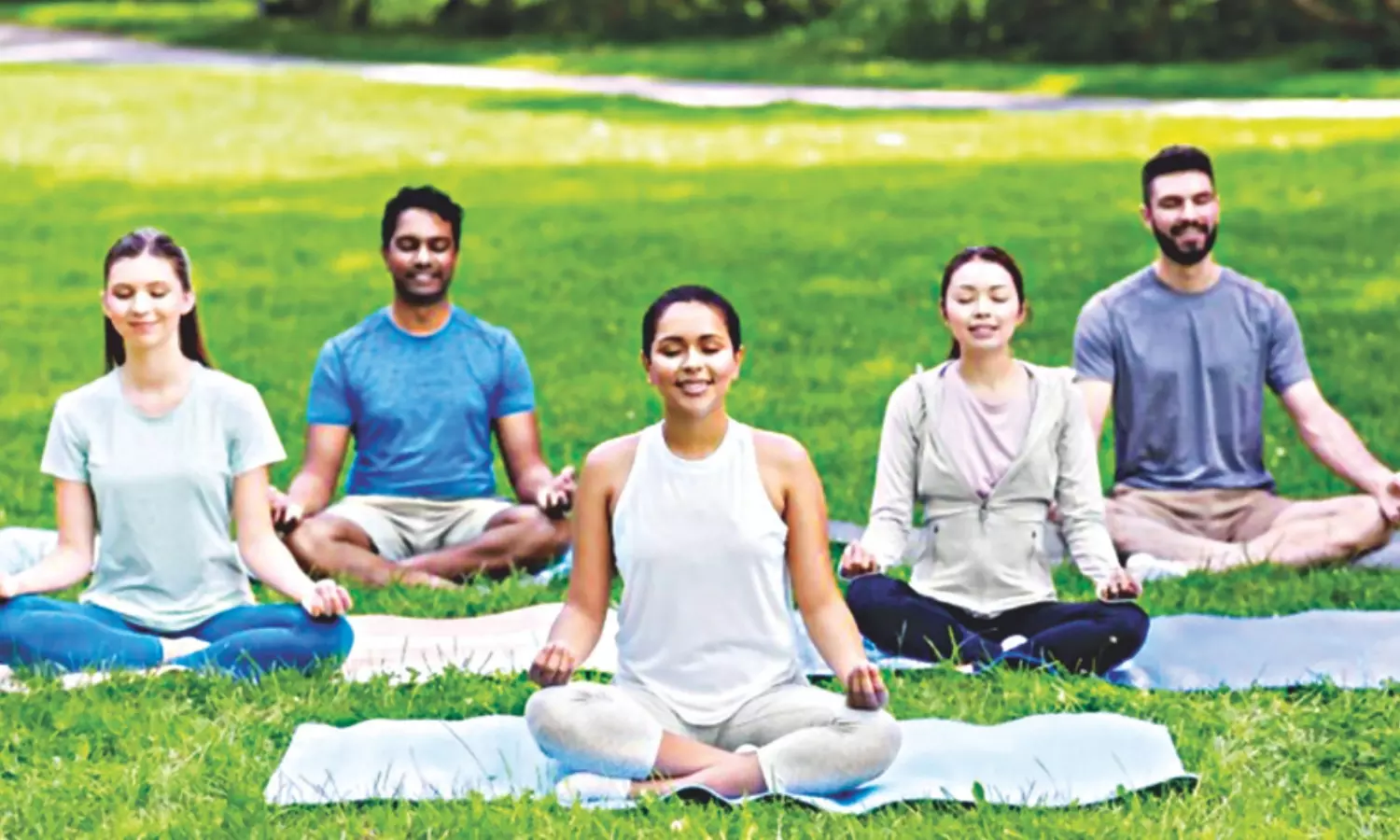
In an age defined by notifications, deadlines, multitasking and an endless stream of digital information, the search for calm has taken on new urgency. Amid the noise, age-old practices such as yoga, meditation, breathwork, sound therapy and mudras are being revisited as tools that may help people feel more present, emotionally balanced and mentally resilient. The idea of “grounding” goes beyond simply feeling calm. It is about reconnecting with the body, becoming aware of the present moment and developing the ability to respond to stress rather than being overwhelmed by it. While these practices have deep roots in traditional wellness systems, modern research into mindfulness, stress regulation and the nervous system is helping explain why they may have relevance in contemporary life.
Survival Mode to Stillness
For many people, stress has become less about occasional crises and more about continuous micro-stressors - emails, social media alerts, financial concerns and the pressure to remain constantly productive. Vidhi Sutar, Yoga Instructor at Sanctum House of Wellness, says modern life can leave the nervous system in a near-constant state of activation. “Chronic stress, digital overload, and continuous multitasking keep many of us trapped in a perpetual state of fight-or-flight,” she says. According to Sutar, yoga, meditation, breathwork and mudras can provide an opportunity to shift away from that state and return to greater calm and awareness.
Ground Connection
Yoga is often associated with flexibility and physical fitness, but its traditional practice places considerable emphasis on preparing the body and mind for stillness. Standing postures, hip openers and restorative poses can encourage practitioners to pay attention to their physical connection with the ground. Sutar believes that this physical experience can also influence emotional resilience. Holding a challenging posture while maintaining steady breathing requires a person to remain present despite discomfort.
“Learning to stay present and breathe through physical tension translates directly into the ability to stay composed during emotional or situational stress,” she explains. The practice, therefore, is not necessarily about eliminating discomfort, but about changing one's relationship with it.
Breath As A Bridge
Among the simplest grounding tools is something people carry with them at all times: the breath. Pranayama, or yogic breathwork, uses deliberate breathing patterns to influence physical and mental states. Practices that emphasize slower, extended exhalations, including alternate-nostril breathing, are commonly used to encourage relaxation and focused attention. “The breath is the direct bridge between the conscious mind and the autonomic nervous system,” Sutar says.
By consciously slowing and regulating breathing, practitioners may create a pause between a stressful trigger and their reaction to it. That pause can become particularly valuable in a culture where constant stimulation often leaves little room for reflection.
Power of Presence
Meditation offers another route back to the present. Rather than attempting to eliminate thoughts, mindfulness encourages people to observe them without automatically reacting to each one. Grounding meditations can focus attention on the breath, bodily sensations, sounds or other immediate sensory experiences. In doing so, attention is redirected away from worries about the past or future and toward what is happening in the present.
Kshitij Patil, a yoga and meditation practioner describes meditation as the practice of focusing on the mind rather than getting lost in thoughts. Over a period of time, meditation teaches you to be mindful. This creates greater self-awareness and reduces automatic emotional reactions.
Meaningful Mudras
Mudras symbolic hand gestures used in yogic and contemplative traditions offer another way of creating a physical point of focus. Practices such as Prithvi Mudra, traditionally associated with the earth element, are used to cultivate a sense of stability and centeredness. Padma Mudra and Abhaya Hridaya Mudra are among other gestures explored in contemplative practices, each carrying its own traditional symbolism and focus.
Familiar hand positions can also become “somatic touchpoints” during stressful moments. The simple act of returning attention to a gesture, can serve as a reminder to pause, breathe and reconnect with the body.
A Holistic Approach
Fitness is increasingly being viewed not simply through strength, weight or physical performance, but through the combined health of the body and mind. Rahul Singh, Trainer at Sanctum House of Wellness, says, “True fitness goes beyond building strength or losing weight it’s about improving overall wellbeing.”
He advocates combining movement and strength training with recovery, nutrition and mindful practices such as yoga and meditation. According to Singh, this broader approach can help reduce stress, build confidence and encourage sustainable habits.
Stay Grounded
The appeal of grounding practices may ultimately lie in their simplicity. They do not require people to escape modern life; instead, they offer ways to navigate it with greater awareness. Whether it is standing barefoot on the earth, slowing the breath, sitting quietly, practising a yoga posture or returning to a familiar mudra, these moments can interrupt the momentum of constant stimulation.
The ground beneath us may be something we rarely notice. Yet reconnecting with it - physically, mentally and symbolically - could offer a powerful reminder that resilience is not always about pushing harder. Sometimes, it begins with becoming still enough to feel where we are.