Garuda Atlas Logs 192 Bird Species In Tirupati

The programme is an initiative of the Indian Institute of Science Education and Research (IISER), Tirupati, in collaboration with the Tirupati Nature Society (TNS) and the Forest Department: Reports
TIRUPATI: The fifth edition of the Garuda Atlas, a bird-mapping exercise covering Tirupati and surrounding areas, was completed on Sunday, documenting avian diversity across the region.
Launched in 2022 as the Tirupati Bird Atlas, the initiative was later renamed the Garuda Atlas to strengthen its cultural association with Tirupati and encourage wider community participation. Over five editions, the exercise has recorded 274 bird species across the Tirupati landscape, with 192 species documented in the current edition alone.
The programme is an initiative of the Indian Institute of Science Education and Research (IISER), Tirupati, in collaboration with the Tirupati Nature Society (TNS) and the Forest Department. Under the methodology, the Tirupati region is divided into 72 grids of 3×3 km each, with every grid further split into nine 1×1 km sub-grids. One sub-grid from each grid is randomly selected for the survey.
Teams comprising four to five members, including at least one bird identification expert, conduct three-hour surveys following a standardised scientific protocol. All 72 grids are covered over four days to ensure uniform data collection across habitats.
During a recent bird walk at Divyaramam, participants recorded the Indian Yellow Tit for the first time in the Tirupati region. The nearest known records of the species are from the northern parts of the Nallamala hills and the Male Mahadeshwara hills, and its presence in Tirupati expands its known distribution range.
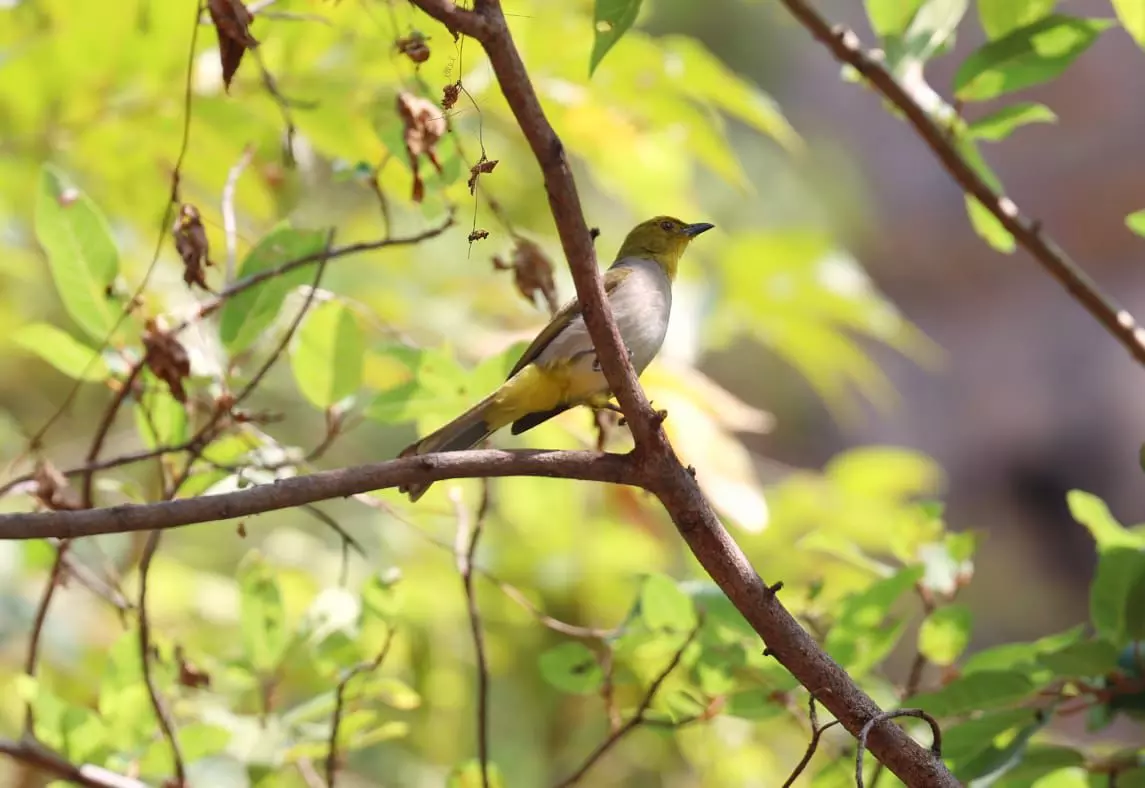
The Shaheen Falcon, a small cliff-dwelling raptor, was also observed, with the Tirumala ghat road providing suitable habitat. Participants witnessed its hunting behaviour during the survey. Other notable species recorded include the Yellow-throated Bulbul, Red-necked Falcon, Slaty-breasted Rail and Black Eagle, indicating the ecological richness of the Tirupati landscape.
IISER Tirupati said the Garuda Atlas aims to generate long-term data to track changes in bird populations, assess the impact of urban expansion and land-use changes, and support conservation planning. The technical design is led by Dr Robin’s Lab at IISER Tirupati, with logistical support from TNS and the Forest Department.
The fifth edition was coordinated by Hareesha of IISER Tirupati, with support from S. Pushya Mitra and P. Ramachandra Reddy of TNS, and saw participation from birders across the country.
