Breakthrough Hydrogel Mimics Human Skin’s Strength, Self-Healing Abilities

Researchers develop a hydrogel that replicates both the stiffness and self-healing properties of human skin, paving the way for advancements in medicine and robotics
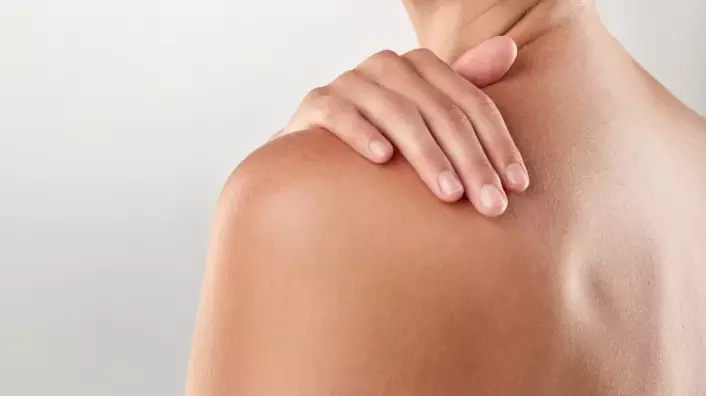
Scientists from Aalto University and the University of Bayreuth have created a revolutionary hydrogel that is both strong and self-healing, overcoming previous material limitations.
We encounter gels in everyday life, from hair products to food components. While gels often have a soft and sticky texture, human skin possesses unique properties, combining stiffness, flexibility, and self-healing capabilities. Until now, artificial hydrogels could either be strong or self-repairing—but not both. A team of researchers from Aalto University and the University of Bayreuth has changed that with a breakthrough hydrogel that mimics the resilience and healing power of human skin.
Published in Nature Materials on March 7, the study describes how scientists incorporated ultra-thin clay nanosheets into traditional hydrogels. This innovation creates a highly organized structure with densely entangled polymers, significantly enhancing both mechanical strength and self-healing properties.
The key to the material’s success lies in its nanosheet arrangement and polymer entanglement—a process similar to baking. Postdoctoral researcher Chen Liang mixed monomers with water containing nanosheets and exposed the mixture to UV light. ‘The UV radiation causes molecules to bond together, forming an elastic gel,’ Liang explained.
Hang Zhang, a researcher from Aalto University, further detailed the process: ‘Entanglement means the polymer layers twist around each other randomly, like tiny wool yarns. Once fully intertwined, they are indistinguishable and highly dynamic at a molecular level. If cut, they start reattaching automatically.’
Within four hours of being cut, the hydrogel achieves 80–90% self-repair, and after 24 hours, it is completely healed. A mere one-millimeter-thick hydrogel consists of 10,000 nanosheet layers, giving it stiffness, stretch, and flexibility comparable to human skin.
This new hydrogel has the potential to revolutionize multiple fields, including drug delivery, wound healing, soft robotics, and artificial skin. ‘Stiff, strong, and self-healing hydrogels have long been a challenge. We have discovered a mechanism to strengthen the conventionally soft hydrogels, paving the way for new bio-inspired materials,’ Zhang concluded.
With its unprecedented properties, this hydrogel could lead to transformative advancements in medicine, robotics, and material science.
