Yoga for Growing Children: Simple Practices That Support Strength, Flexibility, and Posture

This is where the benefits of yoga can be of assistance. It’s not about turning kids into disciplined practitioners overnight.
Over the years, I have taught yoga to people of every age, and I always notice something special when children join a session. They move without hesitation, they laugh through the poses, and they pick up new movements faster than most adults do. Children are naturally flexible and curious. With longer school hours, more screen time, and less outdoor play, many children today carry stiffness and poor posture at an age when their bodies should be at their most free.
This is where the benefits of yoga can be of assistance. It’s not about turning kids into disciplined practitioners overnight. It’s about providing simple tools to keep their body strong, their spine aligned, their mind calm, and to have fun while doing it. The child’s body is still developing and the habits they form today will affect the way they sit, stand and move in the future. Hours spent hunched over or phones can pull the shoulders forward and weaken the muscles that support good posture. Yoga works gently against this. It strengthens the core, opens the chest, and teaches children to become aware of how they are holding their bodies. This awareness is often the biggest gift yoga gives a child, since most posture problems begin simply because nobody notices them early enough.
Before introducing any asana, I like to begin with breath. Children rarely pay attention to how they breathe, yet slow and steady breathing calms an overactive mind and prepares the body for movement. A simple practice is to have the child sit cross-legged, place both hands on the belly, and take five slow breaths, feeling the belly rise and fall. This alone can bring a restless child into a calmer state within a minute or two. Once the breath settles, the body is ready for a few basic asanas, and none of them need special training to attempt.
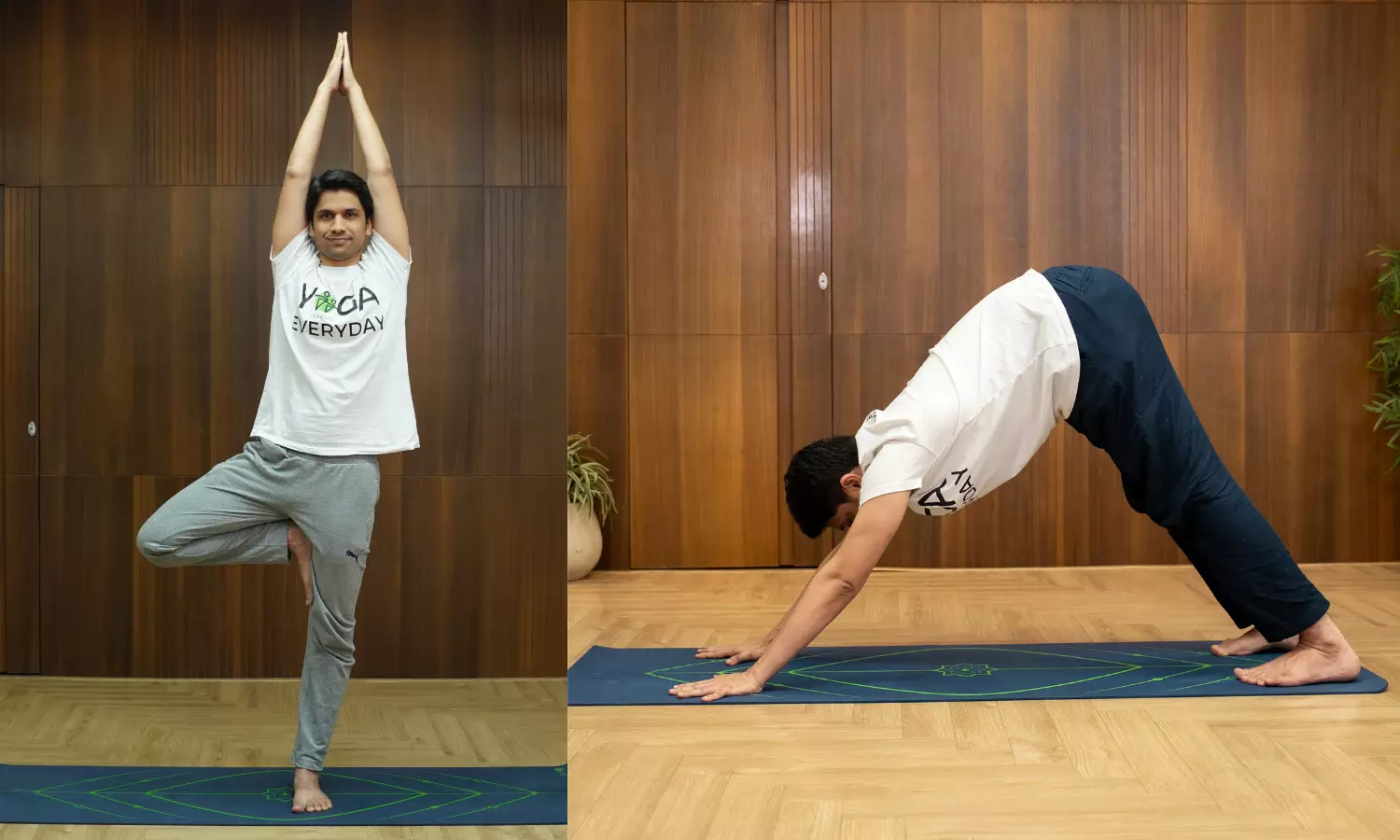
Vrikshasana, or Tree Pose
It is a wonderful starting point for balance and leg strength.
Step 1: Stand tall with the feet together.
Step 2: Shift the weight onto one leg and place the sole of the other foot against the inner calf or thigh, avoiding the knee.
Step 3: Bring the hands together at the chest or stretch them overhead.
Step 4: Hold for a few breaths, then switch sides.
Marjariasana, or Cat Cow Pose
It keeps the spine flexible and eases tension from long hours of sitting.
Step 1: Come onto the hands and knees, with wrists under the shoulders and knees under the hips.
Step 2: Breathe in, drop the belly, and lift the chest and chin, arching the back gently.
Step 3: Breathe out, round the spine upward, and tuck the chin toward the chest.
Step 4: Repeat slowly for six to eight rounds.
Adho Mukha Svanasana, or Downward Dog
It builds strength in the arms, shoulders, and legs while lengthening the spine.
Step 1: Start on the hands and knees.
Step 2: Tuck the toes under and lift the hips upward, straightening the arms and legs to form an inverted V shape.
Step 3: Drop the head down between the arms and press the heels towards the floor gently.
Step 4 : Breathe a few breaths.
Bhujangasana or Cobra Pose
It opens the chest and strengthens the back muscles.
Step 1 – Lie on your stomach with your palms flat on the floor under your shoulders.
Step 2: Push through the hands to lift the chest off the ground. Slight bend in the elbows and shoulders away from the ears.
Step 3: Breathe and hold for a few breaths.
Step 4. Lower back down slowly.
Baddha Konasana, or Butterfly Pose
It increases flexibility in the hips, which we often neglect in our everyday activities.
Step 1: Sit up straight with your spine straight and the soles of your feet together.
Step 2: Allow knees to open to the sides.
Step 3: Grab the feet with both hands.
Step 4: Flap the knees gently up and down like butterfly wings.
None of these asanas need to be perfect on the first try. What matters is that the child moves into them regularly and grows a little more comfortable with each attempt. The real value of yoga for children comes from consistency rather than intensity. A ten to fifteen minute practice a few times a week, moving through three or four simple asanas, is enough to build strength and flexibility over time. What matters more is making the sessions fun. Use their favourite music, turn asanas into small stories, or practice together as a family. When children see yoga as playtime rather than a task, they stay with it far longer.
