Maha Shivaratri: Stories, Rituals & Science Behind The Sacred Night

While most Hindu festivals are celebrated during the day, with a sense of joy and community gatherings, Shivaratri is in contrast is celebrated in the silence of night and in total stillness
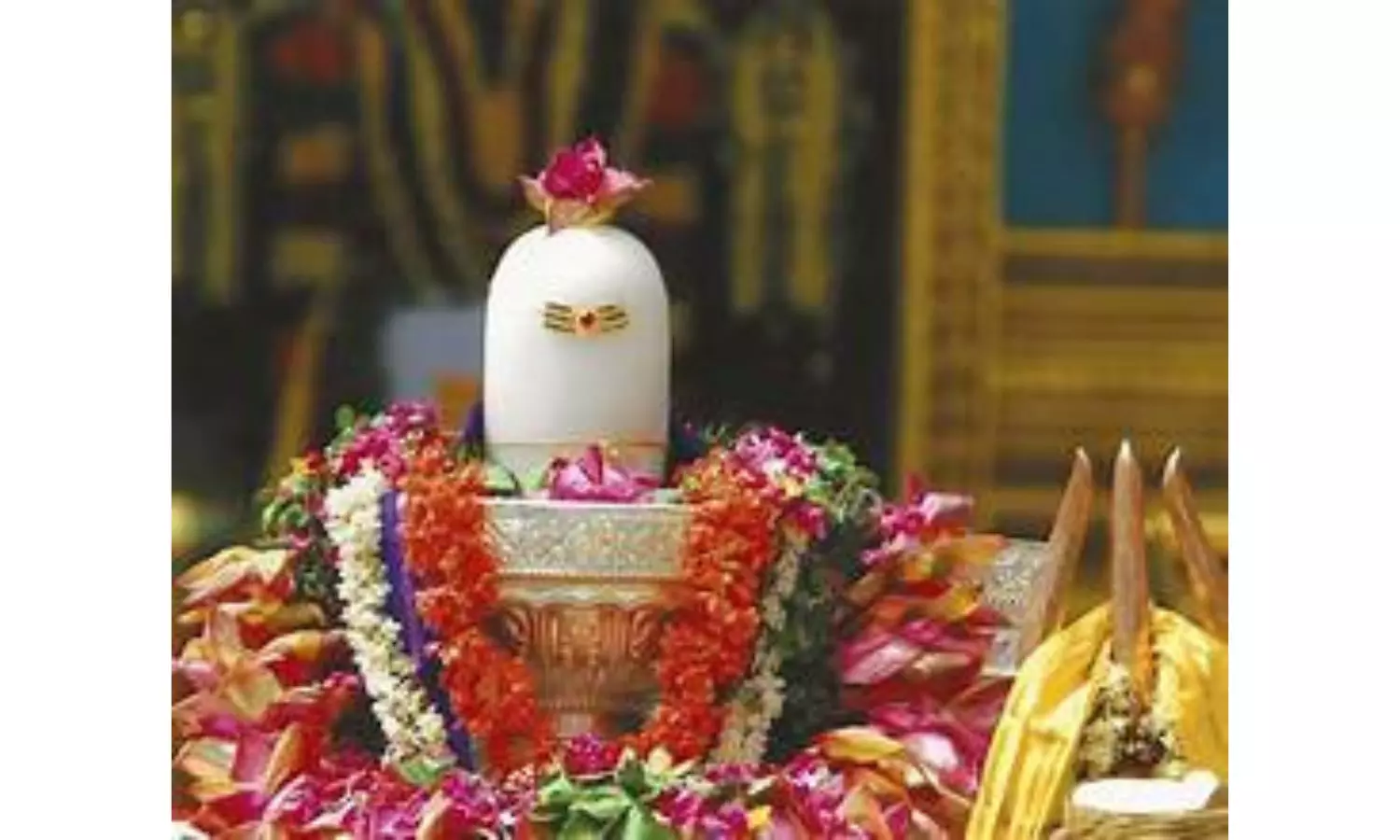
Maha Shivaratri is the sacred night observed each year when devotees dedicate themselves to the worship of Lord Shiva, revered as the Supreme God, the God of Gods. A few spiritual teachers remind us that Shivaratri is not about ritual worship, it is about opening oneself to stillness. Shiva is not external but the very essence within, waiting for the soul’s return to its inner source.
Maha Shivratri 2026 Thithi and Time
It is celebrated when the Chaturdasi thithi ends (fourteenth night) of the waning moon in the Bahula paksham of the sacred month of Magha during the Uttarayana period. While most Hindu festivals are celebrated during the day, with a sense of joy and community gatherings, Shivaratri is in contrast is celebrated in the silence of night and in total stillness.
Chaturdashi Tithi begins on February 15th at 05:04 PM and ends on 05:34 PM, February 16th 2026.
In Telugu, there is a phrase linked to Maha Shivaratri -- Janmaaniki Oka Shivatri, which means whenever possible, use the opportunity given on the Shivaratri to tread on the spiritual path as there is no certainty that one would continue to live till the next Maha Shivaratri. Lord Shiva is believed to be a symbol of pure consciousness, the destroyer of ego, illusion and ignorance. He represents stillness, silence and infinite awareness.
Lingodbhava Kaala
Lingapurana says Lingodbhava Kaala occurred during Maha Shivaratri marking the exact time Lord Shiva manifested as an infinite, blazing pillar of light or Jyotirlinga. As the story from the purana goes, Lord Brahma and Lord Vishnu had an argument over who is most powerful among them. During this time, Lord Shiva manifested in the form of a massive infinite pillar of fire stretching beyond the earth and heaven. To find the beginning and end of the pillar, Lord Brahma took the shape of a swan and flew upwards while Lord Vishnu took the form a wild board and dug deep inside the earth but both failed, indicating that the Supreme Truth has no beginning or end. As Lord Shiva manifested in the form of a lingam (also called Arupa Rupi), Maha Shivaratri is considered as the Lord's birth anniversary.
Stories behind Shivaratri
According to Shivapurana, there is another story linked to Maha Shivaratri. It is said that Lord Shiva got married to Goddess Parvathi on the same day, thousands of years ago. As Lord Shiva represents Purusha and Goddess Parvathi as Prakriti, their marriage means the union of Purusha and Prakriti or consciousness and energy, to strike a balance between inner stillness and outward responsibilities. The Shiva Lingam also represents the union of Stillness (Shiva) and Shakti (Parvati), male and female energies. These legends make it clear that Maha Shivaratri is both the birth and marriage anniversary of Lord Shiva.
Mythology says that Lord Shiva consumed poison (haalahal) that emanated during the Samudra Manthan, on Maha Shivaratri night. It is believed that Lord Shiva's neck turned blue due to the poison which remained in his throat.
In another story, devotees get to know that Lord Shiva loves intense surrender rather than the grandeur of rituals. Lubdhaka, a hunter, climbed a tree in a dense forest during one night (which happened to be Shivaratri) after being chased by a tiger. Incidentally, it was a bilva tree. Fearing for his life, he plucked one leaf from the tree and kept dropping it down chanting 'Shiva Shiva' throughout the four prahars (jaamulu) of the night. He did not know that there was a Shiva ling beneath the tree and that all the bilva leaves he dropped fell on it. But, Lord Shiva granted him liberation as that night was Shivaratri and Lubdhaka followed all the rituals, though without any knowledge. He observed fasting as there was no food available to him in the forest; he chanted Lord Shiva's name and kept vigil as he remained awake feared that he would fall from the tree and into the tiger's jaws, if he closed his eyes. In that manner, he fulfilled all the rituals performed on Maha Shivaratri,of fasting, staying awake, and doing puja with the sacred bilva leaves, hence receiving Lord Shiva's boundless mercy and liberation.
Science & Shivaratri
It is believed that on Mahashivatri, energies of the cosmos move upward from the earth in the night. Ancient yogis and sages found that the human nervous system becomes more receptive and the spine becomes more sensitive to the higher consciousness due to which meditation is believed to enhance spiritual growth. Instead, if humans would sleep during that time, they would miss an opportunity for spiritual progress as they would be obstructing the energy by lying parallel to the earth. On the sacred night, it is believed that consciousness is most accessible to human beings. By sitting and keeping our spine straight, we allow the energy rise up towards the subtler consciousness.
Shivapurana says that during the Maha Shivaratri night, the northern hemisphere of the earth is positioned in such a way that creates an upsurge of energy in a human being, as if the nature itself gives a major push towards our spiritual growth.
Rituals
During the sacred night, millions of devotees fast (Upavasam), keep vigil in the night (jagarana), while chanting and meditating on Lord Shiva.
Fasting: Fasting (upavasam) does not mean avoiding intake of food but allowing minimal intake of food to keep the five senses functioning and worshipping the Supreme God. Devotees can consume milk and fruits in limited quantities, whenever the need is felt. Overeating would drown devotees in sleep for which reason, they are advised to eat in small quantities. Through meditation and chanting the name of Lord Shiva, yogis believed that humans can transcend from the darkness of ignorance to awakening.
Vigil: By worshipping Lord Shiva, devotees embrace Shiva Tatwa, the principle of nothingness. The destruction of the limited identity to merge with the infinite ocean of silence. Lord Shiva does not promise grandeur or comfort, but liberation. By being awake, devotees would show their readiness to tread the spiritual path and understand the essence of Lord Shiva in stillness. The geometry of the earth and the pull of the stars align to offer something extraordinary on this night. By staying awake the whole night, devotees rise above ignorance and darkness and align with Shiva consciousness.
Abhishekam: It is done to keep the entire universe cool with rich supply of milk and water. Symbolically water is poured on the Shiva lingam, continuously from the top. He is not a deity but the vast, unbounded emptiness of the universe. During the four prahars from the evening of Maha Shivaratri day to the next day morning, roughly 12 hours, abhishekam is done to the Shiva Lingam with four different liquids -- milk, curd, ghee and honey. Each prahar lasts for three hours approximately.
Meditation: Skanda Purana says that planetary alignment on Shivaratri night makes meditation easier. Devotees stay awake and aware not as part of an exercise to fight sleep, but to watch the mind become still.
Devotees across the nation are preparing to celebrate Maha Shivaratri on February 15th 2026 with profound devotion. Grand pujas will take place at Shiva temples such as Mahakaleshwar Jyotirlinga in Ujjain, Kashi Vishwanath in Varanasi, and Kedarnath in the Himalayas, where devotees gather to offer prayers and participate in special aartis. As homes and shrines are adorned with lights and flowers, the air will resonate with spiritual intensity, creating an atmosphere of deep reverence as devotees seek the blessings of Lord Shiva.
