India’s Fertility Crisis: Why Are More Couples Struggling to Conceive Naturally?

Infertility is not a problem limited to one gender or one lifestyle. The WHO estimates that around one in six people of reproductive age experience infertility at some point in their lives.
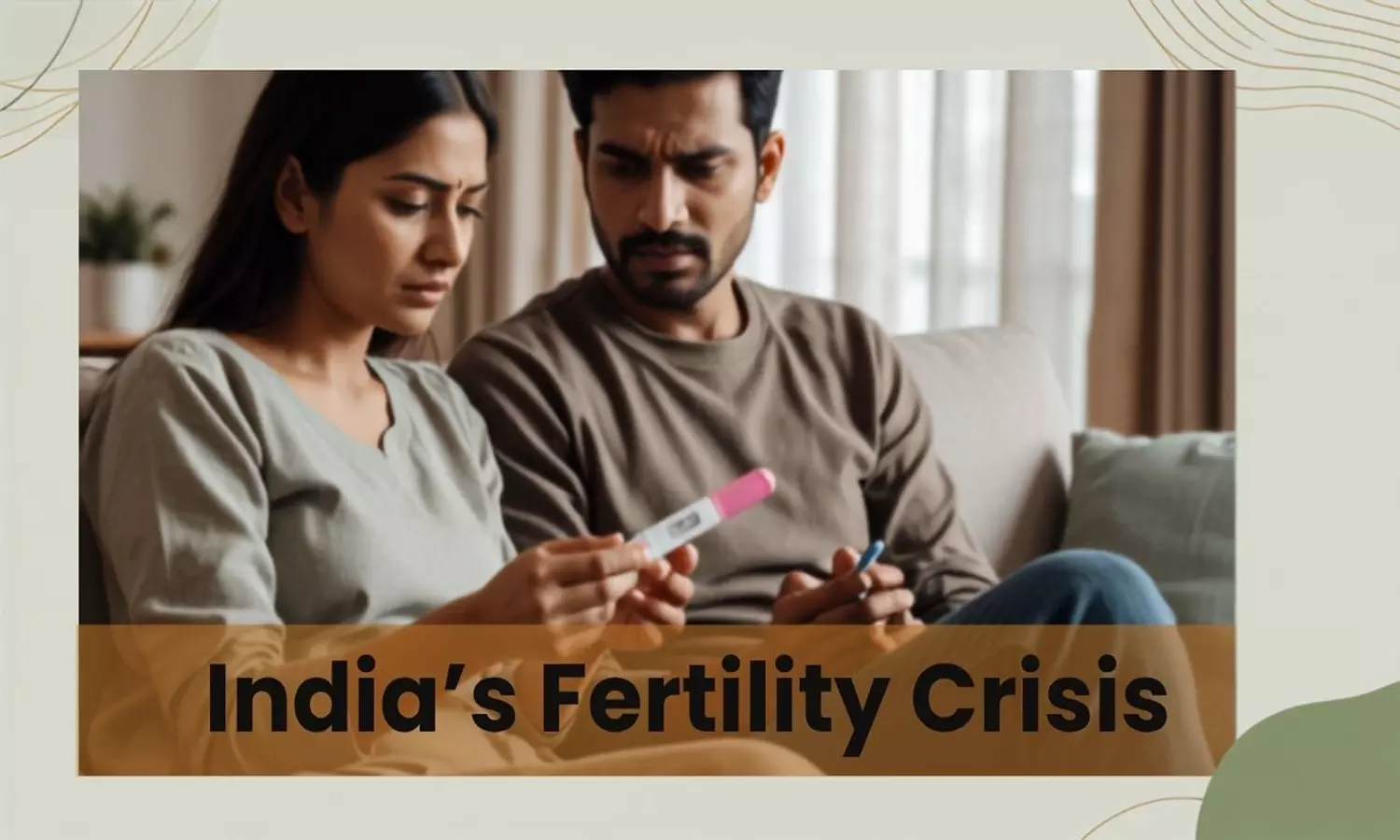
For many couples, starting a family is no longer an immediate step after marriage. Careers are being built, financial stability is being prioritised, and marriage itself is happening later. By the time couples feel ready to have a child, however, they may discover something they had not considered closely enough: reproductive biology does not follow the same timeline as modern life.
This is one of the reasons fertility has become an increasingly important conversation in India.
Infertility is not a problem limited to one gender or one lifestyle. The World Health Organization estimates that around one in six people of reproductive age experience infertility at some point in their lives. It can arise from male factors, female factors, a combination of both, or sometimes without an identifiable cause.
From an embryologist’s perspective, one of the most important things to understand is that difficulty conceiving naturally is rarely the result of a single factor. It is usually a combination of reproductive biology, age, health, lifestyle and, in some cases, underlying medical conditions.
Delayed parenthood and the biological clock
One of the most significant changes in the way people approach parenthood is timing.
Couples are increasingly choosing to have children when they feel emotionally, professionally and financially prepared. That is a completely valid personal decision. But reproductive ageing continues irrespective of when someone decides they are ready.
Female fertility is particularly sensitive to age because both the number and quality of eggs decline over time. This does not mean that every woman who tries to conceive in her 30s will have difficulty. It means that the probability of conception and the likelihood of certain reproductive challenges change with age.
Male fertility also changes with age, although the pattern is different. Sperm production continues throughout life, but sperm parameters and reproductive potential can be affected by age and other health factors.
The important point is not to create fear around age. It is to make sure people understand that delaying parenthood is a decision that should ideally be made with awareness of the biological timeline as well.
Infertility is not just a woman’s issue
One of the most persistent misconceptions surrounding fertility is that the woman should be investigated first.
In reality, male factors can contribute significantly to infertility. Problems can involve sperm production, sperm count, movement, shape, or the reproductive tract. The WHO also identifies factors such as smoking, excessive alcohol consumption and obesity as influences that can affect fertility, while environmental pollutants and toxins may affect egg and sperm quality.
Modern lifestyles can add to this burden. Sedentary routines, poor sleep, chronic stress, smoking, excessive alcohol consumption and metabolic health issues can all become relevant when assessing reproductive health.
There is also an important misconception that being physically fit automatically means being fertile. A person may exercise regularly and appear extremely healthy while still having an abnormal semen analysis. Fertility is not something that can be judged by appearance.
That is why fertility evaluation should be approached as a couple’s health assessment rather than something that places responsibility on the woman.
PMOS and the problem of irregular ovulation
For women, ovulation is central to natural conception. If an egg is not released regularly, the chances of conception can decrease.
Polycystic ovary syndrome, or PMOS, is one of the most common conditions associated with ovulatory dysfunction. According to the WHO, PMOS affects an estimated 10–13% of reproductive-aged women globally and is the most common cause of anovulation, making it a leading cause of infertility.
However, PMOS is often misunderstood.
It is not simply a condition caused by eating poorly or being overweight. It is a complex hormonal and metabolic disorder with genetic and metabolic components. Some women with PMOS may have irregular periods, while others may have relatively regular cycles and still require evaluation.
The good news is that difficulty conceiving because of ovulatory problems does not automatically mean that natural conception is impossible. Identifying the underlying issue is the first step towards addressing it.
Lifestyle matters, but fertility is more complex than lifestyle
The conversation around fertility often swings between two extremes: blaming modern lifestyles for everything or assuming lifestyle has no role at all.
The reality lies somewhere in between.
Smoking, excessive alcohol consumption, obesity and certain environmental exposures can affect reproductive health. At the same time, infertility cannot be explained simply by saying that someone is stressed, eats a particular food or uses plastic containers.
Reproductive health is influenced by multiple interacting factors. Diet, physical activity, metabolic health, sleep and stress are important components of overall health, but they should be considered alongside age, medical history and reproductive factors.
This distinction is important because oversimplifying fertility can create unnecessary guilt. A couple struggling to conceive should not automatically assume that they have “lived an unhealthy lifestyle” or that changing one habit will solve the problem.
What about pollution and environmental exposure?
Environmental factors are another area that deserves greater awareness.
People are exposed to air pollution, pesticides, chemicals and endocrine-disrupting substances through different aspects of everyday life. Research has raised concerns about the potential effects of some environmental exposures on reproductive health, including sperm and egg quality.
But this is an area where caution is essential. We should not tell people that ordinary exposure to a particular plastic product or chemical has caused their infertility. The science is more complex than that.
What we can say is that reproductive cells are biologically sensitive, and reducing unnecessary exposure to potentially harmful environmental substances is a reasonable part of maintaining overall health.
The biggest problem may be what couples don't know
Perhaps the most important factor is not a biological one at all. It is the awareness gap.
Many couples begin trying for a baby with very little understanding of how conception actually works. They may know when their period is due but have limited knowledge about ovulation, the fertile window, sperm health or the effect of age on fertility.
There is also a tendency to wait and assume that pregnancy will eventually happen.
Infertility is generally defined as not achieving pregnancy after 12 months of regular, unprotected intercourse. However, that does not mean every couple should simply wait a year regardless of their circumstances. A medical evaluation may be appropriate earlier depending on age, menstrual irregularity, known reproductive conditions or other concerns.
Seeking an evaluation also does not mean committing to IVF.
A basic fertility assessment can simply provide information: whether ovulation is occurring, whether there may be a tubal or uterine issue, what the ovarian reserve looks like and whether sperm parameters are within the expected range.
Fertility awareness should not become fertility anxiety
The answer to India's fertility challenge is not to encourage people to panic about parenthood or to suggest that everyone must have children early.
People should be able to decide when and whether they want children.
But that decision is more empowering when it is informed.
For too long, fertility has been something people learn about only after they encounter difficulty. By then, they may be trying to understand years of decisions, assumptions and missed opportunities all at once.
We need to move towards a culture of fertility awareness much earlier.
Understanding the reproductive timeline does not mean rushing into parenthood. Understanding sperm health does not mean assuming every man has a fertility problem. Knowing about PMOS does not mean fearing every irregular cycle. And seeking a fertility assessment does not mean that assisted reproduction is inevitable.
As an embryologist, I believe the most useful fertility conversation is one that replaces fear with information.
India's fertility crisis should not be framed simply as a story about people becoming infertile. It is also a story about a generation navigating parenthood later, while reproductive biology continues to follow its own timeline.
The goal should not be to alarm people into conceiving.
It should be to give them enough awareness to make reproductive decisions while they still have choices.
The article is written by Rishina Bansal, Clinical Embryologist and Co-Founder, Archish