Godrej Jersey’s Lactograph 2.0 Highlights Urban India’s Milk Knowledge Gap

26 Nov 2026 5:16 PM IST26 Nov 2026 5:16 PM IST
The findings reveal a significant gap between habit and nutritional recognition. 60%consume milk through tea or coffee every day, while 40% drink plain milk daily.
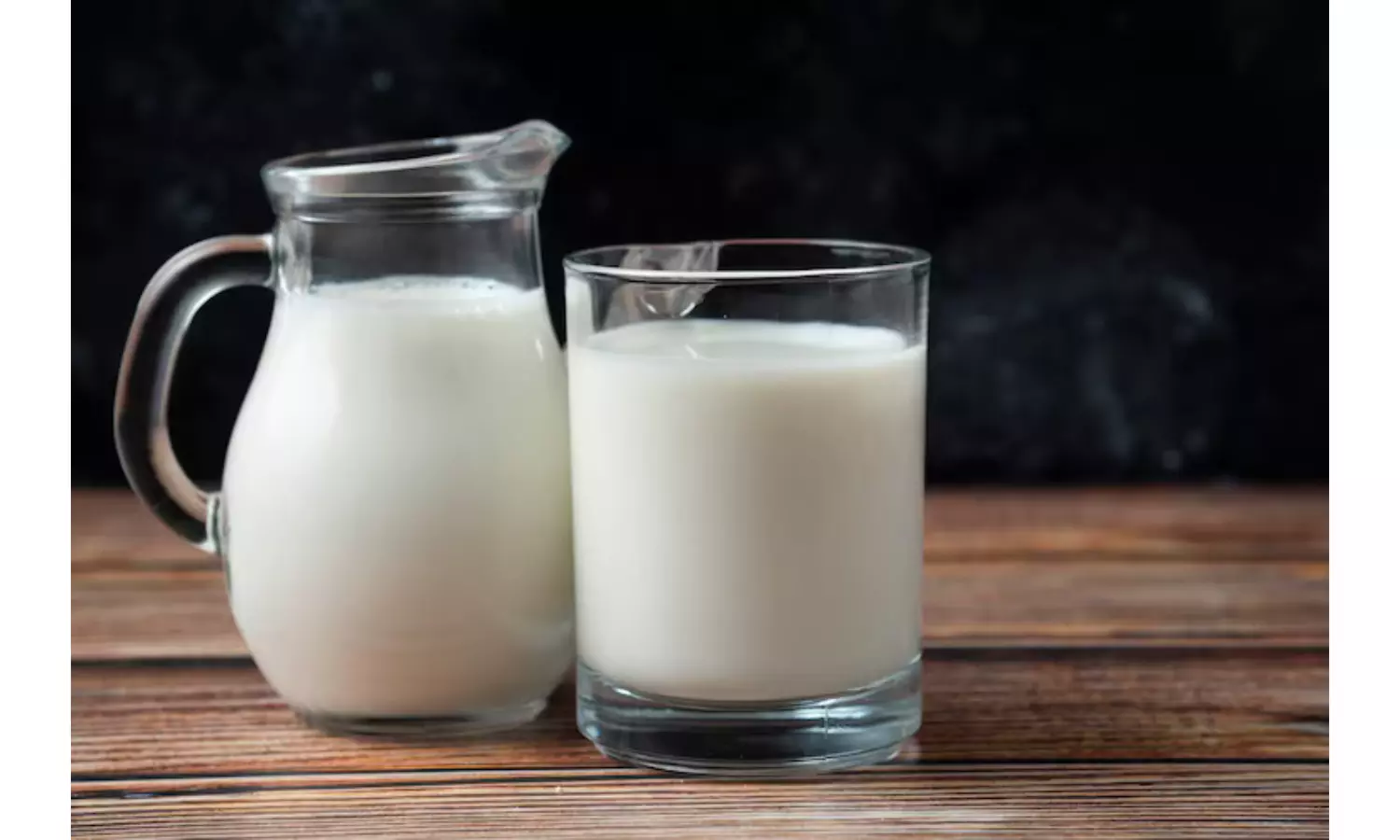
Representational Image/Magnific
Mumbai: Milk is deeply woven into everyday life across urban India. It is poured into morning chai and coffee, served as a glass of milk, consumed before bedtime and enjoyed through familiar foods such as curd, paneer and buttermilk. Yet a new study by Godrej suggests that while consumers rely on milk regularly, many do not fully recognise one of its most important nutritional benefits.
Released on National Milk Day, Lactograph 2.0, a study of dairy consumption habits across eight Indian cities conducted by YouGov, found that only 59% recognise milk as a complete protein. This means that more than four in ten urban consumers are either incorrect or unsure that milk contains all nine essential amino acids required by the body.
The findings reveal a significant gap between habit and nutritional recognition. 60%consume milk through tea or coffee every day, while 40% drink plain milk daily. Milk also emerged as the most affordable everyday protein source among the 13 foods tested, with 69% considering it affordable for daily protein. This rises to 80% in Mumbai and Chennai.
The protein-perception gap extends across dairy foods. While 69% recognise paneer as a complete protein, recognition falls to 59% for milk, and 47% for curd. Despite milk’s everyday presence and accessibility, it receives less protein recognition than some of its own derivatives.
The contrast is also visible among vegetarians. 86% of vegetarians include dairy among their top protein sources, yet only 65% recognise milk as a complete protein. This suggests that even consumers who rely heavily on dairy do not always understand its complete-protein value.
Gaurav Pande, CEO, Godrej Jersey, said,“Milk is one of the few foods that combines everyday familiarity with widespread accessibility. Lactograph 2.0 shows that 69% of urban consumers already consider milk an affordable source of daily protein, but the larger opportunity is to help consumers better understand the nutritional value of the dairy foods they consume regularly. The future of the category will lie in building on established habits while responding to evolving expectations around nutrition, taste and convenience.”
The findings point to strong awareness of high-protein milk but limited regular adoption. While more than 8 in 10 consumers are familiar with it, only 25% consume it regularly. Converting awareness into habit will require more than protein credentials, with 50% citing taste as a barrier and 45% citing price.
Beyond nutrition, the findings highlight the continuing cultural role of milk and dairy. Approximately 9 in 10 urban consumers retain at least one childhood dairy ritual. Respondents could select multiple habits, with curd rice leading at 50% followed by buttermilk in summer at 49%, badam milk on special occasions at 41%, a morning glass of milk at 40%, milk at bedtimeat 39% and haldi milk consumption at 36%.
Trust and hygiene also shape how urban consumers buy milk. The study found that 44% primarily buy branded packaged milk, 27% buy directly from a farmer and 17% purchase loose milk from a vendor or dairy. Hygienic handling remains a leading purchase consideration, with 71% rating it very important and 95% considering it either fairly or very important. Branded packaged milk is most prevalent in Bengaluru at 52% and Mumbai at 51%, while direct-from-farmer purchasing is highest in Hyderabad at 38%.
Expectations extend to the pack itself. 84% consider spill-proof packaging important, 83% value easy-to-carry packs and 82% consider reduced plastic use important.
As India observes National Milk Day and reflects on the legacy of Dr Verghese Kurien, Lactograph 2.0 suggests that the next chapter of the country’s dairy story may not be about creating a new milk habit. It may be about helping consumers fully understand the nutrition already present in an everyday one.
Key Findings
• Only 59% recognise milk as a complete protein; four in ten are incorrect or unsure.
• 60% consume milk through tea or coffee every day, while 40% drink plain milk daily.
• 69% consider milk an affordable everyday protein, the highest among the 13 sources tested.
• Paneer leads complete-protein recognition at 69%, ahead of milk at 59%, curd at 47% and cheese at 41%.
• 86% of vegetarians include dairy among their top protein sources, but only 65% recognise milk as a complete protein.
• 37% would replace a daily protein shake with a dairy food, ahead of eggs and chicken or fish at 21% each.
• 67% agree that protein from food is better than protein from powder.
• 25% consume high-protein milk regularly, while 28% have tried it once or twice.
• 77% would pay some premium for curd containing twice the protein.
• 50% cite taste as a barrier to choosing high-protein dairy, ahead of price at 45%.
• Approximately nine in ten retain at least one childhood dairy ritual.
• 86% check protein content on dairy packs always or sometimes, while 80% consider front-of-pack protein information important.
• 71% consider hygienic handling very important when choosing milk.
( Source : Deccan Chronicle )

Next Story