Why New Homeowners Are Designing Homes Around Their Hobbies

Homeowners arranged their lives around what the floor plan offered, and the designer’s job was to make that work as well as possible.
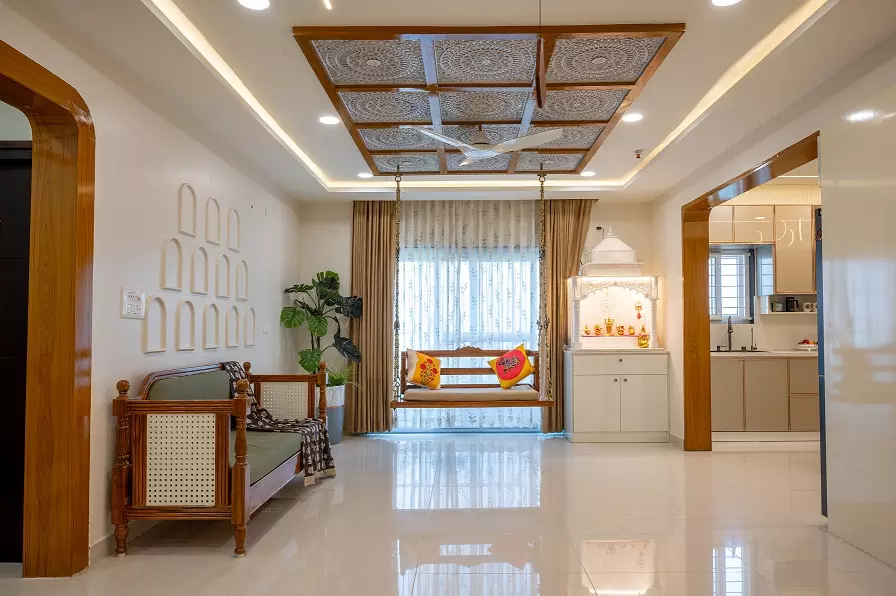
For a long time, the interior design brief for an Indian home followed a familiar structure: how to design the public spaces and the private ones, each with its own conventions. The living room looked a certain way, the bedrooms served a defined purpose and the dining area held its assigned position. Homeowners arranged their lives around what the floor plan offered, and the designer’s job was to make that work as well as possible.
That is changing, and the shift is coming from homeowners themselves. In global markets, “hobby havens” have become one of 2026’s defining home trends: spaces built not around room typologies but around what people actually love to do. In India, we are seeing the same instinct take hold. It is not yet universal, but it is showing up with increasing frequency in the briefs younger homeowners bring to the table.
A hobby, or the specific interest of a family member, is no longer an afterthought squeezed into leftover space, or accommodated ad-hoc in whatever room is available: a keyboard in the corner of the bedroom, a reading chair wedged next to the wardrobe, craft supplies taking over the dining table. It has become a starting point of the brief itself.
Gita Ramanan, Co-Founder & CEO, DesignCafe.
This is one of the more meaningful shifts in Indian interiors in recent years for me personally, as I’ve always believed that a home should not simply accommodate the lives of the people on it, but celebrate it. And this shift is a reflection of this deeper truth, that the home has become an extension of personal identity. People are no longer content with a house that simply looks like it belongs to their lifestyle; they want a home that could only belong to their lives.
A generation willing to challenge convention
Homeowners will trade a formal dining room used twice a year for a proper art studio. They will shrink a guest bedroom to build a soundproofed music corner. These are unsentimental, confident choices about what a space is really for, and they say something honest about how people want to live.
This is where the old, room-by-room way of designing quietly breaks down. A hobby-first home cannot be delivered from a template, because a passion is deeply personal, and the technical requirements behind it vary enormously. A home gym for a serious lifter needs different flooring, ventilation and mirror placement than a yoga nook built for someone chasing ten quiet minutes a day. A reading corner was once a defined ask: a chair, a shelf, a good lamp. It has since taken on different connotations; families now want reading woven across the home, from a window seat in the bedroom to a quiet alcove off the living room, without any of it feeling like an afterthought.
A home music room may be the most demanding of all: proper soundproofing is not a matter of adding mass, but of decoupling a room structurally from the walls and floor around it, so that vibration does not simply carry through as noise. And increasingly, what begins as a keyboard or drum kit given to a child with talent, is evolving into a properly built-out practice space, because the arena these children are competing in is far more demanding than it was a generation ago. The detail is the whole point.
A second force: hobbies that also earn
A more practical shift runs alongside this. Many hobbies today carry real income potential, and the reach the internet gives a baker, an artist, or a home fitness enthusiast, has made this a genuine consideration in the design brief. A few years ago, a request to design a space that works both for the person and for a camera would have been unusual enough to be memorable.
Today, we see several such briefs in a single month: a baking corner with a backdrop that photographs well, a room with acoustic treatment tuned for a microphone rather than an ear, daylight planned to be consistent enough to shoot in at the same time each day. This does not replace the personal brief; it sits alongside it, adding a further layer of specificity to what a hobby space now has to do.
Designing for a life in motion
Homes built this way require a different design process altogether. At DesignCafe, the work starts by understanding a homeowner’s routines, habits, and the particular shape of their day, rather than by filling rooms with furniture and building outward from there. When a hobby leads the brief, that understanding becomes everything, because the task is no longer to furnish a space but to design for a life in motion.
The most exciting change in this shift is that homeowners have largely stopped asking for room typologies and started asking for designs built around their lives. When someone wants a home built around the thing they love: music, fitness, a wall of books, they are, in effect, describing who they are, and the task of the designer is to listen closely enough to translate that accurately.
This is what lifestyle-led design ultimately means: not a trend, but a return to something simple and human, the idea that a home should be shaped by the people inside it, and by what makes them uniquely themselves, rather than the other way around. The homes that stay with me are not the ones that photographed best, they are the ones where you could tell, within minutes of walking in, exactly whose life this was.
By Gita Ramanan, Co-Founder & CEO, DesignCafe