Sora In Ahmedabad Rewrites the Vegetarian Rulebook

At Sora, Asian Peruvian cuisine finds a bold, entirely vegetarian voice in a city that understands plant based dining like no other.
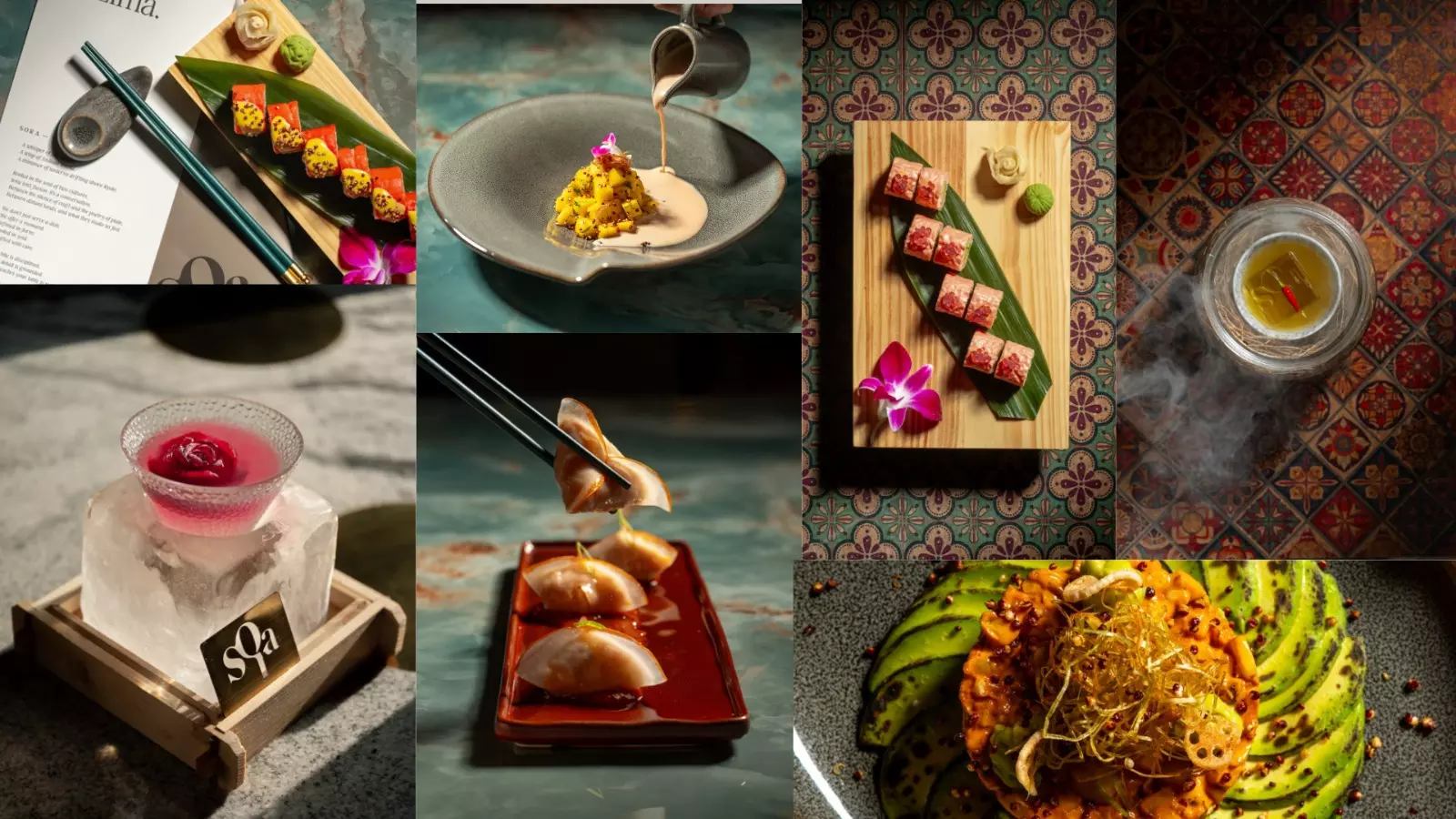
At Sora, perched within the flagship culinary destination The Primo, lunch unfolds like a masterclass that never once feels intimidating. It feels intimate, immersive and quietly revelatory. In a city known for its vegetarian loyalty, CEO Ridhi Choudhary has done something audacious. She has launched an Asian Peruvian restaurant that is largely vegetarian, without compromising on technique, depth or authenticity.
“We thought, why not make it the best vegetarian experience,” she says, adding, “Ahmedabad was missing out on progressive dining. I am a big fan of restaurants that tell a story through food. We did not want to do a typical Indian restaurant. We wanted to create something experiential.”
That experience begins at the bar. The lunch begins with a drink called Hanami, inspired by the Japanese blossom festival. “The taste will be sweet and citrus,” says a hotel spokesperson, as the liquid shifts colour in the glass. “The colour changes every minute.” Mangosteen, raisin fruit and red cucumber come together in a drink that feels playful yet precise. Another cocktail, Aji Eclipse, arrives with instruction. “First have a sip. Second, feel the rosemary smoke. Third, take out the glass.” It is theatre, but purposeful theatre.
Sora’s culinary mentor, chef Sadik Khan, carries three decades of experience and the calm assurance of someone who has seen cuisines travel and transform. “The basic definition of sushi is vinegared rice. The rice has to be vinegared. Either topped, stuffed or rolled with vegetables, egg or seafood, which can be raw, cured or cooked.”
Sora’s culinary mentor, Chef Sadik Khan
At Sora, that philosophy is reinterpreted for a vegetarian table. Bell peppers are cured, carrots are pickled, soy sauce is processed so it enhances rather than overpowers. “If you taste only soy sauce, it is all salty,” explains the chef, adding, “It is just to enhance the flavour, not to dominate it.” The sushi platter arrives with Peruvian influences woven in. A cheese-based Wonka sauce references a town in Peru where women once sold a simple cheese preparation to railroad workers. Culinary history, here, is never far from the plate.
Peru itself becomes a recurring character in the meal. Tiradito Tofu channels Nikkei cuisine, born when Japanese migrants in Peru began cooking with local ingredients. “When the Japanese went to Peru, they took their style and used Peruvian ingredients. They created a whole Nikkei style,” Chef says. Yuzu soy, sesame oil and delicate slicing bring refinement to tofu that feels anything but ordinary.
Then comes Seviche, inspired by Peru’s national dish ceviche. Traditionally made with seafood and leche de tigre, or tiger’s milk, Sora’s version leans on coconut milk and Peruvian chilli. “They call it tiger’s milk because it is an energy booster,” explains chef Sadik. The vegetarian adaptation retains the brightness and punch, proving that structure matters as much as protein.
The education continues with dim sum. Did you know that when the Chinese say dim sum, it means something to touch your heart? And they are not exactly meant to fill your stomach. He traces its origins to the Silk Road and Yum Cha, morning tea accompanied by small bites. At Sora, black garlic dim sum arrives alongside broccoli and pine nut dumplings. The story of how the garlic turns black is a wonder in itself. It is regular garlic kept in humidity of eighty to ninety percent for four to six weeks. All the bitterness goes away. What is left behind is that garlic. The flavour is mellow, almost balsamic, lending a touch of tamarind and smoke.
“We were not sure how people would respond to vegetarian Japanese and Peruvian,” Ridhi admits. “But the response has been very responsible and very encouraging. People are ready to try.”
Even miso soup becomes a conversation about islands and resourcefulness. “Japan is an island. “They stretch every ingredient,” says the chef. He walks us through edamame transforming into soy milk, tofu, miso and soy sauce. It is a reminder that a single bean can create an entire culinary universe.
For Ridhi, that universe fits into a larger vision. Mann and Salwa, her Ahmedabad based hospitality company, has long been known for premium catering. With Sora, she wanted permanence. “We have tried focusing on a menu that feels global but approachable. Even if you are vegetarian, you will enjoy the complete experience.”
While I relish soft bao and Peruvian corn preparations, it becomes clear that Sora is not chasing trends. It is building literacy. It invites diners to rethink sushi, to see dim sum as poetry, to taste garlic without fear. It is less about fusion and more about conversation between cultures.
In a city that thrives on tradition, Sora feels like a gentle provocation. It proves that vegetarian dining can be layered, worldly and deeply rooted in history. And in Chef Sadik’s words, “The more I share, the more I learn.” At Sora, that exchange is the true signature dish.
