The Familiar and Beyond: How Hyderabad Is Rediscovering Telugu Food

The familiar markers remain—gongura, pappu, pulusu, pachadi, kodi kura, seafood and the much-loved repertoire of Andhra and Telangana dishes including the curd rice.
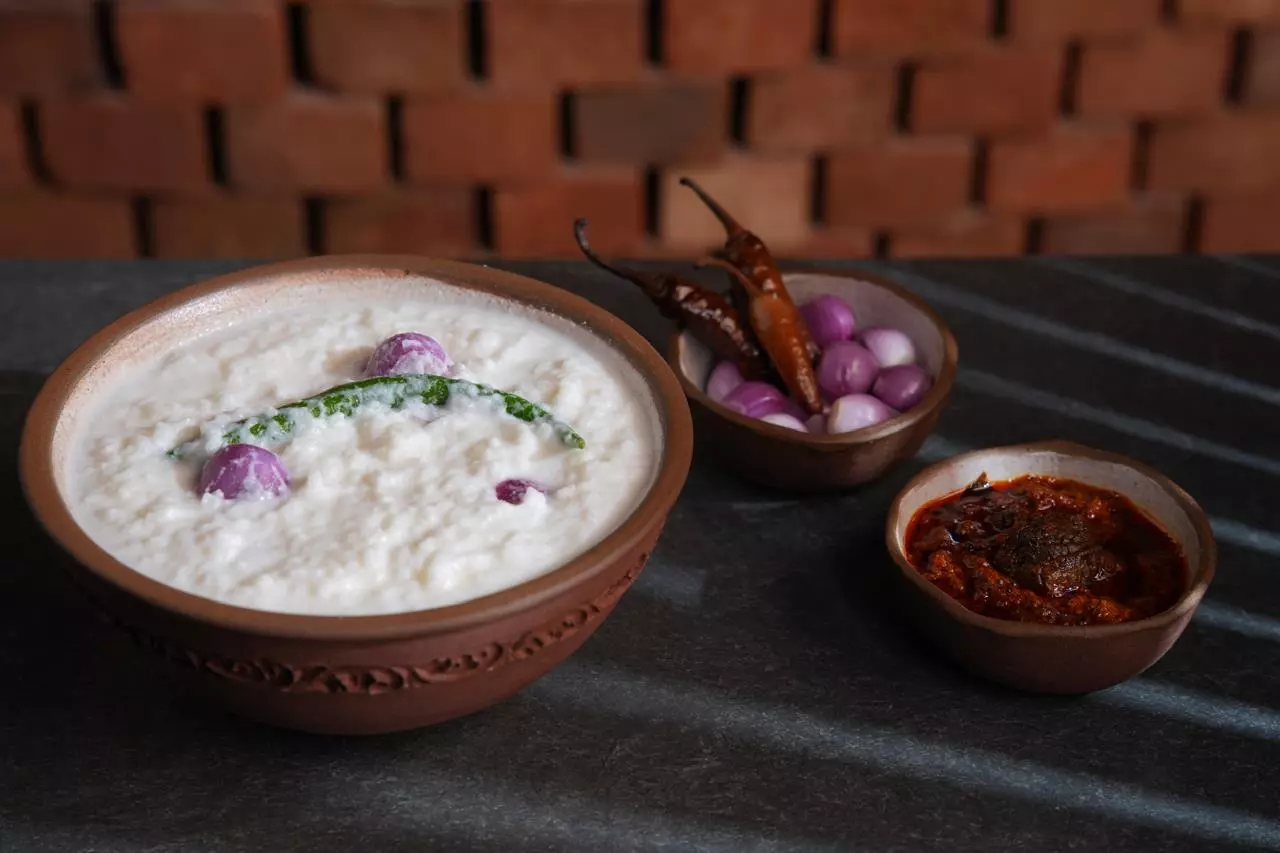
Challannam is perugannam that has waited long enough to be fermented well, just the right amount delicious, not too sour, not too sweet. The fermented yoghurt and rice dish that has always been the soul food of Telugu people is in fact one of the best probiotic food super foods we know today. While the yakult, kombucha etc., have been trending big time, Challannam went about quietly doing its job.
Semiya Perugannam at Anaganaga
When, those of us, who ate Challannam at home just because our elders said it was good, see this familiar dish on the menu of a Telugu restaurant, we acknowledge it with renewed enthusiasm.
There is a quiet shift taking place on Hyderabad’s restaurant tables. Telugu food, of course, was never absent. It has lived comfortably in messes and meals hotels, tiffin centres and family restaurants, and multi-cuisine menus. What is changing is the way restaurants and diners are beginning to look at it.
The familiar markers remain—gongura, pappu, pulusu, pachadi, kodi kura, seafood and the much-loved repertoire of Andhra and Telangana dishes including the curd rice. But alongside them is a growing curiosity about what lies beyond the familiar: recipes that rarely left home kitchens, foods specific to districts and communities, ingredients that have fallen out of everyday use and the stories behind why something was cooked in a particular way.
Chef Pavan Kumar, who opened Avartana at ITC Royal Bengal is now in Hyderabad with the opening team of the premium speciality restaurant – Anaganaga Telugu Culinary Tales. He says “We stopped looking back at our foundational cuisine, and the food that our ancestors produced and ate. Food back then was not just to feed our appetite. There is a lot of science behind why we eat certain food, which is the right season for vegetarian food, and when must one eat meat, how food we eat helps our body generate energy, and stay healthy.”
He vouches for his menu at Anaganaga that is based on atleast three years of research into the food history of Telugu people, and travelling over 40,000 kilometres across Telangana, Rayalaseema and Andhra Pradesh. Telugu food is deeply rooted in ancestral knowledge, but is also defined by centuries of evolution, migration history and postmodern influences. An offshoot of Challannam – the Semiya Perugannam, for example, is originally from Karnataka. The border district of Anantapur adapted it in the early 90s. Since then it’s been a part of their staple go-to home meal, he says.
Telugu Chefs are looking back at history, and into the future as well. Today’s Telugu menus are a reflection of what industry observers see as Hyderabad's growing “confident regionalism”. Chefs and culinary watchers have predicted that Telangana and Andhra food will increasingly move beyond nostalgia towards native grains, indigenous produce and heirloom recipes.
The interesting thing is to see how this shift is happening with many Indian cuisines, and what the fine dining and speciality restaurants across India and beyond are doing with this increasing appetite for regional food. Food historian and popular chef Osama Jalali has built much of his work around precisely this vulnerability of regional food—the recipes that disappear when they stop travelling from one generation to the next. He is known for researching and reviving forgotten Indian recipes, an increasingly important exercise as regional and micro-local cuisines enter mainstream restaurant conversations.
Chef Manish Mehrotra, the Celebrity Indian Chef, who was with Indian Accent before opening his own restaurant, in one of his interviews made the point even more starkly years ago while talking about Indian home cooking. When a grandmother dies, he observed, several things she made can disappear with her unless somebody revives them. Bringing such preparations onto restaurant menus, he argued, can prevent old recipes from simply being lost.
Rajamundry Frozen Milkshake, a play on the region’s speciality rose milk at Tuya
That may be one of the more interesting roles restaurants can play in the current regional-food revival.
Not as museums of “authentic” food, because food has never remained static, but as places where culinary memory can be recorded, cooked and passed forward.
Preservation is not just about freezing a recipe in time. Research can also establish what is essential to a food—its ingredient, technique, balance of flavours, cultural context or even the memory associated with eating it. Interpretation can then begin from knowledge rather than novelty.
Chef Meera Tadimeti, whose popups feature forgotten Telugu recipes, approaches Andhra food through Shadruchulu, the traditional balance of six tastes. Her work is a reminder of how limiting it can be to reduce Telugu cuisine merely to its reputation for chilli and spice, and plays on her memories of food from childhood.
Evidently, nostalgia is a powerful element in the new regional-food conversation. It isn't necessarily nostalgia for a particular dish. It could be the smell of a tempering, food associated with a festival, something a grandmother made, a vegetable rarely cooked anymore or an ingredient a younger diner recognises without ever having encountered it in that form.
Chef Pavan says there are three courses that do not exist in Telugu food – Soups, Starters and Desserts. At Anaganaga, he plays around with them in presenting progressive dishes with Telugu flavours - Siri Dhanyala Salad and Ippapoovu Pudding for instance, and keeps the rest of the menu rooted in nostalgia, tradition, and forgotten recipes like the Pachi Pasupukommula Koora, Putnaaku Pesara Gudala Koora.
On the other hand, restaurants like Theta Theta Telugu and south Indian restaurant Tuya present local food in global language. Founded by Sampath Thummala of Spicy Venue, T3 offers rasam served as consommé, avakaya pappu annam as arancini, giving atrendy twist to regional flavours. At Anaganaga Telugu Culinary Tales - Jeedipappu Kobari Paalu Koora, Sorakaya Perugu Pulusu, Oravakallu Naatu Kodi Iguru and Chukkaku Royyalu share a culinary conversation with Dosa Waffles, Bonda Beignet, Palakova Choux and Curry Leaf Ice Cream.
Perhaps this is where Hyderabad's current Telugu restaurant trend becomes more interesting. For Hyderabad, the next chapter of Telugu food may therefore be as much about rediscovering a cuisine the city already knows, as it is about discovering just how much of it, we never knew at all. It is about appealing to the tastes and curiosity of food lovers from across generations and geography.
