3 Traditional Kerala Recipes to Celebrate the Spirit of Onam

From Sambar and Avial to coconut-rich Thoran, these classic preparations bring the flavours and traditions of Kerala's Onam feast to the table.
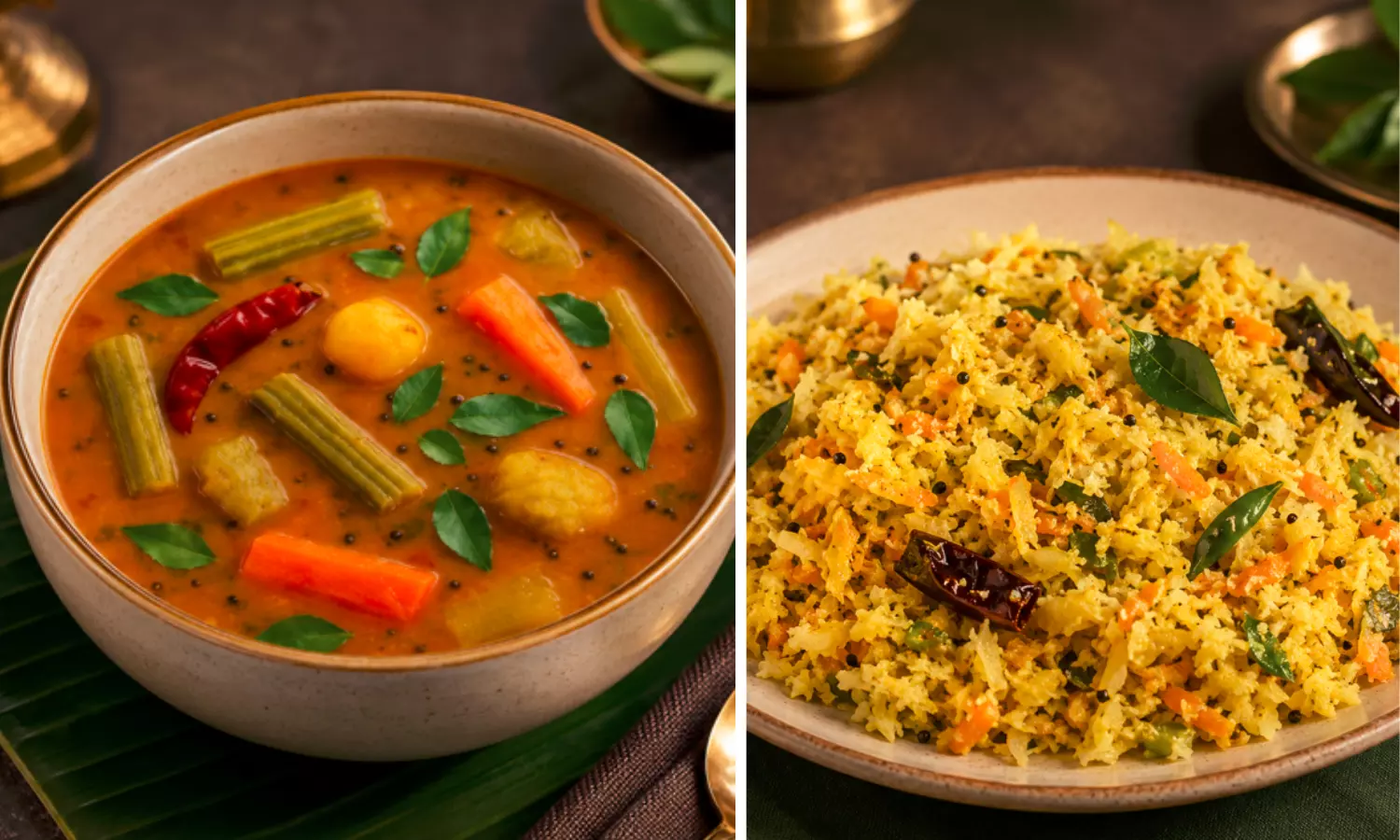
Onam is a celebration where food brings together tradition, community and the abundance of the harvest. At the centre of the festivities is the Sadya, a traditional vegetarian feast served on a banana leaf, with each preparation contributing a distinct flavour, texture and character to the meal. From lentil-based Sambar to vegetable-rich Avial and coconut-infused Thoran, these dishes reflect the simplicity and depth of Kerala's culinary heritage.
The following recipes highlight some of the traditional preparations associated with Kerala cuisine, using vegetables, coconut, curd, lentils and aromatic tempering to create dishes that are an integral part of the festive spread.
Here are three recipes that capture the essence of a Kerala-style Onam feast.
1. Sambar
Ingredients
- 1 cup toor dal
- 1–2 cups mixed vegetables such as drumstick, carrot, pumpkin, brinjal, beans and tomato
- 1 small onion, chopped
- 1 small lemon-sized ball of tamarind
- 2–3 tbsp sambar powder
- ½ tsp turmeric
- Salt to taste
- 2–3 tbsp oil
- Fresh coriander
For tempering
- 1 tsp mustard seeds
- ½ tsp cumin seeds
- 1–2 dried red chillies
- 8–10 curry leaves
- A pinch of asafoetida
Method
- Pressure-cook the toor dal with turmeric and about 2½ cups of water until soft. Mash well.
- Cook the vegetables, onion and tomato with salt and a little turmeric until tender.
- Soak the tamarind in warm water for 10–15 minutes and extract the pulp.
- Add the tamarind water and sambar powder to the vegetables. Simmer for 8–10 minutes.
- Add the mashed dal and adjust the consistency with water. Simmer for another 5–7 minutes.
- Heat oil and crackle the mustard and cumin seeds. Add the dried chillies, curry leaves and asafoetida.
- Pour the tempering over the sambar and finish with chopped coriander.
- Let it rest for five minutes before serving.
2. Avial
ZIngredients
- Raw banana – 100 g
- Carrot – 100 g
- Drumstick – 100 g
- French beans – 100 g
- Ash gourd – 100 g
- Yam – 100 g
- Cucumber – 100 g
- Green chillies – 3–4
- Grated coconut – 150 g
- Cumin seeds – 1 tsp
- Turmeric powder – ½ tsp
- Curd – 200 g
- Coconut oil – 30 ml
- Curry leaves – 10–12
- Salt to taste
Method
- Cut all the vegetables into uniform 2-inch × ½-inch strips.
- Cook the vegetables with turmeric, salt and a small amount of water, keeping them firm rather than overcooking them.
- Grind the coconut, green chillies and cumin with a little water into a coarse paste.
- Add the coconut mixture to the cooked vegetables and simmer for 3–4 minutes.
- Beat the curd and gently mix it in over low heat. Do not boil after adding the curd.
- Finish with coconut oil and curry leaves.
- Check the seasoning and serve hot or warm.
3. Cabbage-Carrot Thoran
Ingredients
- Cabbage, carrot or other vegetables – 500 g, finely chopped
- Grated coconut – ¾ cup
- Green chillies – 2–3, chopped
- Shallots – 4–5, chopped
- Garlic – 1–2 cloves, optional
- Turmeric powder – ¼ tsp
- Cumin seeds – ½ tsp
- Salt to taste
- Coconut oil – 1½ tbsp
For tempering
- Mustard seeds – ½ tsp
- Cumin seeds – ¼ tsp
- Dried red chillies – 2
- Curry leaves – 1 sprig
Method
- Coarsely crush or grind the coconut, green chillies, shallots, garlic, cumin and turmeric. The mixture should remain coarse rather than becoming a smooth paste.
- Heat coconut oil and add the mustard seeds. Once they splutter, add cumin, dried red chillies and curry leaves.
- Add the chopped vegetables and salt. Stir well.
- Cover and cook over low to medium heat until the vegetables are just tender. Avoid adding water unless necessary.
- Add the coconut mixture and gently combine.
- Cook uncovered for 2–3 minutes, stirring occasionally, until the coconut is cooked and the Thoran is relatively dry.
- Finish with a small drizzle of coconut oil and serve.
Conclusion
The beauty of a traditional Onam Sadya lies in the way simple ingredients come together to create a meal that is both diverse and harmonious. Coconut, seasonal vegetables, lentils, curd, and aromatic spices form the foundation of several dishes, while traditional cooking techniques preserve the distinct character of each preparation. Recipes like these offer a glimpse into the culinary traditions that have made Kerala cuisine an integral part of the Onam celebration.
This article s authored by Chef Sandeep Chaudhary, ibis Delhi Aerocity