From Irani Chai to Indian Speciality Coffee, Hyderabad’s Taste Is Changing

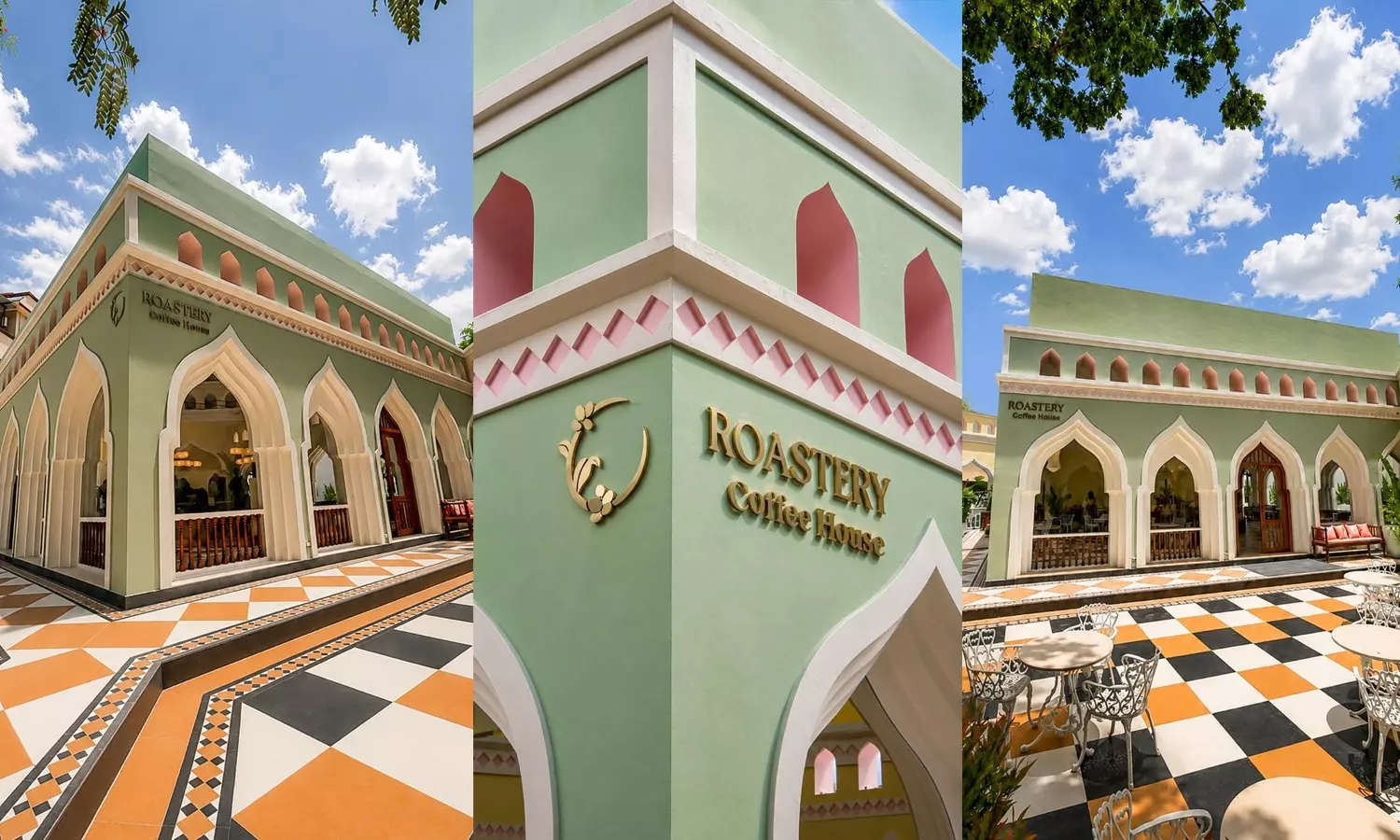
With its 15th café in Filmnagar, Roastery Coffee House is tapping into a Hyderabad where coffee houses are becoming places to eat, linger, work and soak in the design, rather than simply stop by for a cup of coffee.
There was a time when going to a café in Hyderabad meant sitting down with a glass of Irani chai, with perhaps something to eat on the side and staying long enough to finish a conversation. Coffee was around, of course, but chai was definitely the city’s beverage of choice.
But…that has changed, now!
Walk into a café today and the coffee is only part of the reason people are there. The food matters. The design matters. The music matters. So does the corner where you sit, the way the staff remembers you and increasingly, whether the place gives you a reason to stay a little longer.
Roastery Coffee House’s newest outlet in Filmnagar is a good example of that shift. The brand’s 15th café in Hyderabad is not merely another address serving speciality coffee. Inspired by city’s Taramati Baradari, the space brings together heritage-inspired architecture, Kalamkari upholstery and a custom Kalamkari artwork depicting coffee flowers and cherries. The result is a café that feels consciously rooted in its surroundings while still belonging to the new Hyderabad of speciality coffee and design-led dining.
Nishant Sinha,Founder,Roastery Coffee House.
For Nishant Sinha, founder of Roastery Coffee House, this evolution was perhaps more natural than it may seem. “Since chai was already popular here back then, people had the habit of going to cafés and drinking tea of that particular era. As the city grew, disposable incomes grew and it also became a global city because of the IT boom and increased exposure to travel. Adopting coffee became easier. Hence, the conversion from tea to coffee was natural and easier.”
That conversion is visible in the way Hyderabad drinks coffee today. Sinha says people are drinking more coffee, particularly black coffee, driven partly by health concerns, but also by changing tastes and the environments in which coffee is being served. However, most importantly, consumers are finally consuming quality coffee sourced from the best of our coffee-growing estates in Indiam including Chikmagalur, Coorg and Tamil Nadu. The brand directly works with coffee farmers while ensuring they get a fair or even premium prices, the brand champions sustainable farming.
There is a certain irony to it. The café-going habit was already deeply embedded in the city. What changed was what people expected when they walked through the door.
“As the city evolved and became more global, shifting to beautifully designed cafés with a great atmosphere, serving great coffee, was natural,” he says.
Roastery’s own journey in Hyderabad mirrors that change. From a single café to 15 outlets today, Sinha believes the formula has been relatively straightforward: “High-quality Indian speciality coffee served with great hospitality in modern Indian architecture.”
At the Filmnagar outlet, that philosophy is easy to see. The coffee remains central, but the surroundings give it context. The Kalamkari references, particularly the artwork built around coffee flowers and cherries, add another layer to the experience. It is heritage without turning the café into a museum, and modern design without making the space feel disconnected from Hyderabad.
And then there is the food.
Sinha is refreshingly direct about Roastery’s approach. “Our food is not authentic but it’s tasty. We don’t follow a rulebook in crafting our food, but we always value taste first.”
That philosophy shows up in some of the café’s popular dishes. The club sandwich, for instance, is grilled rather than toasted. The zucchini fries are not exactly traditional fries, and even the white sauce pasta is made without flour. There is a willingness to take familiar café food and tweak it without becoming overly concerned about whether it fits a particular rulebook.
The same applies to the drinks. Roastery’s trademarked cranberry coffee has become one of its signatures, and Sinha points out that variations of the drink are now served elsewhere under different names.
It is this combination of familiarity and experimentation that perhaps explains why cafés have become such an important part of the city’s social landscape.
But there is another element that is harder to photograph.
“In fact, if you go back in history and observe all the world’s oldest cafés located in different parts of Europe, you will find cafés never just served beverages and pre-cooked food,” Sinha says. “Cafés always served fresh and comfort food, great beverages in well-designed spaces, and that’s how cafés started to function.”
According to him, somewhere along the way, the idea of what a café should be became narrower, influenced by a particular model of café culture that spread globally. Now, he believes, the pendulum is swinging back.
“I am glad that era is gone, and now people are bringing back the same old way of opening a café, which is about great food, beverages, hospitality and architecture. That’s what the future is all about.”
That future also explains why a beautifully designed café cannot rely on Instagram alone.
The Filmnagar space is certainly made for photographs, with its architectural references and Kalamkari detailing, but Sinha believes the real test begins after the picture has been taken.
He recalls the philosophy of hotelier M.S. Oberoi, who believed that even a hotel made of gold would fail if the service was not efficient. Sinha applies the same logic to Roastery.
“We do create beautiful-looking, modern Indian-designed cafés, but we focus more on hospitality, and that’s how we attract a lot of repeat guests.”
That may be the more interesting story behind the 15th outlet. The number itself is impressive, but it is what the number represents that matters more. Hyderabad is no longer simply adopting coffee. It is developing its own café culture around it.
The new Filmnagar Roastery fits neatly into that transition. There is speciality coffee for those who care about what is in the cup, food for those who arrive hungry, design for those who notice their surroundings and enough comfort to make staying longer feel almost inevitable.
The city may still have its Irani chai. It probably always will. But Hyderabad has clearly made room for another kind of café conversation, one that begins with coffee and carries on well beyond it.