The Afghan Chef Who Found Home in Indian Cuisine

An Afghan refugee who grew up on Bollywood films now runs one of Europe’s most celebrated Indian restaurant brands in Denmark.
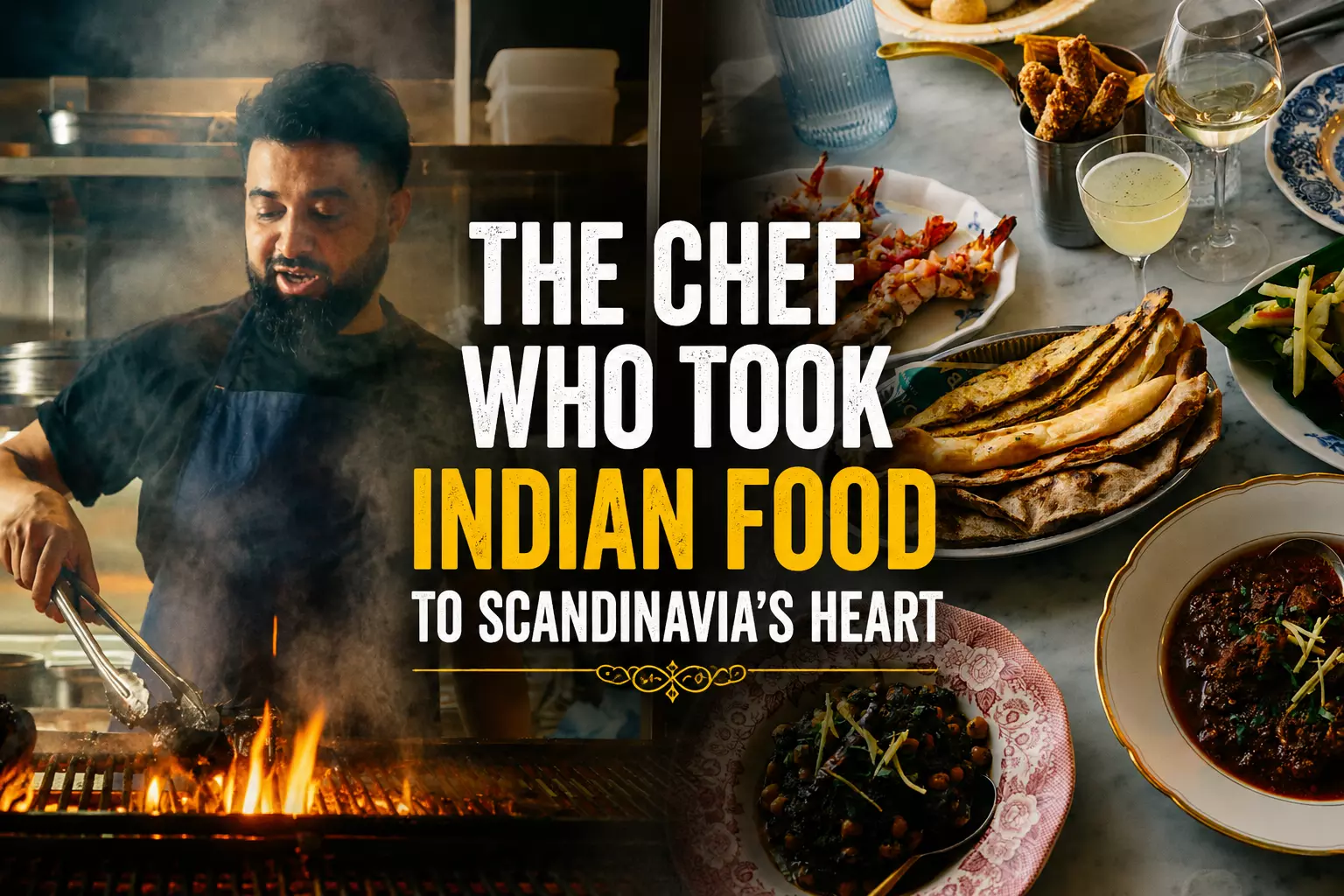
For Chef Enayatullah Safi, Indian food was never just about recipes or restaurants. Long before he opened Dhaba Indian Kitchen in Denmark, India had already entered his life through Bollywood films, memories of warmth amid war, and the deep cultural similarities between Afghanistan and India.
Long before Chef Enayatullah Safi became one of Europe’s most awarded Indian food chefs, India existed for him as flickering images on a television screen in war-torn Afghanistan.
Every Friday evening, Bollywood films would play on national television while violence unfolded outside his home. “Outside of the window, there was war, there were people dying,” Safi recalls. “But for us to escape from all of that, we had Bollywood movies.”
He was just 13 when his family fled Afghanistan and rebuilt their lives in Denmark. But somewhere between the songs, the colours and the sprawling family scenes of Indian cinema, India had already begun to feel strangely familiar. “The closest culture to ours was Bollywood culture,” he says. “It showcased food, hospitality and warmth.”
Years later, after taking odd jobs in restaurants while studying in Denmark, Safi travelled through India for the first time. Delhi, Mumbai and Jaipur changed the way he looked at food forever. “I came back asking why nobody was telling the real story of Indian food in Copenhagen,” he says.
At the time, Indian cuisine in Denmark was still largely boxed into predictable curries and butter chicken. Safi felt something was missing. The India he had experienced was layered, regional and deeply emotional. In 2016, he decided to build Dhaba Indian Kitchen around that idea.
Today, Dhaba has grown into a seven restaurant brand in Denmark, complete with bestselling cookbooks, a spice line and national television appearances. Yet Safi still speaks less like a restaurateur and more like a cultural archivist trying to preserve stories through food.
“The bestseller is still butter chicken,” he says with a laugh. “But my mission is to make people taste more than just butter chicken.”
Instead of conventional ordering, many of his restaurants encourage guests to try multiple dishes in a thali-style experience. Laal maas from Rajasthan, galouti kebab from Lucknow, regional vegetarian dishes and smoky tandoor cooked meats arrive together so diners can understand the diversity of Indian cuisine.
“Every hundred kilometres in India, the cuisine changes,” Safi says. “The people change, the climate changes, the spices change.”
But what fascinates him most is India’s vegetarian food culture. Safi says some of his most memorable meals in India involved no meat at all. “Whenever I am in India, my favourite thing is to be vegetarian,” he says. “The techniques and the way vegetables are cooked here are unlike anywhere else.”
He remembers taking his young nephew, raised in Denmark, to a vegetarian restaurant in India. The boy assumed vegetarian food would mean salad. Instead, the meal transformed his understanding of what vegetarian cuisine could be. “He came out saying he could eat like this every day,” Safi recalls.
That ability to surprise people through food is central to Safi’s philosophy. He believes Indian cuisine succeeds internationally not because of heat or richness, but because of its depth. “People think Indian food is only about chilli,” he says. “But even without the chilli, there are so many layers because of the spices, techniques and traditions.”
For Safi, food and hospitality remain inseparable. He often uses the Afghan phrase ‘Mehman Nawazi’ while describing the dining experience at Dhaba. Guests are encouraged to eat generously and feel at home. Employees travel with him to India to understand not just the cuisine, but the culture behind it.
His relationship with India has now moved far beyond restaurants. Safi has cooked with Denmark’s Prime Minister during diplomatic events, travelled with Danish delegations to India and hosted dinners designed to strengthen Indo Danish ties during politically sensitive moments.
“I call it naan diplomacy sometimes,” he says, adding, “Breaking bread together helps people understand each other.”
Despite spending decades in Denmark, Safi still finds himself emotionally overwhelmed by the warmth he receives in India, especially when people discover he is Afghan. “There’s always this instant connection,” he says. “So much love.”
Perhaps that is why his story resonates beyond food. Chef Enayatullah Safi did not inherit Indian cuisine through family tradition or geography. He arrived at it through memory, migration, cinema, curiosity and longing. Somewhere between Kabul, Copenhagen and Jaipur, Indian food stopped being something he admired from afar and became part of his identity itself.
