Authenticity on a Plate: Inside Baan Phadthai’s Hyderabad Debut

From Bangkok’s bustling backstreets to Hyderabad’s Hitech City, Baan Phadthai brings authentic Thai street food, cherished family flavours and an uncompromising commitment to doing things the Thai way.
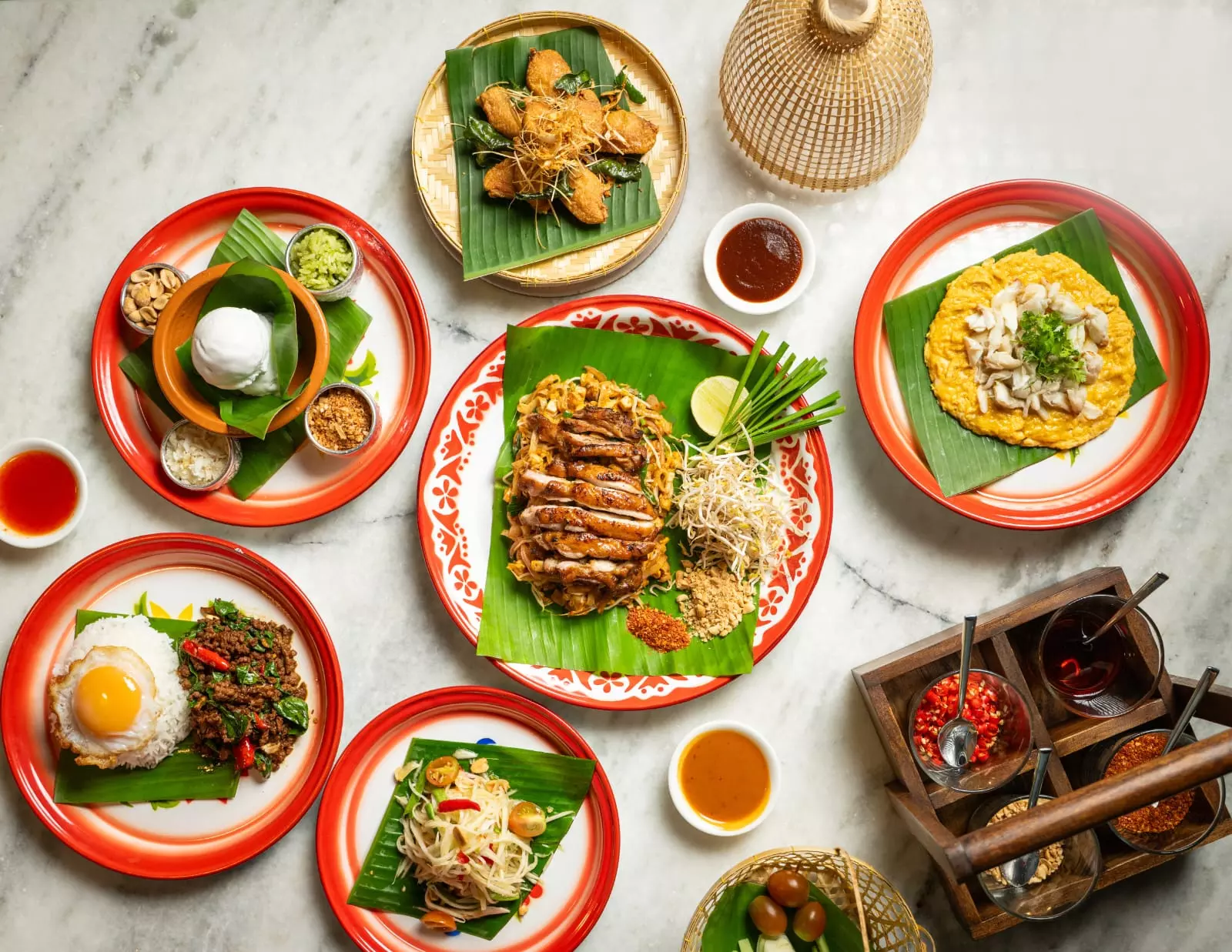
On a busy street in Hitech City, surrounded by glass towers, corporate offices and the relentless pace of Hyderabad’s technology district, the last thing you expect to find is Bangkok.
Yet the transformation begins almost as soon as you step into Baan Phadthai. A faint strain of Thai music drifts through the air. Conversations unfold over steaming bowls of flat noodles and fragrant curries. Deep blue walls, colourful artwork and the narrow, intimate layout evoke the feeling of a Bangkok shophouse tucked away in one of the city’s bustling backstreets.
For the founders behind Baan Phadthai’s India journey, that sense of transport is entirely intentional.
“Bangkok is chaotic,” says Sid Mewara, co-founder and CMO. “You smell the food, you hear the conversation and then you get into the mood of it. That’s what we wanted to recreate. It’s visceral.”
The restaurant’s Hyderabad opening marks the latest chapter for the Michelin Guide-recognised Bangkok brand, following successful launches in Bengaluru. But for Rajesh Rebala, co-founder and CEO, the story began long before the restaurant itself.
“We love food, but we are not chefs,” he says. “The idea was simple. Let’s bring the best food from around the world to India and not change a thing about how it’s made.”
That philosophy has shaped every decision. Rather than adapting dishes to suit local expectations, the team chose a different approach. “If there are 100 dishes in Bangkok and Indian diners will love 20 of them, our job is to pick the 20,” Rajesh explains, adding, “Not take all 100 and change them.” Authenticity, for the founders, is not a marketing word. It is an obsession.
The signature Pad Thai remains the restaurant’s centerpiece, prepared using the same celebrated sauce that made the Bangkok original famous. Built around 18 carefully balanced ingredients, it delivers the sweet, tangy and savoury flavours that define the dish.
“That sauce is the speciality. Nobody can recreate it. It took years to perfect,” says Rajesh.
To ensure consistency, key ingredients including tamarind, chilli jam and pantry essentials are sourced directly from Thailand. Chefs undergo training in Bangkok and regularly work alongside visiting members of the original Thai culinary team.
“We don’t modify anything. We keep the recipe OG,” says Rajesh. The statement is delivered with a laugh, but the commitment behind it is serious.
“We are obsessed with consistency. Ultimately, customers care about taste. Nothing else matters.” That commitment extends even to ingredients many diners may never notice.
“Tamarind, for example, is different in Thailand,” Rajesh explains, adding. “The acidity and the way it tastes on your tongue are different. We obsess over those small things so the experience remains the same.”
For Hyderabad diners, the menu offers a window into the everyday food culture of Thailand rather than the polished restaurant versions that often dominate international perceptions of Thai cuisine.
“This is street-style food,” Rajesh says. “Casual Thai food. This is what people actually eat.”
Alongside the Pad Thai, there is Krapao, a beloved Thai staple of minced meat or tofu with rice and basil that Rajesh describes as ‘a Thai biryani’. There is the refreshing Som Tam salad, Mushroom Satay and a growing collection of dishes developed specifically for Indian diners.
One of Sid’s personal favourites is Pak Kati, a humble vegetable dish that rarely appears on restaurant menus even in Thailand.
“You will never find it in a restaurant there. It’s a home dish. When families make elaborate curries and somebody isn’t feeling well, they cook something lighter like this,” he says.
The dish perfectly captures what the founders hope diners will discover about Thai food. Beyond the familiar curries lies a cuisine shaped by regional traditions, home cooking and remarkable complexity.
The challenge becomes even greater when catering to Indian vegetarian diners. “Thai and vegetarian are almost poles apart,” Sid says. “In Thailand, even vegetables are usually cooked with fish sauce. They don’t really understand the concept of veganism.”
Rather than compromise on flavour, the team spent considerable time developing alternatives. Their solution came in the form of a vegan fish sauce sourced from Thailand.
“Almost every Thai dish relies on fish sauce as a base flavour,” Sid explains, adding, “We worked hard to find a vegan version that could deliver the same depth.”
The result has become one of the restaurant’s quiet success stories, allowing vegetarian diners to experience authentic flavour profiles without sacrificing dietary preferences.
If authenticity drives the food, hospitality shapes the experience. With spicy dishes, guests receive a basket filled with fresh cabbage, cucumber and raw vegetables. It is a simple Thai tradition that offers relief from the heat while adding texture and freshness to every bite.
Even the details beyond the plate reflect the founders’ fascination with Thai culture. In Bengaluru, guests who make reservations receive a link to a specially curated Spotify playlist before their visit, introducing them to Thai music before they step through the door.
“We want people to get into the mood before they arrive,” says Rajesh. Around the restaurant, quirky artwork, vintage-inspired signs and custom-designed accessories tell stories about contemporary Thailand. Some guests love them so much they occasionally take them home.
“We have lost plenty of baskets,” Sid says with a smile. The humour masks a deeper purpose. Every detail, from the music to the décor to the ingredients, exists to create a sense of place.
With Hyderabad’s dining scene evolving, international brands are increasingly looking towards the city. But Baan Phadthai’s arrival is an invitation to experience Thai food not as an interpretation, but as a living culture. To understand why a bowl of Pad Thai depends on an 18-ingredient sauce, why fish sauce matters, why a basket of cabbage accompanies spicy dishes and why some of the most memorable meals are the ones found not in fine-dining restaurants but in bustling neighbourhood streets.
For a few hours inside Baan Phadthai, somewhere between the aroma of wok-fried noodles and the sound of Thai conversations floating through the speakers, Bangkok suddenly feels much closer to Hyderabad.
