To Fill the Stomach or the Soul? A Wellness Chef’s Answer Lies in the Balance

In a world of fad diets and fast food, Atmantan’s chefs craft every meal as a mindful ritual—guided by naturopathy, tradition, and the belief that true nourishment realigns body and spirit.
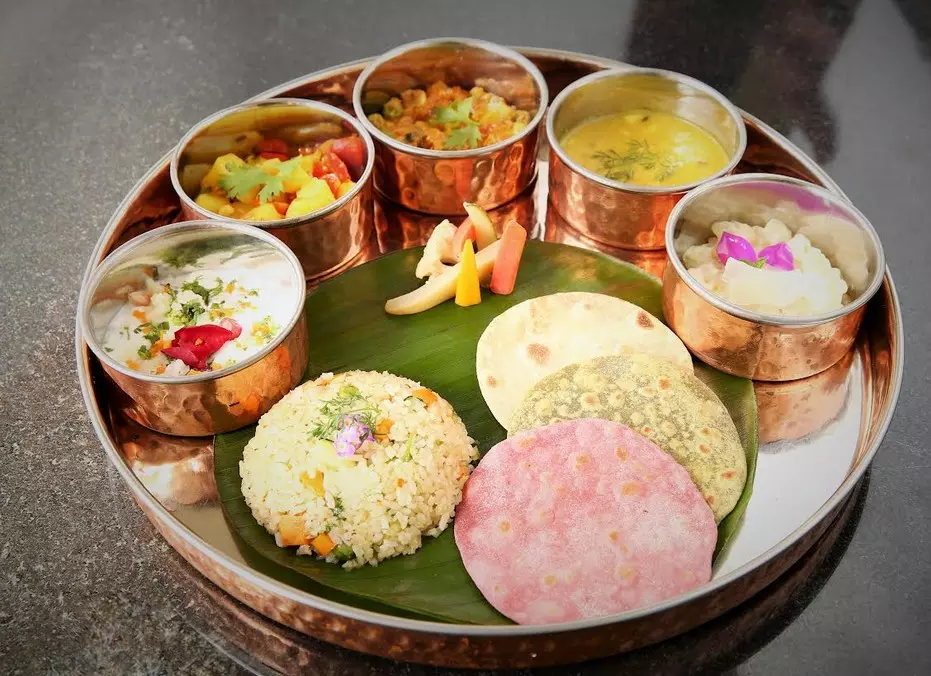
At the heart of wellness cuisine lies a quiet revolution—one that is built not on indulgence, but on intention. It is a cuisine that doesn’t just nourish the body but realigns it, gently correcting imbalances, working in synergy with nature, and reconnecting people with the wisdom of mindful eating. This is the philosophy that guides chefs in their daily rituals at Atmantan Wellness, where food is treated not as luxury, but as medicine.
Chefs, who hold global experience from and some leading wellness institutions, have found their true calling in the world of therapeutic cooking. “When you cook with fat and protein, it’s easy to create flavour,” says a chef. “But when you remove oil, salt, sugar, and spice, the challenge becomes art. That’s where I find meaning.”
At the core of this practice is naturopathy—not just as a diet but as a way of life. The menus at this wellness center are intricately planned three months in advance, beginning with seeds planted at the on-site organic farm. “What you eat today was conceptualised 90 days ago,” explains a chef. “Every ingredient is grown, harvested, and used with intention. There are no packet foods in my kitchen. No artificial preservatives. We use only three spices—turmeric, coriander, and cumin.”
And even these are used sparingly. Instead of relying on typical seasoning, the chef coaxes natural flavours through technique: “If you cook bell pepper at 190°C, it releases sweetness. Spinach is high in natural sodium. Mustard becomes pungent if soaked in vinegar. Food has its own body—you just need to understand time and temperature.”
The kitchen at Atmantan functions more like an apothecary. Dishes are developed after rigorous R&D, then approved by in-house doctors based on a guest’s body type and dietary needs. “We work with synergy. Guests are assessed individually. Only if the doctor approves extra protein or fat do we offer more,” says a chef. “You won’t eat two paracetamols, so why overeat when your body doesn’t need it?” he asks, matter-of-factly, smiling.
The emphasis on mindful eating is profound. Guests are gently guided to eat not based on desire, but on actual physical need. “We don’t realise how much our body requires. That’s why people eat with targets—2 rotis, 1 bowl rice—rather than listening to their body. But once you start doing that, you will find the food we serve is sufficient.”
At mealtimes, the spread may appear minimal, but it’s deeply curated. A roti made from raw banana or cassava flour is served with a turmeric-dusted vegetable curry, and perhaps a mustard sauce made fresh that morning. Coconut flour, almond flour, spinach juice, beetroot purée—every element is chosen for its nutritional value and healing property.
And forget store-bought sauces or spice mixes, even the soya sauce is made in-house. “Why bring in preservatives when natural fermentation and timing can do the job? I trust old techniques, handwritten recipes, and small-batch preparations,” says another chef.
The desserts are equally therapeutic. A date-and-raw-banana pudding sweetened with jaggery or honey is both gluten-free and sugar-free. Breads are made using Isabgol (psyllium husk) instead of yeast—another example of using nature’s binders over artificial agents.
The wellness philosophy extends beyond the plate. Guests are encouraged to follow a structured lifestyle—waking early, practicing yoga, and eating meals at prescribed times. It’s a complete ecosystem. The food is just one part. When you live in harmony with your body’s clock, food becomes even more effective.
The food philosophy relies heavily on microgreens, which they call “the growing energy of food.” These tiny sprouts are included in nearly every meal for their high nutrient density and regenerative properties. “A baby heals faster than an adult because of the energy of growth. Microgreens work the same way inside us,” explains a chef.
Importantly, this is not a diet of deprivation, but of discovery. “There are two ways to eat—to fill the stomach or the heart. Here, we focus on the stomach. And if done right, even that can be deeply satisfying,” reasons the chef.
Every recipe is logged, portioned, and adhered to with precision. Oil usage in the entire kitchen, for instance, is limited to half a litre a day. Salt, too, is tightly controlled. Chefs here aren’t just making food, they are preparing medicine and hence they are trained to respect that responsibility.
In this kitchen, food is not fast, trendy, or commodified. It is slow, deeply considered, and sacred. Tamasic food (the Ayurvedic concept of foods that cause lethargy or aggression), is completely eliminated. “The focus is on sattvic and rajasic elements, offering raw diets only if the guest’s body can handle it. Every menu is personal, not prescriptive.
In a world increasingly overrun by ultra-processed meals and fads, the approach to diet feels radical in its simplicity. It’s a return to wisdom—of knowing that food isn’t just about taste or trend, but about tuning into what your body truly needs.
At Amantan, wellness is not served on a silver platter, but on a thoughtfully crafted, nature-bound thali that invites healing with every bite.
