Chef Yugank Chopra’s Contemporary Indian Cuisine Finds Inspiration in Regional Flavours and Global Techniques

The experience offered a glimpse into his approach to contemporary Indian cuisine, where regional ingredients and memories are transformed into thoughtful culinary narratives.
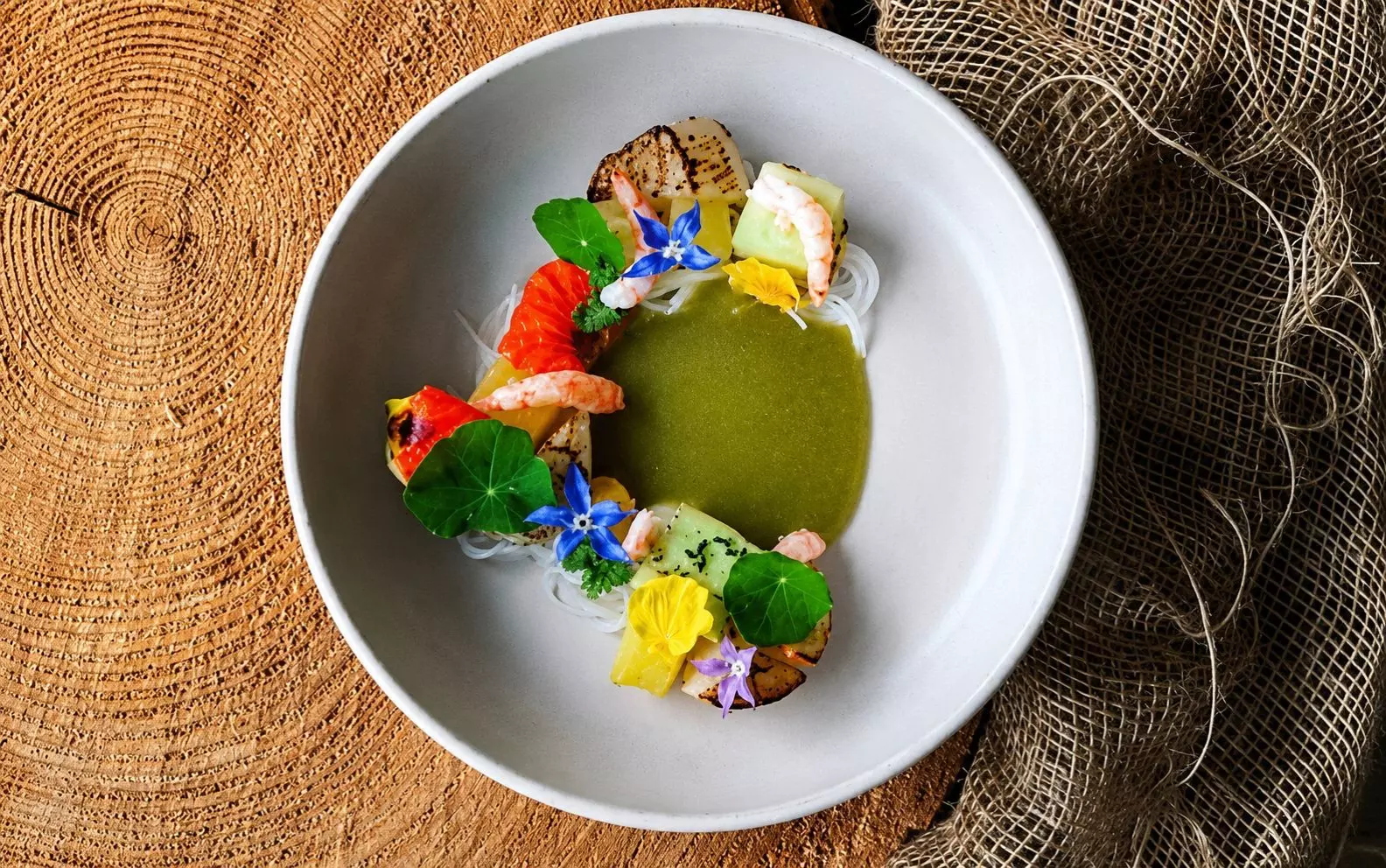
I was recently invited to a closed-door tasting that brought together chefs with distinct food philosophies. Through thoughtfully curated set menus and inspirations unfolding course by course, we were presented with a plate resembling a water garden - a beautiful celebration of the humble kairi by Chef Yugank. The experience offered a glimpse into his approach to contemporary Indian cuisine, where regional ingredients and memories are transformed into thoughtful culinary narratives.
Chef Yugank Chopra
For Chef Yugank Chopra, contemporary Indian cuisine is not about reinventing traditional dishes; it is about refining them while preserving their authenticity, cultural identity, and emotional connection. Born in Old Delhi and trained across Edinburgh, London, and Canada, Yugank has spent years building a culinary philosophy that combines regional Indian storytelling with global culinary techniques and modern presentation.
Today, his work focuses heavily on elevating Indian cuisine through texture, balance, presentation, and dining experience while ensuring the original soul of the dish remains untouched.
One of the dishes that reflects this philosophy most clearly is his creation called 'Aam Panna Pond,' a contemporary interpretation inspired by the traditional Indian summer drink aam panna.
Rather than treating the dish as simple modern plating, Yugank approached it as a sensory experience rooted in nostalgia and regional memory. The dish uses the familiar tanginess and smokiness associated with aam panna but presents it through refined textures, layered presentation, and contemporary culinary execution inspired by techniques learned during his years abroad.
“The idea was never to modernise Indian food for the sake of presentation,” says Yugank Chopra. “I wanted the dish to still feel emotionally familiar while creating a cleaner, more refined experience around it.”
Chef Yugank Chopra
Born in Old Delhi, Yugank grew up surrounded by Mughlai flavours, spice markets, street food traditions, and deeply layered regional influences. His professional culinary journey, however, began later in Gurgaon while he was still a hospitality student.
An early breakthrough came when one of his kebab recipes was published in a newspaper supplement, earning him the title “The Kebab King.” The recognition encouraged him to pursue cooking professionally and eventually led him toward international hospitality.
He later moved to Edinburgh and London, where he worked with established chefs and hospitality brands, including Jumeirah Lowndes Hotel. European kitchens introduced him to discipline, technical cooking, plating aesthetics, precision, and refined execution.
According to Yugank, these experiences became foundational in shaping his creative process as a chef.
“European kitchens taught me structure, discipline, and respect for ingredients,” he says. “Everything had purpose — textures, balance, plating, timing, and flavour.”
His journey later continued in Canada, where he worked with celebrated chef Martin Kouprie and establishments including Pangaea, Rocky Mountaineer, and The Indian Pantry until the pandemic period.
Canada exposed him to ingredient-driven cuisine, refined hospitality systems, and multicultural dining environments. Yet despite years spent in global kitchens, Yugank says it was his repeated visits back to India that truly transformed his understanding of food.
“Every time I came back to India, I started observing regional cuisine much more deeply,” he says. “I became fascinated with the stories behind dishes, local ingredients, forgotten techniques, spice combinations, and culinary history.”
Over time, he began using everything he had learned internationally as tools to refine Indian cuisine instead of changing it completely.
Initially associated with the modern Indian cuisine movement, Yugank’s work gradually shifted toward refining regional Indian dishes without compromising authenticity.
“My work is more about enhancing texture, presentation, balance, and overall experience while respecting where the dish comes from,” he explains. “I like introducing subtle present-day techniques rather than completely reinventing traditional dishes.”
This philosophy can be seen across many of his creations, where familiar Indian flavours are presented with cleaner execution and contemporary aesthetics while retaining their regional identity.
A major influence behind Yugank’s culinary thinking has been renowned food historian and author Pushpesh Pant.
“Pushpesh Sir made me understand that Indian cuisine is not just food,” says Yugank. “It is culture, geography, emotion, migration, and history combined together.”
Today, Yugank’s cuisine reflects every stage of his journey — the heritage of Old Delhi, the precision of European kitchens, the refinement of Canadian hospitality, and the emotional depth of Indian regional cuisine.
For him, the future of Indian cuisine lies not in changing its identity, but in presenting it with greater refinement, clarity, and respect.
“Indian cuisine already has depth and richness,” he says. “The goal is to refine the experience around it while keeping its authenticity alive.”
