Can Indian Cacao Become the Next Indian Specialty Ingredient?

At Bon Fiction, we ferment and dry wet beans from our own farms and the growers we work with near the Godavari.
Ask someone where fine chocolate comes from and they may name Belgium or Switzerland, or a cacao origin in South America. India rarely enters the conversation. Yet cacao grows here. Can we build the care and demand that make its flavour recognised?
My answer is yes, but calling cacao “Indian” will not be enough. A specialty ingredient earns that description when its origin matters to the eating experience, its quality can be repeated, and the people producing it have a reason to keep improving it.
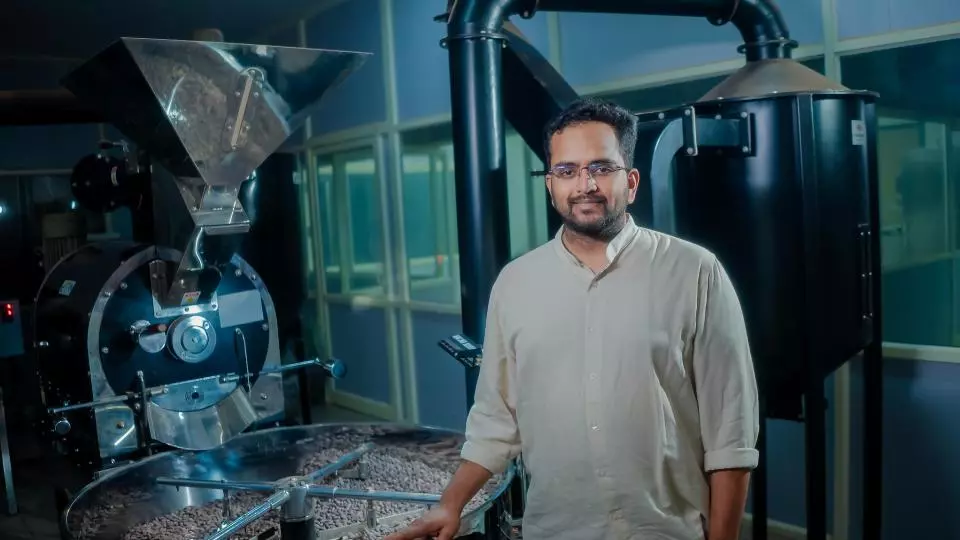
Akhil Grandhi, Co-founder, Bon Fiction.
In the Godavari region of Andhra Pradesh, cacao on our farms and those of the growers we work with grows beneath coconut palms. Its flavour is shaped by planting material, soil, climate, harvest timing and the decisions made after the pods are opened. Even neighbouring farms can give us beans with different potential. Across India, other cacao-growing regions have their own conditions and flavour potential. “Indian cacao” is a starting point, not a single flavour. We need to discover what each origin can express.
That potential is easy to lose. Once beans are removed from the pod, fermentation and drying shape their flavour. A rushed or uneven process can obscure what made the crop distinctive. Roasting and chocolate making can bring out that character, but they cannot invent good flavour in a bean that has been mishandled.
At Bon Fiction, we ferment and dry wet beans from our own farms and the growers we work with near the Godavari. We then roast and make the chocolate ourselves. This has taught us to judge cacao as an agricultural product, not just an ingredient delivered to a factory. We adjust our work to each harvest and aim for chocolate that is expressive and dependable. Some acidity or citrus brightness is a natural part of cacao’s profile. Our job is to understand and balance it, not erase it.
Our work with Godavari-origin cacao offers one example. Beans fermented and dried by Bon Fiction reached the 2025 Cacao of Excellence Best 50 and received a Bronze award for Asia and the Pacific. That recognised the grower and the care taken after harvest. We aim to repeat that care with every harvest.
Chocolate is an indulgence. For me, a craft bar made with fine-flavour cacao is a more rewarding indulgence than typical sweet-shop mithai, where sweetness takes centre stage. In chocolate, the cacao’s flavour should lead and sweetness should lift it. Yet today, the type or source of sugar often becomes the headline and Indian cacao an afterthought. People can research sugars and choose what suits them, but switching sugars does not make a bar “sugar-free” or automatically healthy if it still contains sugar. I care more about ingredient quality and careful chocolate making: bringing out good cacao notes, reducing unwanted ones and avoiding chemically treated ingredients.
There is a risk for Indian cacao when the bar is known mainly for its sugar. Buyers may no longer notice where its cacao was grown or what it tastes like. The beans can then be replaced by cheaper ones from outside India without changing the main selling point. That weakens the value of the farmer’s work, post-harvest care and the maker’s effort to express an origin’s flavour.
Building a specialty market in India also takes more than a good story. Farmers need sound agronomy and a commercial reward for healthy, ripe pods. Post-harvest teams need facilities, training and records that make fermentation and drying repeatable. Makers need to taste and describe differences between lots. Traceability should connect a chocolate to the people and place behind it. Quality must be priced so that the extra work can continue beyond one showcase batch.
Chefs can choose chocolate for its fruit notes in a dessert; bakeries can choose couverture for flavour; cafés can introduce an origin through drinking chocolate.
Wine is understood through regions, grapes and vintages. Coffee has made a similar journey, including in India, where people increasingly ask about the origin and processing behind a cup. I see chocolate moving in that direction. Cocoa percentage or sweetness alone tells us little about the bean. As people taste nutty, fruity, floral or tangy notes, they can begin to recognise the different origins within India and ask why each chocolate tastes as it does.
A chocolate revolution is taking shape in India. We need an ecosystem that values its cacao origins and helps consumers understand their flavours. Farmers, post-harvest teams and makers each have a part. By rewarding quality and making it repeatable, the bean, the farmer and the maker can bring customers the best Indian cacao has to offer.
By Akhil Grandhi, Co-founder, Bon Fiction