Lucknow’s Culinary Legacy Finds a Table At Novotel Hyderabad

At the heart of the festival is chef Samad Khan, a tandoor specialist whose culinary journey has taken him through several hospitality brands across the country.
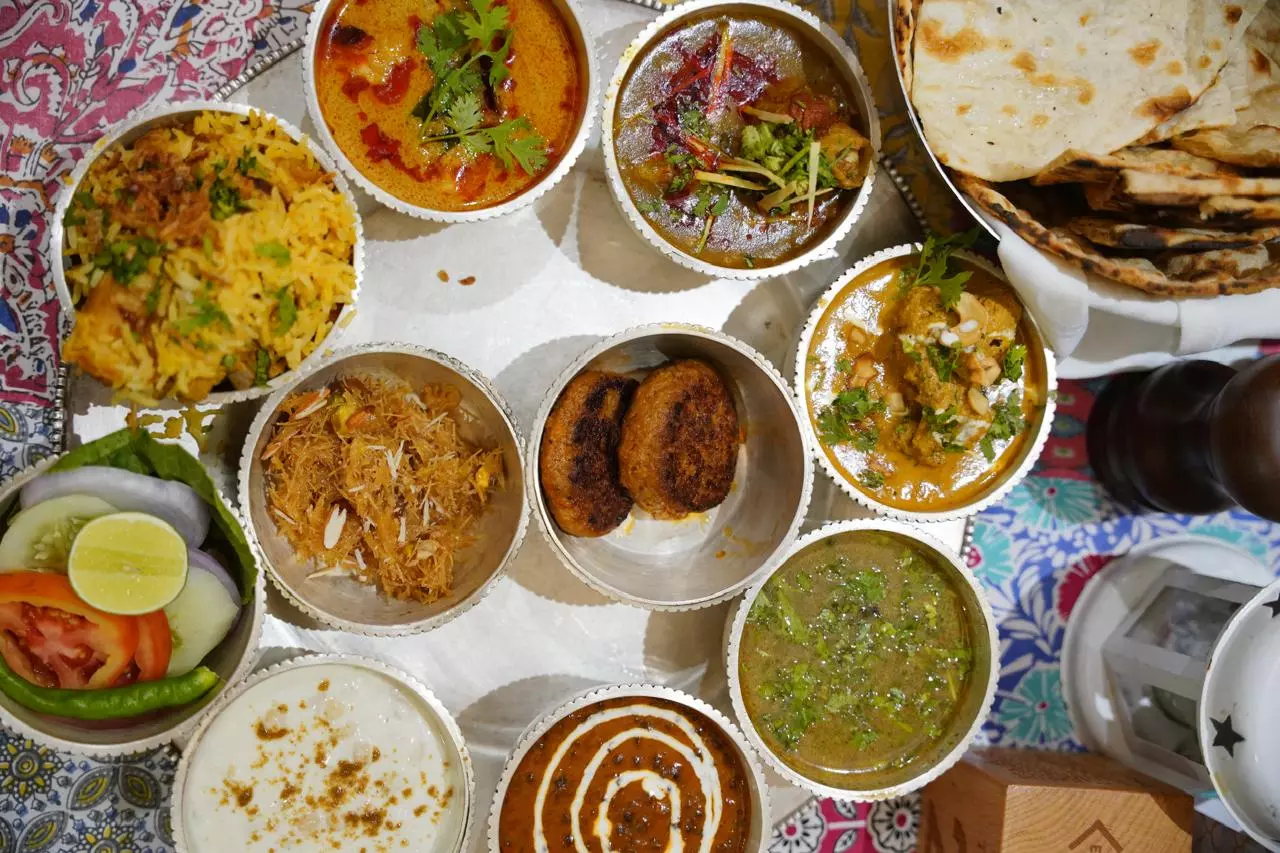
For ten evenings this June, Food Exchange at Novotel Hyderabad Convention Centre is turning its attention northward, inviting diners into the refined world of Awadhi cuisine. The Lucknow Food Festival, running from June 5 to 14, is not positioned as a showcase of culinary innovation or modern reinterpretations. Instead, it is a tribute to authenticity, a celebration of recipes, techniques and flavours that have travelled through generations of royal kitchens, family homes and bustling food streets of Lucknow.
Chef Samad Khan.
At the heart of the festival is chef Samad Khan, a tandoor specialist whose culinary journey has taken him through several hospitality brands across the country. For Khan, Awadhi cuisine is inseparable from its history.
“Nihari was originally a dish of the Mughal kings,” he says. “It was eaten in the morning and prepared in a way that made it rich and nourishing. Then there was Galawat kebab. The story goes that ageing nawabs wanted a kebab so soft that it required no chewing. That is why it became known for its melt-in-the-mouth texture.”
The stories behind these dishes reveal much about the cuisine itself. Awadhi food is often spoken about through its celebrated kebabs and slow-cooked curries, but beneath the recipes lies an entire philosophy of refinement. Flavours are layered rather than loud. Aromas arrive before the spices announce themselves. Every preparation carries a sense of restraint.
Khan believes that nowhere is this more evident than in his personal favourites. “My best dish is Mutton Galawat,” he says without hesitation. Alongside it are Nihari, Murgh Korma, Mushroom Galawat and Rogan Josh, dishes that reflect the breadth of flavours guests can expect at the festival.
Yet the soul of Awadhi cuisine, he insists, lies in its distinctive use of aromatics. One ingredient in particular captures that identity. “Lazate Tam has its own aroma. If you add it to a kebab, it brings a fragrance that is unique,” he explains.
That fragrance is central to what separates Lucknow's food from many other regional cuisines. “We use sweet pepper, kewra and aromatic spice blends. Every spice should carry fragrance. The spices are stored and matured before use. It is not only about heat or flavour, it is about aroma.”
For Khan, preserving those nuances is more important than reinventing them. While chefs around the world are often eager to modernise traditional dishes, he is more interested in reviving recipes that have quietly slipped from public memory.
“Fish curry is one dish I would like people to remember again,” he says. “It was very famous. There are many such preparations that deserve attention.”
The same desire extends to Lucknow's most misunderstood culinary export: its biryani.
“People immediately think of Hyderabadi biryani,” Khan says. “But Lucknowi biryani is very different. It is not very spicy. You will not find whole spices scattered through the rice. Yet it is extremely flavourful.”
In fact, he points out, what most people call Lucknowi biryani is technically closer to a pulao.
“When rice is cooked with stock or yakhni through the dum process, it becomes a pulao. Hyderabadi biryani follows a different method with marinated meat, layering and dum cooking. Both are beautiful, but they are different styles.”
That emphasis on technique surfaces repeatedly throughout the conversation, particularly when discussion turns to the tandoor, a craft Khan believes remains widely underestimated.
“Many chefs can cook, but not everyone can work a tandoor,” he says. “Tandoor cooking is craftsmanship. You spend years learning temperatures, understanding how different foods behave and knowing exactly when the oven is ready. An experienced tandoor chef can sense it almost instinctively.”
A kebab, he explains, demands a different heat from bread. One mistake can burn the product, dry it out or cause it to fall apart. Mastery comes only through years of practice.
The festival itself has been designed around that respect for technique and tradition. According to the culinary team, the objective was never to create fusion dishes or contemporary twists.
“The idea is simple,” says Khan. “We wanted to introduce classical Lucknowi food to Hyderabad. The kebabs and curries are being prepared the same way they are made in Lucknow. That is why I am here, to cook them in the same tradition.”
The menu reflects that philosophy. Rather than overwhelming guests with an extensive spread, the focus remains on a carefully selected collection of iconic dishes that diners may recognise through stories, family memories or social media, but may never have experienced in their most authentic form.
Perhaps the greatest misconception surrounding Awadhi cuisine is that it begins and ends with Lucknow. Khan offers a broader historical perspective. During British rule, Awadh referred not simply to a city but to a larger administrative and military region that included several centres where culture, commerce and food evolved together. The cuisine that emerged from these places absorbed influences from courts, camps and communities, eventually becoming one of India's most celebrated culinary traditions.
For Hyderabad, a city deeply proud of its own food heritage, the festival offers an opportunity to encounter another royal cuisine on its own terms. Not through fusion, not through reinvention, but through faithful storytelling on the plate.
As the aromas of kebabs, kormas and slow-cooked gravies drift through Food Exchange each evening, the experience becomes less about a buffet and more about a journey into a culinary culture that values patience, subtlety and craftsmanship.
“We want people to remember the taste of Lucknow,” Khan says. “To come here, enjoy the food, take back good memories and tell others about it.”
For a cuisine built on fragrance, heritage and quiet elegance, that may be the most fitting invitation of all.
