Which Cargo Ships are Transiting Strait of Hormuz?

20 March 2026 7:55 PM IST20 March 2026 7:55 PM IST
Over a third of vessels in the Strait since the conflict began are under US, EU, or UK sanctions, underscoring ongoing geopolitical tensions affecting trade.
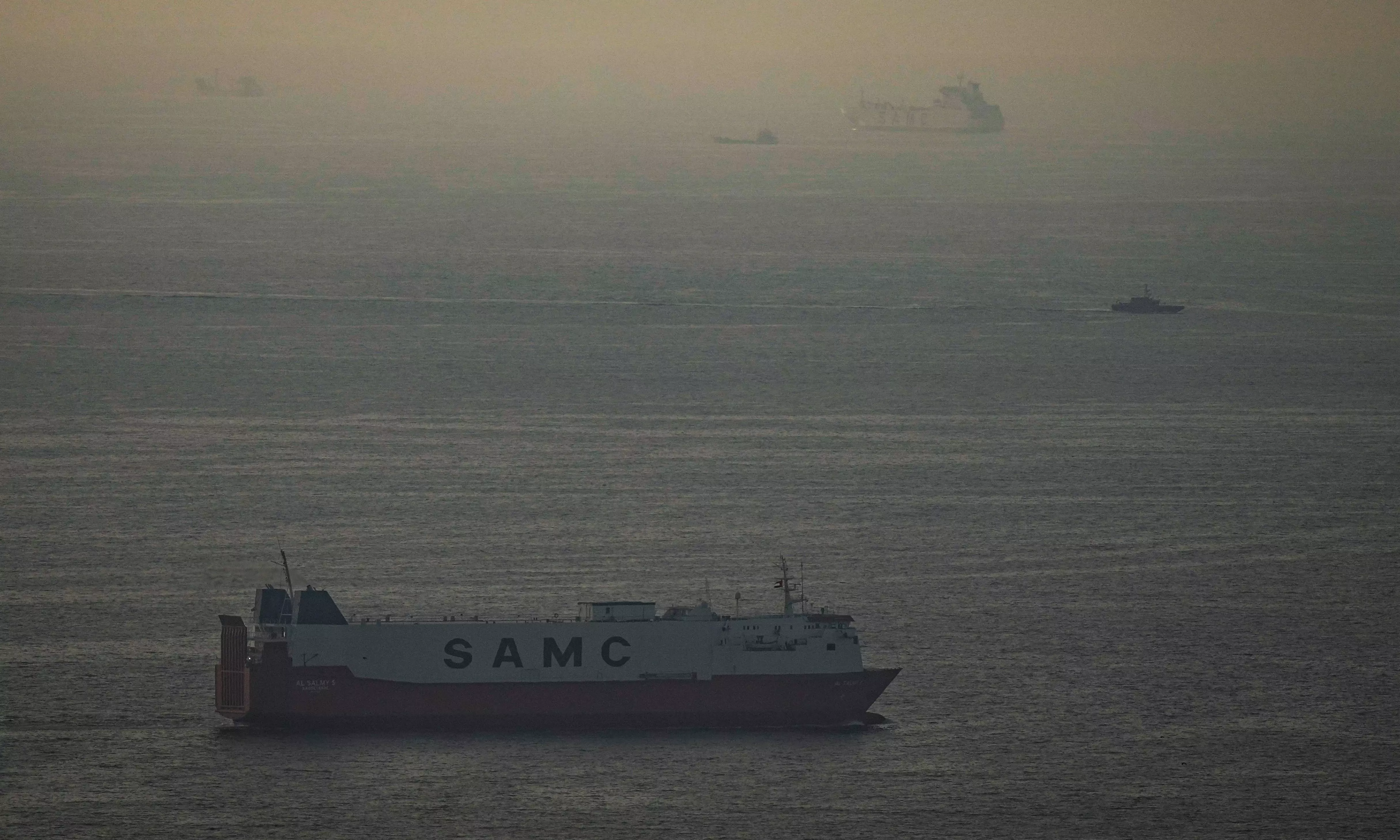
Cargo ships sail in the Arabian Gulf towards Strait of Hormuz in United Arab Emirates, Thursday, March 19, 2026. (AP Photo)
London: Just a trickle of cargo ships and tankers -- most of them Iranian -- have made it through the Strait of Hormuz since Iranian forces blocked the crucial trade route in the Middle East war.
Here are facts and figures about vessels that have passed through the 167-kilometre (104-mile) long strait since the war broke out with US-Israeli strikes on Iran on February 28.
95% shipping drop
From March 1 to 19, commodities carriers made just 116 crossings, according to analytics firm Kpler -- a decrease of 95 percent from peacetime.
Of these, 71 crossings were by oil tankers and more than half were loaded, Kpler data showed, with most travelling east out of the strait.
Traffic "is being led mostly by bulk carriers, tankers and container ships," said Richard Meade, editor of leading shipping intelligence journal Lloyd's List, in a briefing on Thursday.
"But we have seen a bit of an uptick in gas carriers moving over the last week."
Iranian, Greek, Chinese ships
Most of the ships passing the strait are owned or flagged in Iran, said Bridget Diakun, an analyst at data company Lloyd's List Intelligence.
After that, Greek ships accounted for 18 percent of crossings and Chinese ones 10 percent in recent days, she said on Thursday.
"Although Iran is continuing to control the Strait and exit its own oil, everything else is largely still at a standstill," said Meade.
45 sanctioned ships
Overall since the war started, more than a third of the ships transiting the strait were under US, EU or UK sanctions, according to an AFP analysis of passage data.
Of the oil and gas tankers, more than half were under sanctions.
Since March 16 "anything heading westbound has been shadow fleet, gas carriers or tankers... they absolutely dominate the traffic going through," Diakun told the Lloyds briefing.
Oil to China
Commodities analysts at JPMorgan bank said in a report released Monday that most of the oil passing through the strait was headed for Asia, principally China.
Cichen Shen, Asia Pacific editor at Lloyd's List, said there were indications online that Chinese authorities were working on "some sort of exit plan" for their big tankers stuck in the region.
1.3 mn barrels of Iran oil
The JPMorgan analysts said overall 98 percent of the observable oil traffic through the strait was Iranian, averaging 1.3 million barrels a day "in early March".
A fifth of the world's oil and liquefied natural gas passes through the strait in peacetime.
Indian, Pakistani ships
"There are indications that some ships are transiting under Iranian 'approval', with some vessels following a route through the Strait closer to the Iranian coastline than normal," including Indian and Pakistani vessels, marine consultancy Clarksons said in a note.
Meade of Lloyds List added: "Several governments, including China, but (also) India, Pakistan, Iraq, Malaysia, they're all in direct talks with Tehran, coordinating vessel transits" with Iran's Revolutionary Guards.
Lloyd's List said at least nine ships had passed through an apparently Iranian-approved "corridor" close to Larak Island near Iran's coastline for vetting by its authorities.
( Source : AFP )

Next Story