US Imposes Sweeping Sanctions on ICC in Bid to Dismantle Tribunal

9 Oct 2026 10:27 PM IST9 Oct 2026 10:27 PM IST
The ICC denounced the step as an attack on the rule of law and the foundations of international order, themes that Rubio had appeared to embrace only two days ago in a speech in front of the Acropolis in Athens.
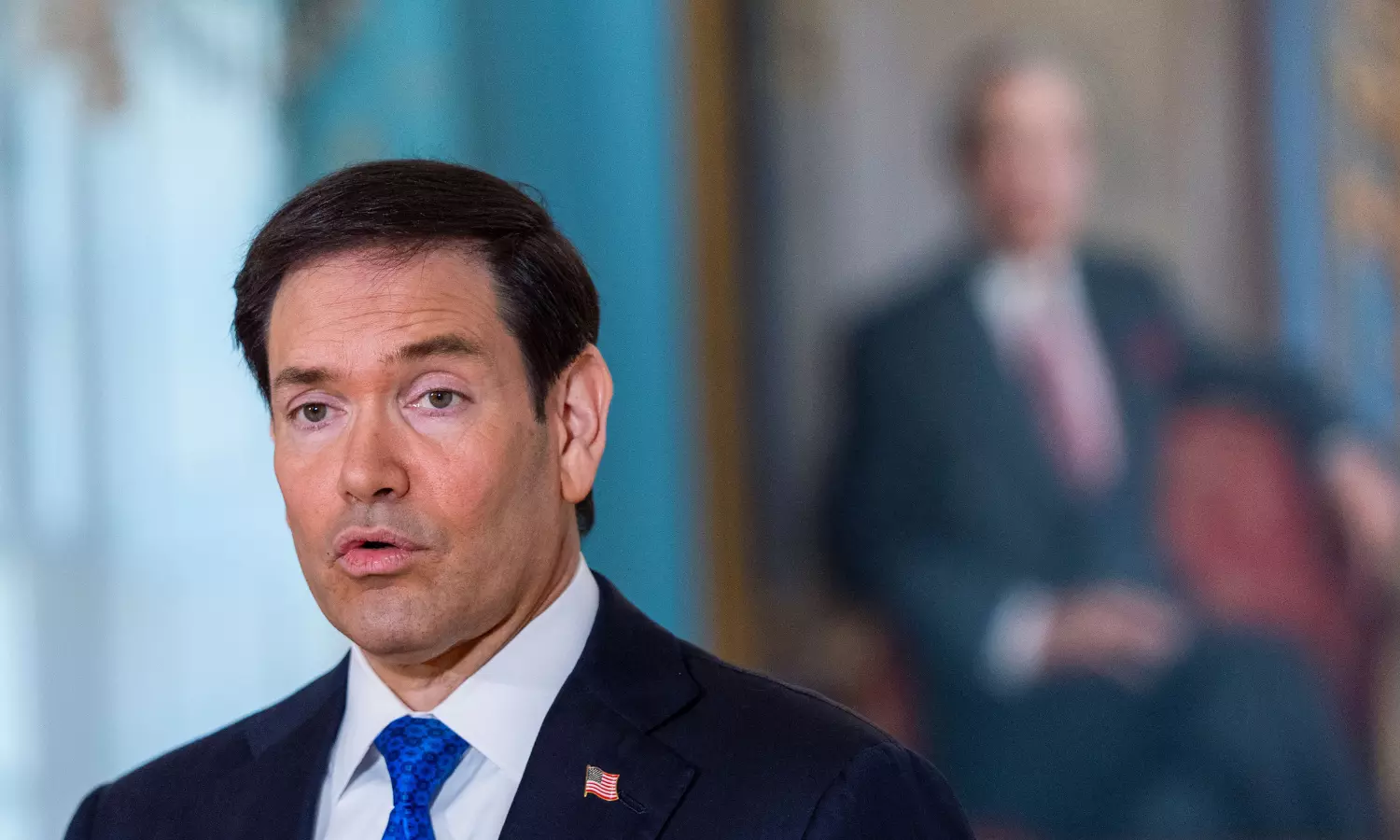
Secretary of State Marco Rubio speaks to reporters before a meeting with 2015 Venezuelan National Assembly President Dinorah Figuera in the Treaty Room at the State Department, Friday, Oct. 9, 2026, in Washington. (AP Photo/Manuel Balce Ceneta)
Washington: The Trump administration has imposed sweeping new sanctions on the International Criminal Court as part of its campaign to dismantle the tribunal over investigations into the United States and its allies, including Israel.
Secretary of State Marco Rubio announced the sanctions Friday, after the Nobel Peace Prize was awarded to South African jurist Navi Pillay , a former judge at the ICC and other international courts. Trump has coveted that prize for himself.
“We will ban transactions with this rogue court, cutting off their resources and crippling its ability to operate against us,” Rubio said in a video address posted to social media. “The United States and the American people are not subject to the jurisdiction of this fake ICC.”
The sanctions cut the court off from U.S.-based financial services, technology companies and even using U.S. dollars. They set a six-month timeline for U.S. companies and individuals that have business with the court to wind that business down.
The ICC denounced the step as an attack on the rule of law and the foundations of international order, themes that Rubio had appeared to embrace only two days ago in a speech in front of the Acropolis in Athens.
“It is an attempt to obstruct the course of justice and to prevent the court from doing what it was created to do," the court said in a statement. "It is an assault on the rule of law and on the very foundations of the international legal order which strikes at the simple principle that no one stands above the law.”
ICC President Tomoko Akane, a citizen of U.S. ally Japan, said the court would “continue to fully discharge its mandate, with independence and impartiality, acting only on the basis of the law and the evidence, for the sake of the countless victims of grave crimes.”
She also appealed to other ICC members for support. “This is not just about defending a single institution, but about safeguarding the international order grounded upon the rule of law.”
Rights groups also denounced the sanctions.
“This existential attack must fail," said Erika Guevara Rosas, an Amnesty International senior director. “States must take concrete action to resist the imposition of these measures and actively protect the Court.”
The court's host country of the Netherlands has been preparing for weeks for the move. One possible measure to mitigate sanctions is the EU “blocking statute,” which could be used to protect European court staff by preventing European companies from complying with the U.S. measures. Dutch Foreign Minister Tom Berendsen has called the blocking statute the “nuclear option” in countering possible sanctions, but said the Netherlands has been in talks with the European Commission to ensure that if it is necessary it can be quickly enacted.
In a joint statement, Canada, Denmark, Germany, France, Italy, Japan, the Netherlands and the United Kingdom expressed strong disagreement with the U.S. sanctions.
“We will continue to work together to support the court’s vital work, uphold the rules-based international system, and advance accountability," the statement said.
“If put into effect, these sanctions will have a significant impact on the court’s work, its dedicated staff and their families. They work every day to bring those accused of the most serious international crimes to justice and to support their victims.”
Rubio said U.S. allies should join in the U.S. actions. “If they do not, the United States will continue its campaign to dismantle the ICC, piece by piece, until Americans are threatened no longer,” he said.
A number of countries have withdrawn from the court this year, including Venezuela and Chad. The South Pacific island nation of Naoero was the most recent to announce it would quit.
( Source : AP )


Next Story