Tiny Creatures, Big Crime: Global Ant Trafficking Ring Exposed in Kenya

Exotic pet trade exposes dark realities, with small creatures like ants fetching high prices.
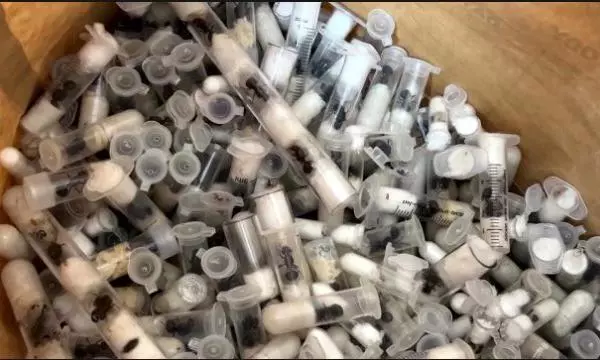
In early March, authorities in Kenya's Nairobi arrested two suspects, Zhang Kequn (a Chinese national) and Charles Mwangi (a Kenyan national), who were caught with 2,248 ants stored in test tubes and tissue paper. The insects were kept alive and carefully packed for transport, showing a clear intent to smuggle them abroad.
The arrest took place at Jomo Kenyatta International Airport. The ants were placed in special tubes to keep them alive and wrapped in tissue to prevent damage during travel. Investigators believe the ants were meant for European and Asian markets, with a larger international trafficking network operating behind the scenes.
Why would anyone smuggle ants?
This is where the story becomes even more shocking. It was discovered that these were not ordinary ants. They were rare species native to East Africa, highly valued by collectors and sold at high prices in global exotic pet markets. Many cases also involve species like Messor cephalotes, one of the largest known harvester ants in the world, known for its impressive size and complex colony structures.
These ants are used in formicariums (ant farms) for scientific observation, particularly to study tunneling behavior and colony growth. They are also popular among exotic pet hobbyists, as a single queen ant can start an entire colony, making it extremely valuable.
This is not a new incident. In 2025, another case in Kenya saw over 5,000 ants seized, with an estimated international value of $1 million. Multiple arrests have been linked to ant trafficking networks, with shipments traced back to countries like Thailand, China, and parts of Europe. Authorities say wildlife crime is shifting from elephants and ivory to insects and other micro-species.
As of now, the suspects remain in custody, with court proceedings underway. They face charges of illegal possession and trafficking of wildlife without permits, as well as conspiracy. Under Kenyan law, this is a serious offense that can lead to heavy fines and long-term imprisonment.
Looking at the bigger picture, ants are not “small and unimportant.” They play a vital role in dispersing seeds, maintaining soil health, and supporting ecosystems. Removing them can disrupt entire ecological systems.
Crimes in the past often involved the smuggling of rhino horns and ivory, but are now shifting toward insects, plants, and microorganisms. This case reveals a disturbing trend, that exposes wildlife crime is no longer about size, but about rarity and demand. Even something as tiny as an ant can become a global commodity, and a target for organized crime.
The article has been written by Aditya Kumarr Singh, interning with Deccan Chronicle
