The War on Free Speech: The Russian Resistance Against the Media Watch Dog

To understand the current restrictions, it is important to look at Russia's actions since the beginning of the Ukraine war
The internet restrictions in Russia resemble the dystopian world imagined by George Orwell in 1984.
At the centre of Russia's internet regulation is Roskomnadzor, the Federal Service for Supervision of Communications, Information Technology and Mass Media. Critics often compare the agency to Orwell's "Big Brother" because of its role in censoring the internet, enforcing state narratives and taking action against independent journalism.
Unlike media regulators in democratic countries, Roskomnadzor functions primarily to shield the state from political criticism and suppress dissent. It directly enforces the Kremlin's political directives and national security legislation.
To understand the current restrictions, it is important to look at Russia's actions since the beginning of the Ukraine war. A few months before the conflict, Russia began developing a state-backed messaging platform called Max. Since 2025, authorities have required the app to be pre-installed on all new devices sold in the country. There have also been reports that public sector employees, teachers and students are increasingly being required to use the platform.
Telegram chief executive Pavel Durov criticised the move, saying, "Restricting citizens' freedom is never the right answer." Pro-war bloggers have also complained that the restrictions were hampering communications on the ground. Critics allege that Max could be used for government surveillance, although Russian state media have denied the claim. The app is heavily promoted across Russia through television advertisements, billboards and official media campaigns.
Russian authorities have justified the shift by claiming that WhatsApp has become one of the main platforms used to defraud and extort citizens. Russian official Andrei Svintsov said WhatsApp had previously been the country's most popular messaging service before Meta was designated an extremist organisation in 2022.
Russia added Meta to its registry of "terrorists and extremists" following its invasion of Ukraine. The move came after Meta temporarily changed its hate speech policy to allow users in certain countries to post messages calling for violence against invading Russian soldiers and for the death of Russian President Vladimir Putin.
The restrictions have significantly reduced Russians' access to information from outside the country. Novaya Gazeta, one of Russia's few remaining independent newspapers, suspended publication after receiving warnings from Roskomnadzor. Several high-profile international journalists, including BBC correspondents Clive Myrie, Orla Guerin and Nick Robinson, have also been barred from working in Russia. Several major online platforms and services, including YouTube, Facebook, WhatsApp, Instagram, BBC and Deutsche Welle, are no longer available through Russia's National Domain Name System.
The Russian resistance
According to The Conversation, Russians who criticise the war or express anti-war views have faced severe prison sentences under expanded wartime censorship laws that criminalise "discrediting" the army.
Mobile internet services in Moscow were reportedly disrupted for nearly three weeks in March. Students and schoolchildren have been threatened with consequences if they refuse to install the Max app. State employees, bureaucrats, deputies and managers reportedly began purchasing separate SIM cards and additional phones solely for installing the messaging service. Telecom operators were also instructed to introduce charges for users consuming more than 15 GB of international mobile traffic per month.
According to a report by CEPA, Russia's security services claimed that a group of eight young Russians across four cities had planned to assassinate a Roskomnadzor official by blowing up his car. One of the alleged suspects, a 20-year-old man, was killed in Moscow on April 18 after opening fire on FSB officers attempting to arrest him. The FSB claimed the plot had been organised by Ukraine, while critics argued the case was used to suppress youth political dissent.
According to CNN, many Russians have responded to the restrictions with humour. Social media was flooded with jokes about sending letters by carrier pigeon or using smartphones as ping-pong paddles. However, the disruptions have also had serious real-life consequences.
"It feels like the ground is being pulled out from under our feet," Svetlana, a resident of suburban Moscow, told CNN. She relies on a continuous internet connection to monitor the blood sugar levels of her eight-year-old diabetic son, Vanya.
Others expressed a sense of despair. Leonid, a 34-year-old IT sales manager in Moscow whose surname CNN withheld for security reasons, said, "We understand that if the authorities really manage to block both VPN and Telegram, then we will have to leave the country, and I don't know for how long."
Many Russians have also turned to offline methods of communication. Citizens, small businesses and delivery services are increasingly relying on walkie-talkies, pagers and paper maps. Sales of walkie-talkies on Russian e-commerce platform Wildberries reportedly rose by 27 per cent, while pager purchases increased by 73 per cent. Demand for printed city guides and road maps of Moscow also nearly tripled as GPS and mapping services were disrupted.
In interviews conducted by BBC Russia editor Steve Rosenberg, Yulia, who runs a catering business in Russia, said the restrictions had severely affected her work.
"Our internet site was not accessible for our clients, which was really painful because we could not generate revenue from it. The internet is very important, like the air we breathe. My whole business was built on the concept that we are using the internet in our day-to-day life," she said.
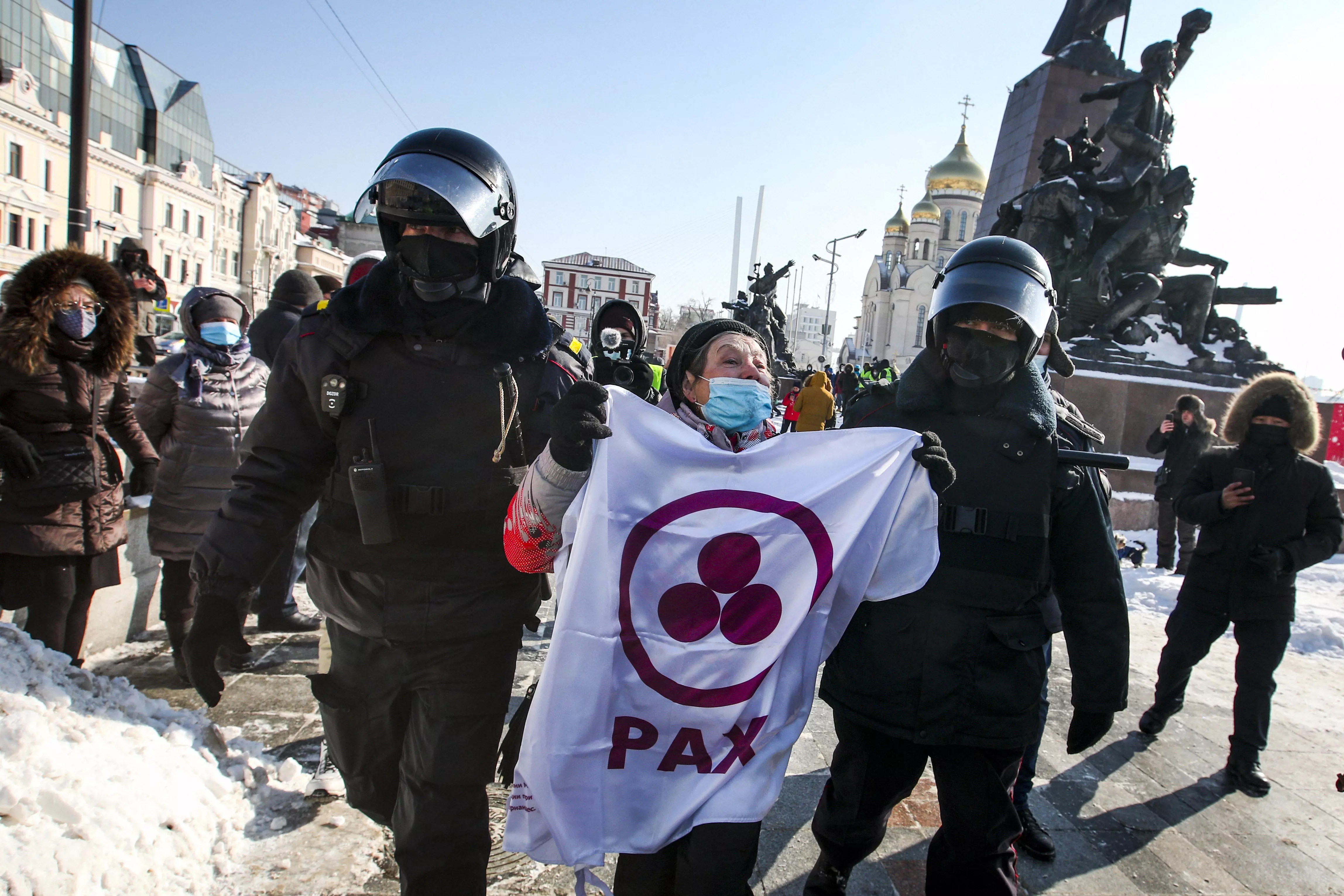
Despite the crackdown, some activists continue to protest. A small group gathered outside the Presidential Administration building in central Moscow to submit a petition urging President Vladimir Putin to end the internet restrictions.
Yulia, who took part in the protest, admitted she was frightened. Asked whether she believed the demonstration would make any difference, she replied: "I don't know. Probably not. But it's what I can do."
This article is written by Radha Pallavi Marturi, a student of Central University of Andhra Pradesh, interning with Deccan Chronicle.