Tanker Struck in Hormuz as Iran, US Trade Attacks After Peace Deal

Iran has not directly commented on reports of specific attacks on ships.
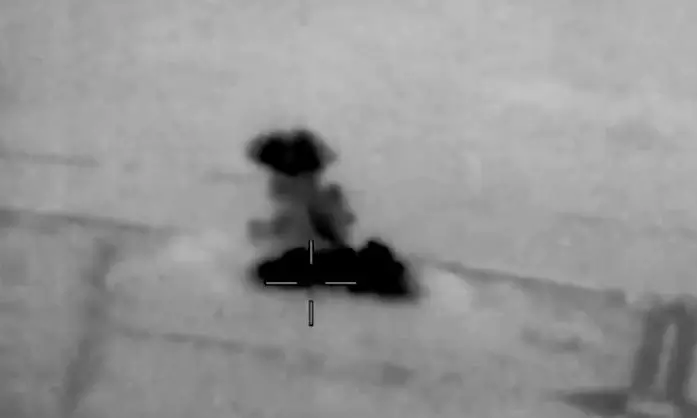
Dubai: A tanker reported being struck by a projectile in the Strait of Hormuz on Saturday, Britain's maritime security agency said, after the United States and Iran each launched strikes in the worst escalation since they signed an interim peace deal.
They each accused the other of violating the agreement reached two weeks ago to end the four-month-old conflict. Washington said it hit Iranian targets overnight, while Iran said it had struck targets linked to US forces on Saturday in response.
Saturday's attack on a tanker in the strait followed another on a cargo ship on Thursday that triggered the latest escalation. Iran has made a fresh bid to assert control over the world's most important energy shipping route, which has begun to reopen over the past two weeks after months of disruption.
Britain's UKMTO maritime security agency said the tanker hit on Saturday had sustained damage to its bridge, with all crew reported safe. The Joint Maritime Information Center, run by a coalition of navies protecting shipping, said it had raised its security threat level as a result of recent incidents.
Iran has not directly commented on reports of specific attacks on ships. But Iranian state television reported that the Revolutionary Guards had fired "warning shots" towards unspecified vessels attempting to pass through channels not approved by Iran, and that this was now prompting other ships to seek Iranian permits before attempting to cross the strait.
Iran said it had carried out “defensive” strikes on US-linked military targets, while Bahrain reported a drone attack on its territory hosting the US Navy’s regional headquarters. The US military did not immediately comment.
Tehran accused Washington of failing to uphold the interim agreement, particularly by not sustaining a promised ceasefire in Lebanon following Israel’s March offensive against the Iran-backed Hezbollah.
Multiple US-brokered ceasefires between Israel and Lebanon, including one announced on Friday, have had limited impact. Israel has maintained it will not withdraw from territory it has seized, while Hezbollah has rejected calls to disarm as long as Israeli forces remain.
Lebanese state television reported an Israeli drone strike in the Nabatiyeh area on Saturday. The Israeli military said it had targeted an individual posing a threat to its forces.
Hezbollah leader Naim Qassem rejected the latest Israel-Lebanon agreement as surrender, stating it was “null and void”.
Mohsen Rezaei, adviser to Iran’s supreme leader, alleged that Washington had violated the memorandum of understanding by backing proxy forces and fuelling tensions in the Strait of Hormuz.
Iran has, during the conflict, retaliated against US actions by targeting neighbouring Gulf states hosting US bases. State television said the Revolutionary Guards delivered “a decisive response” after US forces struck a communications tower in Sirik. Mehr news agency reported that port operations continued normally without damage.
Bahrain said the latest Iranian strikes breached the memorandum of understanding.
Shipping disruption has left hundreds of vessels stranded in the Gulf since the conflict began. As movement resumed over the past two weeks, increased supply pushed oil prices closer to pre-war levels. However, restoring normal two-way traffic through the Strait of Hormuz remains contingent on shippers deeming the route safe.
The US has promoted a southern shipping lane along Oman’s coast, while Iran has pushed for a northern route through its waters, where it aims to levy transit fees.
Ebrahim Azizi, head of Iran’s parliamentary national security committee, said any breach of Iran’s shipping directives would be met decisively.
US Vice President JD Vance said Washington had adhered to the ceasefire terms and blamed Iran for any renewed escalation.
"Iran signed a ceasefire agreement. We have honored it. If they have disagreements about how the MOU is being applied, they can pick up the phone. But violence will be met with violence," Vance said on X.
The latest escalation unfolded over the weekend when markets were closed, allowing both sides to exchange fire and harden positions without immediate impact on oil prices.