Over 11,000 Foreign Military Deaths Recorded by Russia in War on Ukraine

Hacked Russian statistics agency records reviewed by Bloomberg show 11,335 foreign-born or foreign-citizen deaths linked to the Ukraine war between February 2022 and August 2026.
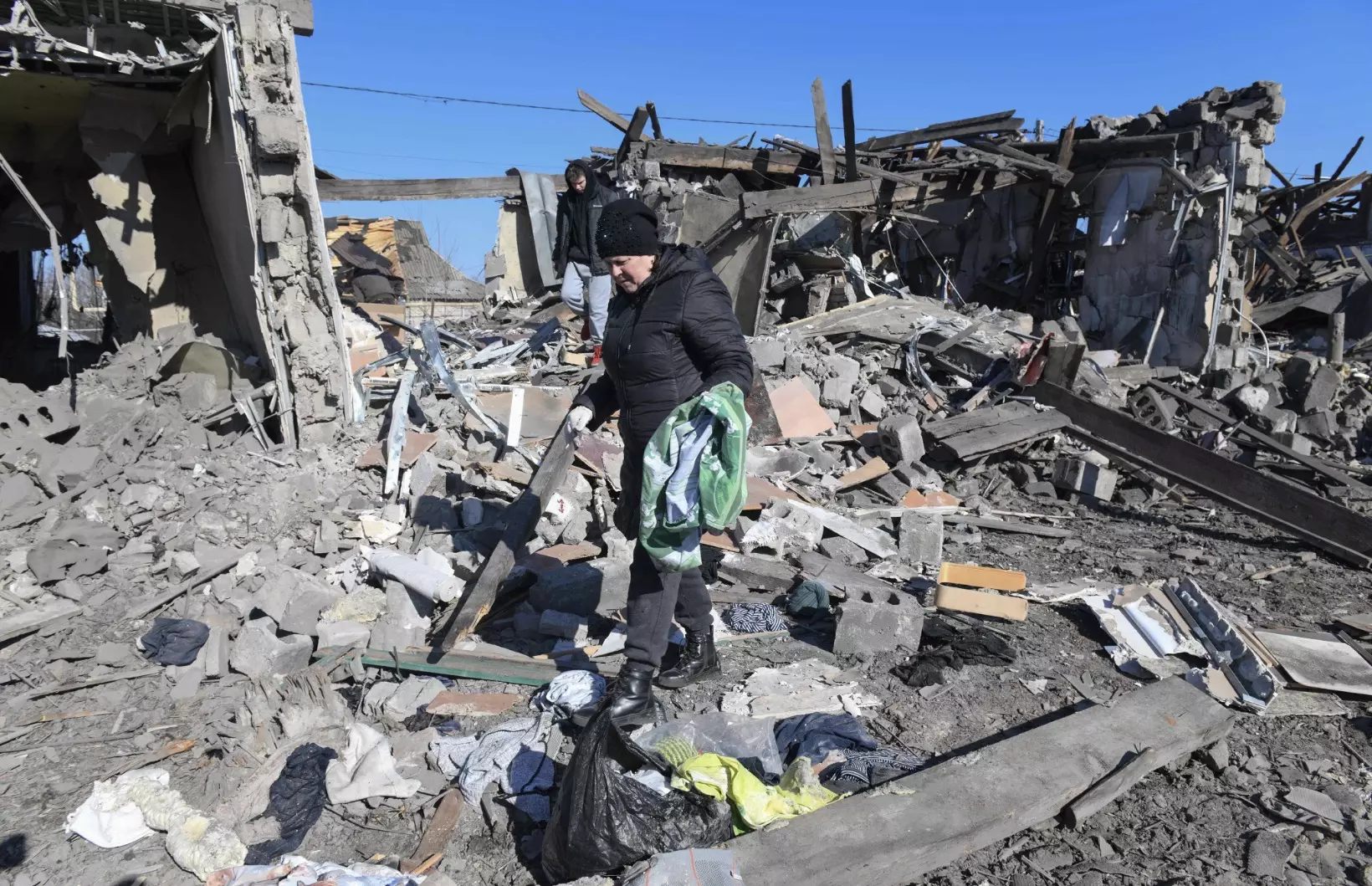
Bloomberg: Russian authorities have recorded the deaths of more than 11,000 foreigners from nearly 100 countries in the war against Ukraine, according to confidential data held by the country’s statistics agency, Rosstat.
The information comes from a cache of more than 11 million death certificates, along with accompanying details such as place of birth, citizenship and where people died. The data was obtained by the Belarusian pro-opposition group Cyber Partisans and the Ukrainian hacker operation Silent Crow. It was subsequently shared with Bloomberg and a small group of other outlets.
Bloomberg previously reported that the Kremlin has registered about 400,000 war-related deaths since its full-scale invasion of Ukraine almost five years ago.
Read More: Hacked Records Show 400,000 Russians Killed in War on Ukraine
Included in this tally are 11,335 foreigners: people who were either born outside Russia or held foreign citizenship. The deaths were recorded between Feb. 24, 2022 and late August 2026 and explicitly linked to the war, either via coding or text mentioning terms such as “military operation,” “shelling” or “drones.”
Rosstat didn’t reply to a request for comment.
The data offers an insight into the way the Kremlin has sustained its war against Ukraine even as its forces struggle to make progress on the battlefield and suffer increasingly heavy losses.
Moscow does not release data on the number of foreign nationals it has recruited and President Vladimir Putin has gone to great lengths to avoid acknowledging the scale of fatalities from the war. But as the conflict claimed the lives of more and more Russians, the Kremlin also appears to have deployed more foreign fighters.
Read More About Russia’s Recruitment of Foreign Fighters:
Russia Is Said to Widen Military Recruitment Drive in Africa
Russia Sends Young Africans to Die in Its War Against Ukraine
Zelenskiy Says Ukraine Captures North Koreans Fighting in Kursk
Russia had recruited about 46,000 foreign nationals as of October, according to the Secretary of the Coordination Headquarters for the Treatment of Prisoners of War, Dmytro Usov, who said that Ukraine has captured enemy combatants from 59 countries and Russia plans to recruit 18,500 foreign nationals this year. A separate estimate by Ukraine’s spy chief sees a lower total of around 28,000 foreign fighters.
The Rosstat data shows foreign war-related deaths have risen roughly in step with Russia’s overall toll, increasing more than eightfold since the invasion: from about 630 in 2022 to more than 5,500 in 2025.
The hacked data was incomplete and inconsistent in places, especially for 2026, because it sometimes takes months or even years to register deaths in combat. Separate reporting suggests that Russia’s death toll has been rising this year, reaching record levels last month.
The Kremlin has denied reports that it uses deceptive methods to recruit abroad. But as stories emerged of foreigners dying on the frontlines after being lured to Russia under often false promises of citizenship, money or jobs, several countries including Kyrgyzstan, Kazakhstan, Kenya and Ghana raised concerns. Foreign Minister Sergei Lavrov said in August that Russia had set up a special body to review requests from foreign nations.
The records reviewed by Bloomberg suggest that the Russian military drew most heavily on the former Soviet states which Moscow considers its sphere of influence. About 3,700 of the foreign dead were either Ukrainian citizens or were born in Ukraine after it gained independence with the break up of the Soviet Union in 1991. Among those records that included an address, most lived in occupied areas of eastern and southern Ukraine.
Because the total includes Russian citizens who were born abroad, some may be Russian by birth, such as children of Soviet or Russian families living abroad. Others may be from various ethnic minorities.
About 80% of the rest of the dead were from other former Soviet countries. Just over 6,000 were born outside of Russia but held Russian citizenship at the time that they died.
For the purpose of this analysis, people born outside of Russia but inside the Soviet Union before its break up were counted as foreigners only if they held another country’s citizenship.
No North Korean fatalities appear in the dataset as war-related, even though they have deployed thousands of troops to help Russia. This suggests that Russia didn’t issue death certificates for any North Korean deaths, possibly because they were part of foreign units rather than individuals who joined the Russian forces.
Because of that, lags in reporting, and other difficulties in recording combat fatalities, the data set almost certainly understates the total number of foreign fighters killed.
Some people will have been reported missing, some bodies will have been unidentified and others may have died months later from war-related injuries that are not explicitly set out in the records. Other deaths may be recorded under unrelated categories.
Russia’s recruitment efforts appear to have been structured in waves. The data show a high concentration of deaths from Nepal in 2023 and 2024, Sri Lanka and China in 2024 and 2025, and then Colombia, Kenya and Nigeria from late 2025.
Additionally, roughly 340 people among the dead came from Africa, where Russia has been stepping up recruitment methods. Those fatalities mostly came from 2025 onward and the largest contingents were from Egypt, Cameroon, Nigeria, Kenya and Ghana.
About 300 of the records were for Russian citizens born in Germany before 1992, mostly in East German garrison towns like Potsdam and Magdeburg, where Soviet forces were stationed until 1994.
Nearly every foreign military death, 99% of the total, were men. Of the 159 women who died, 154 were from occupied areas of Ukraine.
Silent Crow and Cyber Partisans said on Nov. 1 that they’d breached Rosstat’s internal infrastructure, gaining access to about 25,000 computers and extracting some 23 terabytes of data, including information on Russian military losses.
Rosstat said days later that it had detected targeted cyberattacks on its systems between Oct. 29 and Nov. 1, but that it found no evidence its databases had been compromised or confidential information leaked. The agency said it was restoring systems after an attack knocked parts of its infrastructure offline.
