Who is Sheikh Hasina Ex-Bangladesh PM Convicted in Students Crackdown Case

Her governments are credited with significant economic growth, improvements in infrastructure, and a strong social welfare focus. She also presided over the tribunal for war crimes from Bangladesh’s 1971 Liberation War
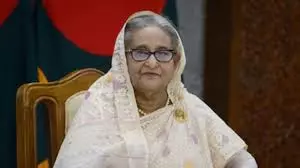
Sheikh Hasina Wazed was born on September 28, 1947, in Tungipara, East Pakistan (now Bangladesh), into a politically influential family. Her father was Sheikh Mujibur Rahman, the founding father of Bangladesh.
She studied Bengali Literature at the University of Dhaka, graduating in 1973. In her youth, Hasina was active in student politics, rising through leadership roles in her college’s student union.
In 1975, a military coup resulted in the assassination of her father, most of her family, and key political figures.
Hasina was abroad at the time and later spent years in exile, during which she became leader of the Awami League, her father’s political party.
Encyclopedia Britannica
Returning to Bangladesh in 1981, she positioned herself as a democratic opposition to military rule.
Hasina first became Prime Minister in 1996. After a period out of power, she returned in 2009 and went on to serve four consecutive terms until 2024.
Her governments are credited with significant economic growth, improvements in infrastructure, and a strong social welfare focus. She also presided over the tribunal for war crimes from Bangladesh’s 1971 Liberation War. During the Rohingya crisis, Hasina accepted and provided refuge for a large number of Rohingya fleeing neighboring Myanmar.
Critics argue that her long rule increasingly leaned authoritarian.
The 2024 elections were widely criticized: the main opposition party, the BNP, boycotted, alleging suppression; voter turnout was low.
Student protests over the quota system in civil service jobs escalated, eventually morphing into a widespread anti-government movement.
In early August 2024, after weeks of unrest, Hasina resigned. She fled to India amid mass protests and a violent crackdown. Hasina has since expressed conditions for her return: she demands free, fair, and inclusive elections under a participatory democracy, and the lifting of the ban on the Awami League.
The interim government, led by Nobel laureate Muhammad Yunus, banned her party, the Awami League, under an anti-terrorism law. A close aide has claimed that Hasina intends to return to power, thanking India for refuge.
Sheikh Hasina’s legacy is deeply complex: a daughter of Bangladesh’s founding father, she modernized many aspects of governance and society, but her long rule was marred by accusations of authoritarianism and political suppression. Her exit marks a dramatic turn in Bangladesh’s political history.
