US Embassy in Pakistan Cancels Visa Appointments

The advisory also applies to the US Consulates General in Lahore and Karachi, as authorities continue to monitor the evolving situation in the country
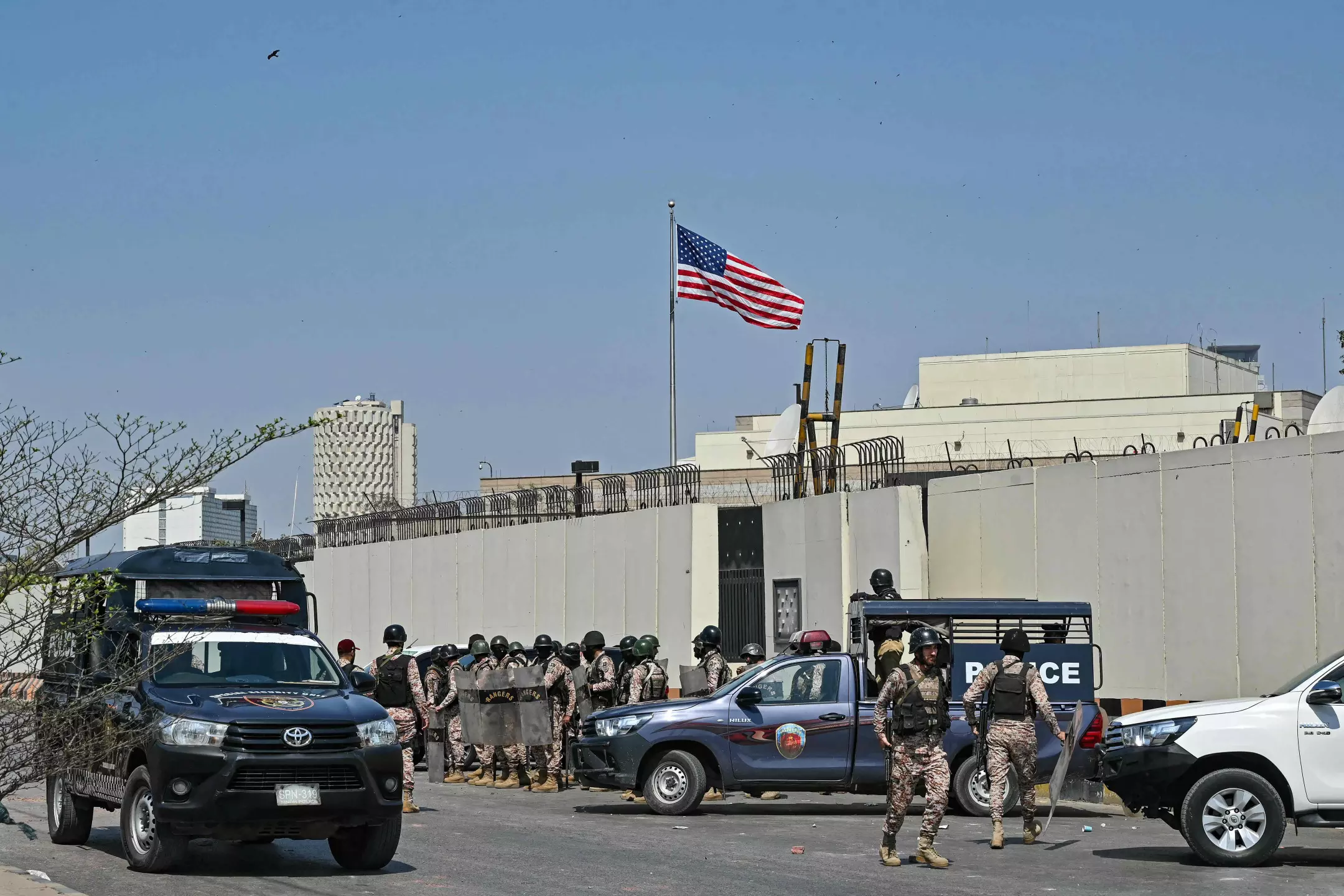
Islamabad: The United States Embassy in Islamabad has announced the cancellation of all visa appointments through Friday, March 6, citing the prevailing security situation amid protests following the death of Iran’s Supreme Leader, Ayatollah Ali Khamenei.
In a post on X, the embassy stated: “Due to the current security situation, the U.S. Embassy in Islamabad and the Consulates General in Lahore and Karachi have cancelled all visa appointments through Friday, March 6.”
The advisory also applies to the US Consulates General in Lahore and Karachi, as authorities continue to monitor the evolving situation in the country.
According to Dawn, multiple roads were closed in Karachi’s West and South districts in view of the security situation, as protests erupted nationwide over Khamenei’s assassination in reported US-Israeli strikes.
Dawn reported that 10 people were killed in Karachi and two in Islamabad as demonstrations spread across the country. Pakistani law enforcement personnel resorted to tear gas shelling and baton charges to control the unrest.
Section 144 of the Pakistan Penal Code (PPC), which pertains to unlawful assembly, was imposed across Sindh province. Several road closure alerts were issued during the morning, citing security concerns.
Protests in Gilgit-Baltistan also intensified, with violent clashes reported in multiple areas. In Gilgit and Skardu, demonstrators set fire to local United Nations offices, including the United Nations Development Programme (UNDP) office in Gilgit.
In Skardu, the office of the Superintendent of Police and several government buildings were torched during the unrest. Authorities reported that seven demonstrators were killed and more than a dozen injured following firing during clashes.
Iran has declared 40 days of public mourning following Khamenei’s death. He had succeeded the founder of the Islamic Revolution, Ruhollah Khomeini, in 1989 and remained a central figure in Iranian politics for decades.
Following his death, Iran vowed what it described as “the most devastating offensive operation” against US bases and Israel in retaliation. The Islamic Revolutionary Guard Corps (IRGC) has pledged revenge and claimed it launched attacks on 27 bases hosting US troops in West Asia, as well as Israeli military facilities in Tel Aviv.
