How China Became Squeaky Clean: Some Money and a Dose of Discipline
Money talks, but several other factors are at play on the path to progress
Just how clean is Beijing? A video by an Indian vlogger shows this. He walks around the streets of the Chinese capital wearing white socks. At the end of his walkathon, the socks are stain-free. Something unbelievable for someone from Hyderabad, where the streets are lined with dirt, and a layer of dust forms on everything in minutes. With Delhi and other cities struggling with air pollution, it is inevitable that one compares the situation with Beijing and elsewhere in China where the situation was as bad, if not worse. A quarter decade later, the dangerous suspended particulate matter has dropped by 40 per cent, concentration of sulphur dioxide by 93 per cent and nitrous dioxide by 38 per cent, according to a United Nations Environment Programme report. Shutting polluting industries, replacing dirty diesels in public transport buses electric buses, encouraging people to buy e-vehicles, replacing coal-fired boilers in households and enhancing green space has done the trick. Of course, China spent a pretty penny to clean the air: The budget zoomed from $434 million to $2.6 billion in just four years. But the Chinese, they breathe easy.
Not just money
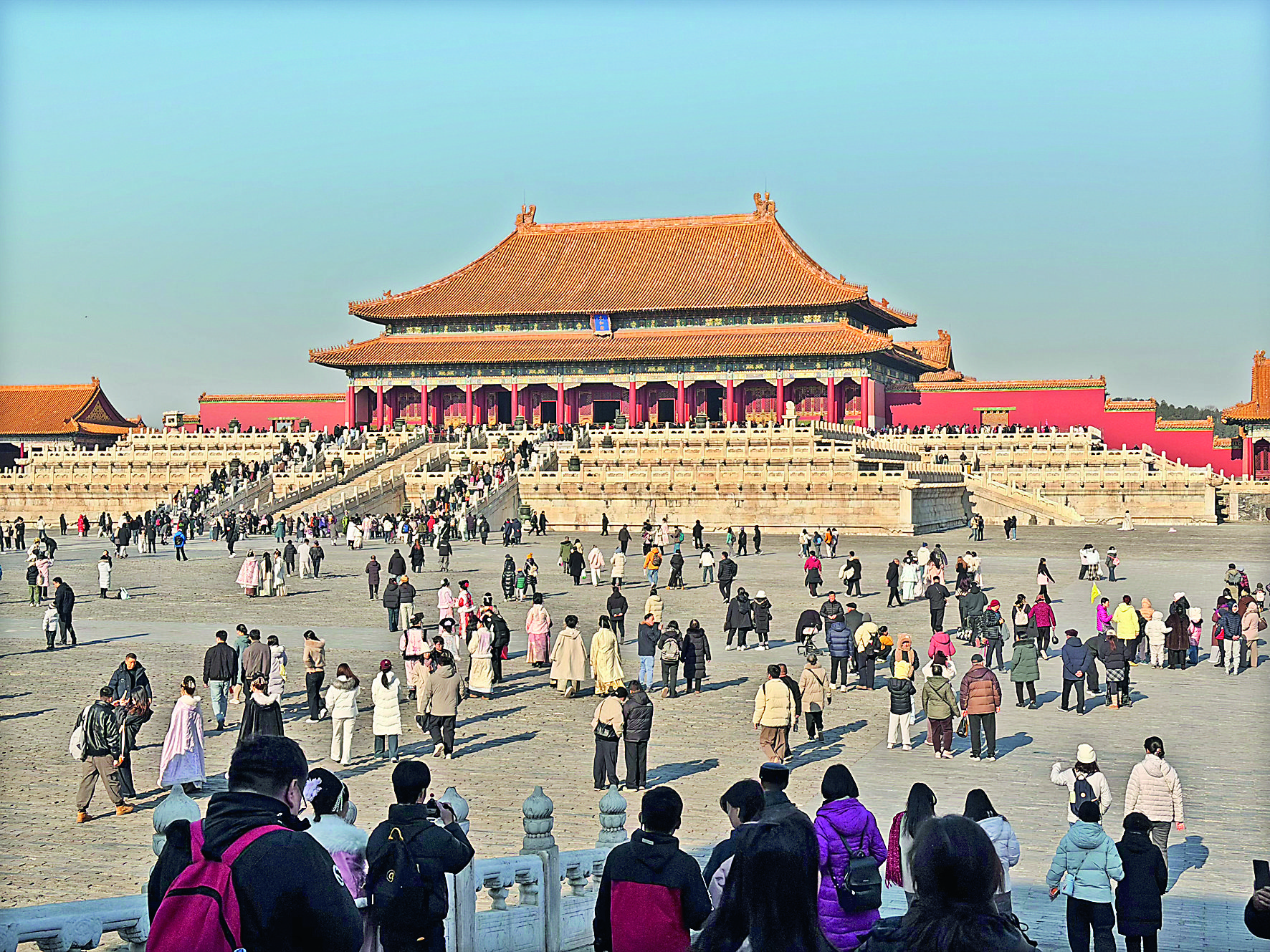
Money talks, but several other factors are at play on the path to progress. Keeping the surroundings clean and making public places - especially tourist spots - visitor-friendly is more a matter of behaviour than of finance. Be it the Great Wall of China, the Forbidden City in the heart of Beijing or Xianyukou, the old city and now most popular hangout for food, the time-honoured cloth and silver ornaments, the locals ensure that the lakhs of visitors have a hassle-free experience. Vendors do not crowd or block visitors and yet they manage to sell their wares. The same applies to the road-side food joints. Local authorities keep the area so clean that the tourists are embarrassed to litter the place, apart from the fear of punishment. The weekend market in Huairou district in the capital's suburb where thousands shop for their essentials is squeaky clean. Another initiative that has helped is to keep some areas off limits for vehicles, turning them into a pedestrians' paradise. To recall, Hyderabad's own Charminar pedestrianisation project remains a non-starter after decades, and efforts to move polluting industries out of city by allowing monetisation of their land by the Revanth Reddy government is being politicised by the Opposition.
Dressing history
The founders of China's iconic heritage silk and traditional textiles brand Ruifuxiang have left a lasting impression. The silk store was established in 1862 and operates from the same premises since, a witness to historical socio-political developments. The story goes that the founders used to maintain a register of receivables and payables, which was gutted in fire mishap. "The founders put up a board next day stating that they will not ask for receivables but offered to pay whoever came with a claim. This won the trust and hearts of customers," says Nickey Zhang of Ruifuxiang. When Chairman Mao Zedong established the People's Republic of China, government authorities rushed to Ruifuxiang to order the new flag because it was the sole possessor of the yellow and red silk yarn needed. It was the first shop in China to engage girls at the sales counter.
The shop displays the first share certificate issued by the Chinese government, allotting equity to workers, government and the private owners. Special quilts in red and green colours for the newly-weds continue to be the USP of Ruifuxiang.
Songs and films
No visit to China can be complete without mentioning the impact of Bollywood. Two Bollywood songs, one that captivated the older generations and the other embraced by the youth, are very popular in China, this correspondent, on a cultural visit to China found. One is R.D. Burman’s ‘Daiya yeh main kahan aa phasi’, sung with youthful exuberance and energy by Asha Bhonsle for the 1971 Jeetendra-Asha Parekh starrer ‘Caravan’ that continues to resonate with those who were kids in the 70s and 80s. They now make reels out of it. The younger generation goes for ‘Ankhe khuli ho yaa ho bandh’ of Lata Mangeshkar and Udit Narayan, composed by Jatin-Lalit for ‘Mohab-batein’ released exactly 29 years later. When it comes to heroes, none can beat ‘Mr Perfectionist’ Aamir Khan, whose ‘Three Idiots’ and ‘Dangal’ were blockbusters in China. “Perhaps our society identifies itself with the two movies — one that takes a critical note of an education system that is beset by stress and the other that showcases women empowerment,” said an educationist.
Woman Power
Yan Han, chairperson of international business in Chinese strategic communications; Yao Li, vocational training pioneer who is engaged in senior citizens' health care; Nina Wang, popular Peking Opera singer; Ying Shen; executive director and chief HR officer in top construction firm Longfor; Yue Mei, tea-blending specialist owning the high end Tea House and Jiang Tao, top designer architect, all of whom this correspondent interacted with during a five-day cultural exchange trip to Beijing, stand as examples of women empowerment. Many of them have not only excelled in their respective fields but developed a passion for service in socio-cultural fields. They take pride in Chinese society maturing enough to recognise women power. "We decide whether to marry or not. and men have no choice in this," says Nina with a twinkle in her eye.
