DC Edit | Pakistan To Be Loser As It Brings Politics To Cricket

Given Pakistan’s history, U-turns may be as common as the estimates of former cricketer Shahid Afridi’s age or his retirement announcements
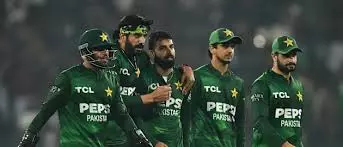
The Pakistan government’s decision to ask its cricket team to boycott the match against India in Colombo in the upcoming T20 cricket World Cup is as illogical as the Pakistan cricket board’s talk of ICC practising double standards. In an act that is akin to cutting the nose to spite the face, Pakistan imagines it is standing in solidarity with Bangladesh which was banished from the competition because it refused to play in India.
Given Pakistan’s history, U-turns may be as common as the estimates of former cricketer Shahid Afridi’s age or his retirement announcements. It does, however, appear that Pakistan, in the wake of the events in Bangladesh after Sheikh Hasina’s ouster, is determined to use every handle to escalate the situation with India after suffering damage to its image and military airfields in Operation Sindoor.
In this scenario, cricket becomes a political football to be kicked around by the governments of Pakistan and Bangladesh. Pakistan cricket will be the loser if the ICC, bolstered by the contribution of Indian cricket to its global popularity and its coffers, sanctions it over picking one match to boycott even though it is on Pakistan’s request that the India match was posted to a third country, Sri Lanka.
Selective boycotts have happened before, as in the 1987 World Cup in which India, Pakistan and Sri Lanka were the joint hosts when Australia and the West Indies refused to play in Colombo after a blast took place during a period of ethnic tensions. But Pakistan, which stands to benefit like India in being stationed in one hotel in a third country and playing all its matches in one city, has chosen to make a mockery of its presence in the comity of cricket nations.
Bangladesh’s excuse to not play in India because of security fears was specious. Considering it is every Hindu who must live in fear for their life in that nation, the boycott was risible. The ICC rightly chose to replace Bangladesh with Scotland as the 20th team. It is naked politics now that impels Pakistan to stand behind Bangladesh after having seen East Pakistan ripped from it in 1971 because it would not accept a leader from the East to head the country after he won the polls fair and square.
Not having too many other forums to support an unsupportable boycott of sport, Pakistan finds itself in a position from which only its cricket will suffer as the ICC and its broadcasters can absorb a presumptive loss of Rs 1,000 crore from the abandoned India-Pakistan encounter but Pakistan, already said to be under pressure to drop its self-respect in seeking loans from other countries for its economy to survive as per a recent confession by its Prime Minister, can ill afford to take financial hits.
Considering that India and Pakistan played a match at the height of the Kargil War in Manchester in England during the 1999 World Cup puts paid to the pretence of security fears now being aired to avoid playing. It is only in Pakistan that a bus carrying a cricket team was targeted by terrorists, in Lahore. The touring Sri Lankans were lucky to come out alive. And only two days ago, India and Pakistan met in the Under-19 World Cup in Bulawayo, Zimbabwe.
Cricket will not be less prosperous if Pakistan and Bangladesh are prepared to risk being pushed to the background, playing with non-elite teams. The cricket establishment will do well enough with matches played among the top three of India, Australia and England while all three nations will do swimmingly with their IPL and Big Bash T20 leagues and ‘The Hundred’ competition. It is Pakistan and Bangladesh which are committing harakiri with their stand on cricket.
