Tehran claims victory after US sanctions relief and reopening of the Strait of Hormuz, but disputes over maritime charges, Israel's presence in Lebanon and implementation of the accord threaten the fragile agreement.
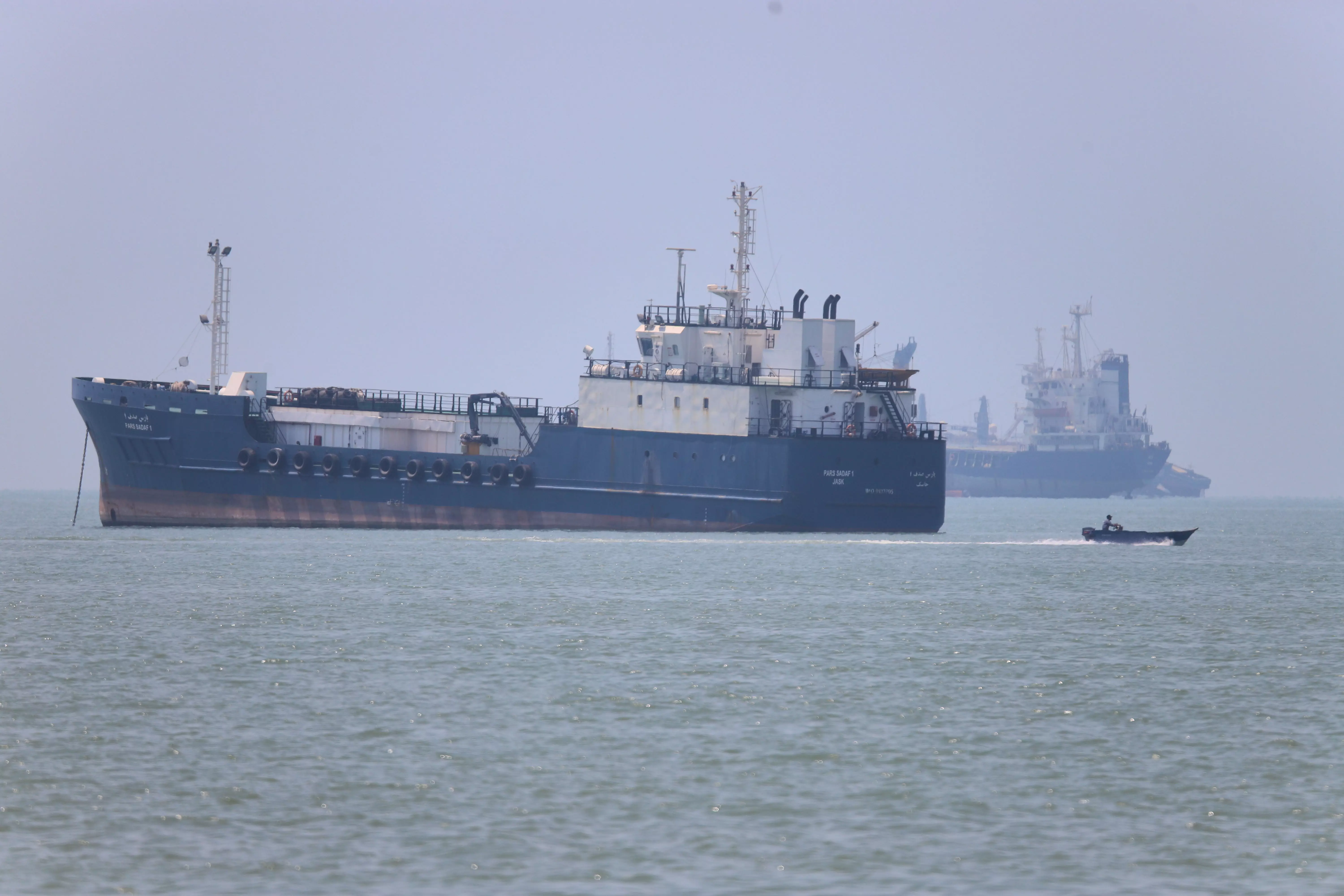
Iran has announced plans to introduce a system of maritime transit fees in the Strait of Hormuz within two months, following a 60-day negotiation period triggered by the signing of a memorandum of understanding with the United States.
Presenting the agreement as a strategic victory over Washington, Tehran declared that the waterway remained under Iranian control and warned that any European-led naval escort mission in the strait would be unwelcome. The announcement came after the United States lifted its blockade of Iran on Thursday, allowing oil tankers to resume unrestricted passage through one of the world's most important shipping lanes.
The development coincided with renewed tensions over Israel's military presence in southern Lebanon. According to Israel's Yedioth Ahronoth newspaper, Prime Minister Benjamin Netanyahu said Israel would maintain its security zone in southern Lebanon for as long as necessary to meet its security requirements. Israeli forces currently occupy more than 600 square kilometres of territory along the border.
Netanyahu also reiterated Israel's commitment to preventing Iran from acquiring nuclear weapons, describing it as a supreme national objective.
Iran argues that the agreement's provisions on Lebanon's territorial integrity require a complete Israeli withdrawal, placing pressure on US President Donald Trump to ensure compliance. Trump said on Thursday that Washington expected "a complete ceasefire on all fronts, including Lebanon, Hezbollah and Israel."
In a post on Truth Social, Trump urged all parties in the Middle East to uphold their commitments and allow negotiations to proceed.
Iranian officials also revealed that Supreme Leader Ayatollah Mojtaba Khamenei had approved the agreement and endorsed direct talks with the Trump administration. Khamenei reportedly said Trump had used "all kinds of levers" to secure the deal "out of desperation."
The supreme leader has remained largely out of public view since assuming office in March following the death of his father.
Despite the diplomatic breakthrough, violence continued on Thursday, with Israeli drone strikes and artillery shelling reported in southern Lebanon. Hezbollah said it had carried out a series of attacks against Israeli forces in the Kfar Tebnit-Ali al-Taher area in recent days.
The agreement has drawn criticism from sections of Israel's political establishment and media. One opinion piece in the Times of Israel described the outcome as a defeat caused by "US presidential weakness," reflecting wider unease among some Israeli commentators.
US Vice-President JD Vance defended Trump during a White House briefing, criticising Israeli opponents of the deal. He argued that Trump remained Israel's strongest ally and warned against attacking the country's most powerful supporter.
Meanwhile, a planned ceremonial signing of the memorandum in Switzerland was cancelled, despite Trump and Iranian President Masoud Pezeshkian already having signed the document in English and Farsi.
The cancellation means Pakistan's Prime Minister Shehbaz Sharif, who played a mediating role in the negotiations, will no longer travel to Switzerland, depriving Islamabad of a high-profile diplomatic moment. Vance said he still intended to visit Switzerland but acknowledged uncertainty over the next steps.
Technical talks between US and Iranian officials are nevertheless expected to proceed at the Bürgenstock resort overlooking Lake Lucerne. The discussions will focus on implementing the agreement's 14 clauses, including sanctions relief for Iran's oil exports and guarantees for commercial shipping through the Strait of Hormuz.
Questions over the future governance of the strait remain contentious. Mohammad Bagher Ghalibaf, Iran's chief negotiator, argued that the waterway required active management and that such oversight would come at a cost.
Saudi Arabia strongly rejected the proposal. Foreign Minister Prince Faisal bin Farhan Al Saud said the strait had functioned effectively before the conflict, with no significant security, environmental or navigation concerns.
"Ships were navigating freely," he said. "There was no safety issue. There was no environmental issue. We should return to the system that worked before."
The United Arab Emirates also voiced concerns. Muath Alwari, the UAE's director of policy planning, said his country had absorbed some of the heaviest Iranian strikes during the conflict, including attacks on hotels, tourist sites and civilian infrastructure.
However, he said the war had strengthened the UAE's defence relationship with Israel and would deepen bilateral cooperation rather than weaken it. The strategic calculations that led Abu Dhabi to sign the Abraham Accords, he said, remained unchanged.
The comments from Gulf officials came as Iran's foreign ministry began efforts to rebuild ties with regional partners. Tehran hopes Gulf investors will contribute significantly to a planned $350 billion Iranian reconstruction fund that the United States has agreed to support and which is expected to attract substantial private-sector investment.
Iranian Economic Minister Seyed Ali Madanizadeh cautioned against expectations of a rapid economic recovery. While the lifting of restrictions on oil exports may boost production modestly, he said the conflict had severely damaged public finances through falling revenues and declining oil income.
"It is not as if everything will suddenly return to normal," he said, warning that budget pressures would remain a major challenge despite the diplomatic breakthrough.