Iran Launches Sejjil Against US: Why Is It Called the Dancing Missile

17 March 2026 4:42 PM IST17 March 2026 4:42 PM IST
Iran is widely recognized for its advanced ballistic missile program, possessing the largest and most diverse arsenal in the Middle East.
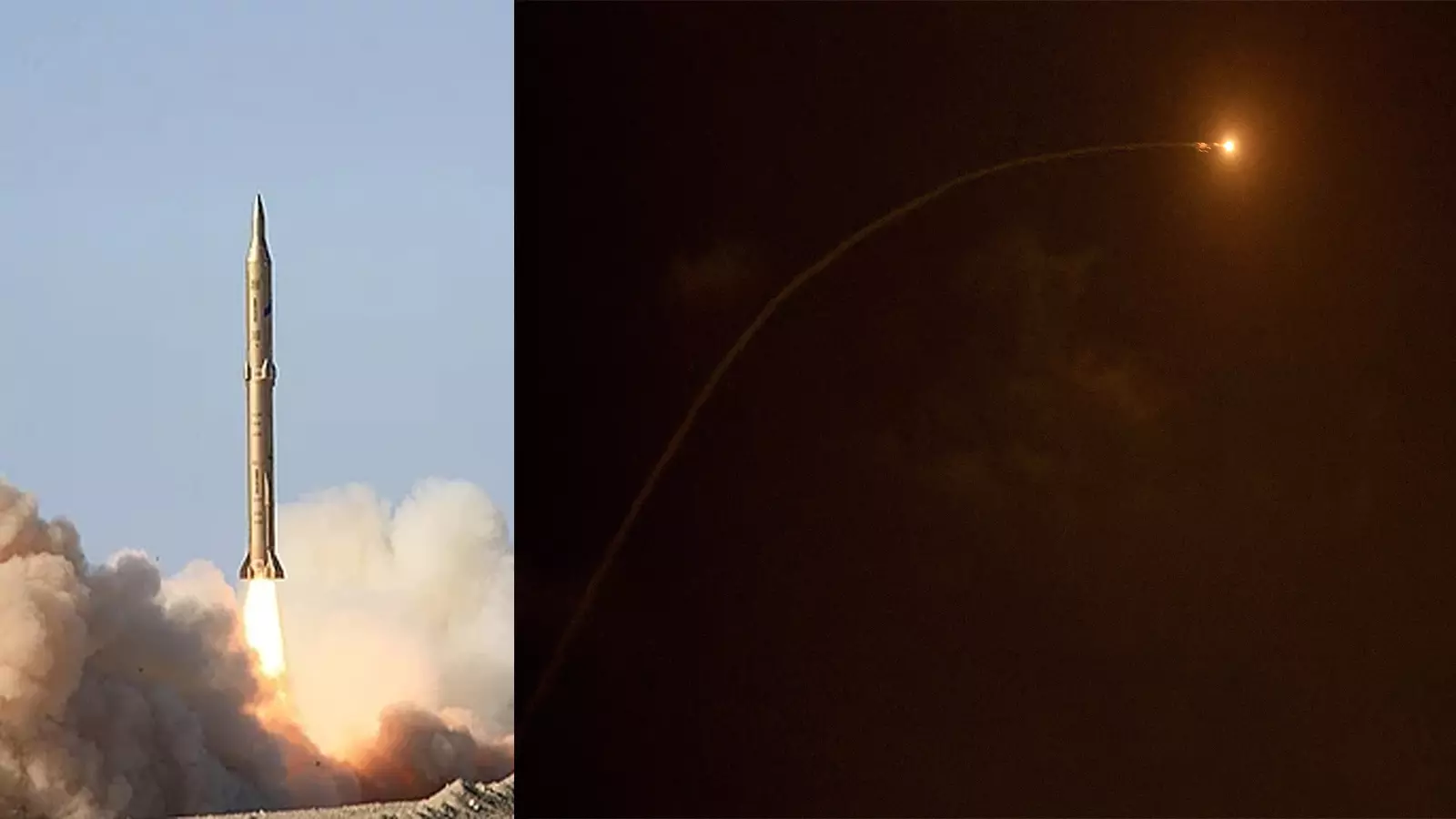
Sejjil Missile | Source: Wikipedia |Rocket trails seen amid a fresh barrage of Iranian missile attacks in the sky above the Israeli center coastal city of Netanya, on March 15, 2026. (Photo by JACK GUEZ / AFP)
The ongoing conflict in West Asia continues to escalate, with reports of new advanced weapons being deployed. The U.S. military has introduced the HELIOS system, an electric weapon said to have altered the scale of warfare. Meanwhile, Iran has reportedly unveiled one of its most advanced ballistic weapons, the Sejjil missile, drawing global attention to Tehran’s missile program.
Analysts note that the Sejjil, capable of striking targets up to 2,000 kilometres away, has earned the nickname “dancing missile” due to its manoeuvrability during flight, which makes interception by air-defence systems extremely difficult.
Iran is widely recognised for its advanced ballistic missile program, possessing the largest and most diverse arsenal in the Middle East. Its inventory includes short-range (SRBM) and medium-range (MRBM) missiles capable of hitting targets up to 3,000 kilometres away. This capability, combined with Iran’s adversarial stance toward the U.S. and Israel, makes it a formidable player in global geopolitics.
The Sejjil missile represents a significant leap in Iran’s missile technology. It is a two-stage, solid-fuel MRBM developed domestically as a successor to the Shahab series of liquid-fuel missiles, which have been in service since the late 1980s. Solid fuel offers a key advantage: unlike liquid-fuel systems that require lengthy preparation before launch, solid-fuel missiles can be fired quickly from mobile launchers, making them harder to detect and destroy pre-launch.
Defence analysts estimate the Sejjil can carry a payload of 500–1,000 kilograms, potentially including conventional high-explosive warheads and other configurations. With a maximum range of 2,000–2,500 kilometres, it can reach targets across much of the Middle East, including Israel, U.S. bases in the Gulf, and other strategic locations. Its manoeuvrability during flight, changing trajectory and confusing radar tracking, gives it a higher chance of evading interception, reinforcing its reputation as one of the most difficult missiles to counter.
Iran first tested the Sejjil in 2008, marking a milestone in its missile development program. The transition from liquid to solid fuel underscored a major advancement in indigenous technology. Today, the missile’s deployment highlights the growing importance of ballistic weapons in regional military strategy, where speed, range, and evasion capabilities increasingly shape the balance of power. At the same time, these launches raise concerns about the prolonging of conflict, economic instability, and the devastating human cost of war.
This article is written by Satvik AVP, an intern with Deccan Chronicle.
( Source : Guest Post )

Next Story