Have You Ever Negotiated Fearing Death: Iran FM on US Talks

According to US Central Command, the most recent operations targeted Iranian air defence installations and coastal surveillance sites linked to previous strikes on Western forces and commercial vessels.
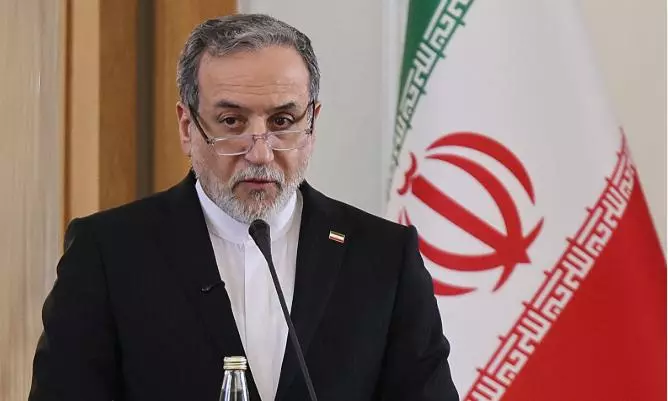
Tehran: Amidst a fresh wave of US airstrikes on Iran, Iranian Foreign Minister Abbas Araghchi has disclosed details of his high-stakes interactions with Steve Witkoff, the envoy to US President Donald Trump.Araghchi revealed that he questioned the American diplomat on whether he had ever conducted negotiations under the psychological pressure of believing "the whole meeting might be bombed".In a recent interview with Iran's state-linked Mehr news agency, the Foreign Minister characterised the environment enveloping the discussions as intensely adversarial, asserting that Iranian representatives had to negotiate under an unrelenting threat of American military strikes.
Revisiting a specific conversation with Witkoff, Araghchi detailed his remarks to the envoy: "Have you ever been in a meeting where at any moment you think the whole meeting might be bombed? Have you ever been on the phone while you're talking, you might, as they say, explode, be destroyed? Have you ever, for example, while checking in on your family over the phone, thought to yourself this might be the last time?"
The Iranian Foreign Minister emphasised that, despite these immense pressures, Tehran remained unyielding."We stood our ground. You have to talk. You can't threaten us and you can't bribe us," Araghchi stated during the interview, as quoted by RT news.The diplomatic channel between Araghchi and Witkoff opened during nuclear talks last year, with the two officials maintaining intermittent contact since then.
However, Tehran has consistently sought to downplay these interactions, insisting they do not constitute formal negotiations.This backchannel diplomacy has spanned multiple international capitals. The initial indirect contact occurred in Muscat on February 6, where Omani intermediaries relayed communications between the two sides before the officials engaged in a brief face-to-face encounter.
Subsequent rounds of discussions were held in Muscat and Rome, followed by a session in Geneva after an initially scheduled European round was moved.
In April, Araghchi journeyed to Islamabad, Muscat, and Moscow for a further round of talks involving Witkoff and Jared Kushner, a process facilitated by Pakistani authorities.
Alongside these in-person meetings, both parties have reportedly maintained contact via direct text messaging.
During the interview, Araghchi firmly dismissed assertions that military coercion could compel Tehran to capitulate.
Drawing a sharp distinction with South America, he stressed that Iran would not suffer a sudden collapse similar to Venezuela following the US capture of President Nicolas Maduro during a military raid in January."Iran is not Venezuela," Araghchi declared, maintaining that Washington is mistaken if it believes it can apprehend "one person" and trigger the total surrender of the Iranian leadership.These remarks come at a critical juncture, as the previously brokered ceasefire between Washington and Tehran has effectively collapsed.The US military has aggressively renewed its campaign against Iran, launching an eighth straight night of bombardments.This escalation followed a fatal Iranian missile strike on a military outpost in Jordan that claimed the lives of two US service members.
According to US Central Command, the most recent operations targeted Iranian air defence installations and coastal surveillance sites linked to previous strikes on Western forces and commercial vessels.
Tehran has retaliated by firing a barrage of drones and missiles at US military positions throughout the Gulf region.Authorities in Kuwait and Bahrain reported neutralising several incoming Iranian projectiles, while Israel confirmed that missiles fired from Iran were tracking towards Aqaba in Jordan, intensifying anxieties regarding a wider regional spillover. Concurrently, the geopolitical tug-of-war over the vital Strait of Hormuz has intensified.
While Washington has instituted a naval blockade around key Iranian ports, Tehran maintains that the strategic shipping lane remains closed to traffic, warning of harsher retaliation if American pressure does not recede. Domestically, Araghchi is facing severe political headwinds.
Reports indicate he was compelled to withdraw from the funeral procession of the late Supreme Leader Ayatollah Ali Khamenei after angry crowds threw stones and shouted slogans denouncing him as "the compromiser".Furthermore, hardline Iranian factions have levelled sharp criticism against Araghchi, Parliament Speaker Mohammad Bagher Ghalibaf, and President Masoud Pezeshkian, accusing the trio of orchestrating the June agreement without securing the explicit authorisation of the new Supreme Leader, Mojtaba Khamenei.
Defending the administration's diplomatic track, Ghalibaf argued in a televised speech that engaging in negotiations "is not tantamount to compromise" but rather serves as a vital component of Iran's overarching doctrine of resistance.