First Human Testing Begins for Bundibugyo Ebola Vaccine

14 July 2026 4:12 PM IST14 July 2026 4:12 PM IST
The vaccine uses the same chimpanzee adenovirus platform as the Oxford-AstraZeneca Covid-19 shot and was developed with funding from the Coalition for Epidemic Preparedness Innovations.
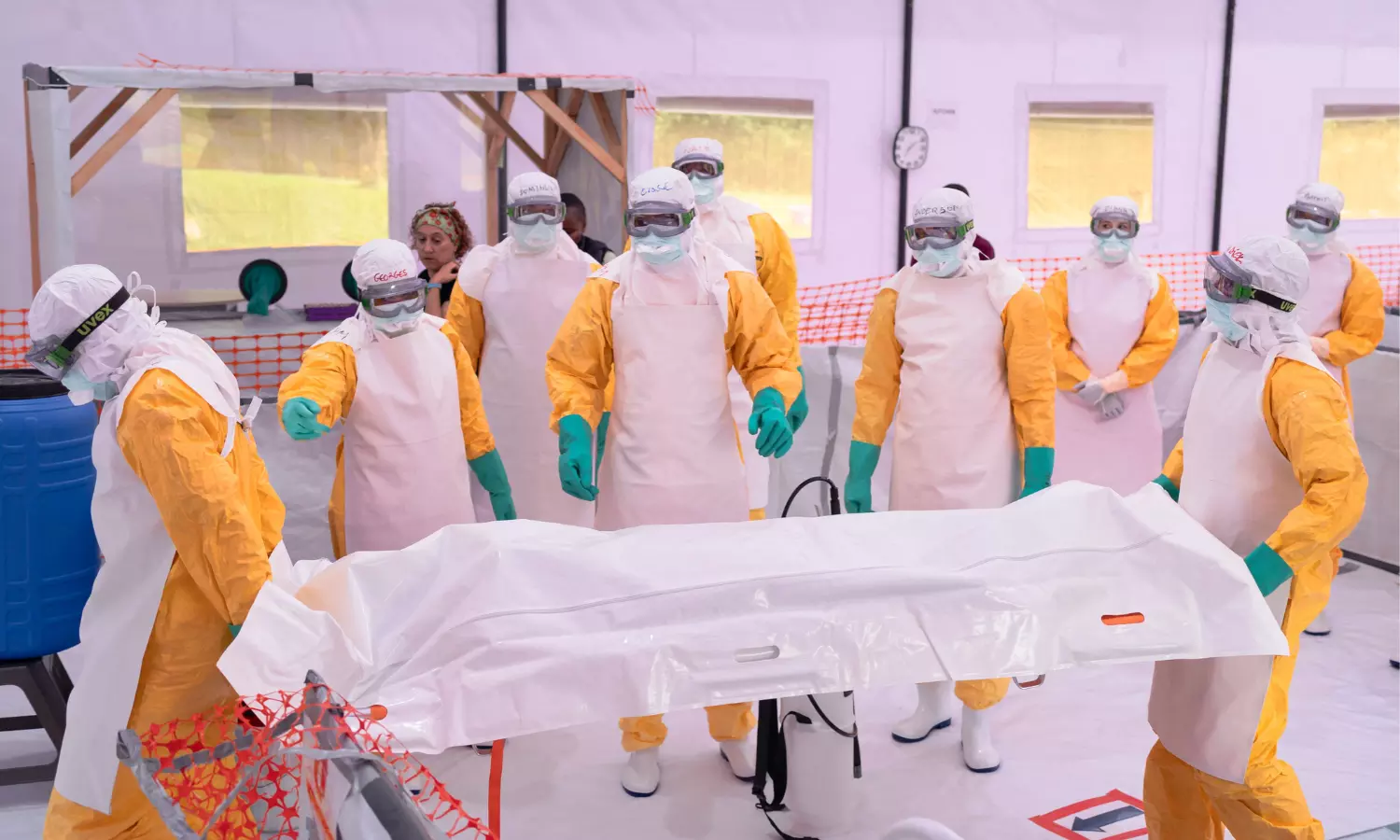
Health workers in Personal Protective Equipment (PPE) simulate using a manikin the evacuation protocols of deceased victims of Ebola during a training by medical charity, Médecins Sans Frontières (MSF) to reinforce regional emergency response capacity for Ebola in the Democratic Republic of Congo (DRC) at Ongata Rongai, Kajiado County in Kenya on July 10, 2026. (Photo by Tony KARUMBA / AFP)
The world’s first clinical trial of a vaccine targeting the Bundibugyo strain of Ebola has begun, marking a milestone in efforts to contain an outbreak that has killed more than 700 people in central Africa.
The early-stage trial will enroll 50 healthy adults to assess the vaccine’s safety and immune response. The Serum Institute of India said it has already manufactured and stockpiled about 620,000 doses of the experimental shot in anticipation of later-stage trials and potential emergency use if it proves effective. It’s supplied 4,000 doses for the phase-1 study, the company said.
The vaccine uses the same chimpanzee adenovirus platform as the Oxford-AstraZeneca Covid-19 shot and was developed with funding from the Coalition for Epidemic Preparedness Innovations.
The trial is beginning 57 days after the World Health Organization declared the Ebola outbreak in the Democratic Republic of Congo and neighboring Uganda a public health emergency of international concern, underscoring how advances in vaccine technology have compressed development timelines since the pandemic.
The “outbreak continues to devastate affected communities, underlining the urgent need for effective vaccines and treatments,” Teresa Lambe, the University of Oxford immunologist leading the vaccine’s scientific development, said in a statement.
There are no approved vaccines or specific treatments for the Bundibugyo virus. Existing licensed Ebola vaccines target the Zaire strain and aren’t approved against Bundibugyo, leaving health officials without a vaccine they can deploy during the current outbreak.
Even if the Bundibugyo vaccine succeeds, it’s unlikely to alter the course of the current outbreak in the near term. Early-stage clinical trials are “not an immediate solution for communities facing the outbreak today,” said Jean Kaseya, director-general of the Africa Centres for Disease Control and Prevention, but are essential for preparing better tools for future epidemics.
Quickly identifying Ebola cases and tracing their contacts would reduce deaths more than vaccinating only patients’ contacts — a strategy known as ring vaccination — if the existing Ebola vaccine provides only limited protection against the Bundibugyo strain, according to a modeling study released ahead of peer review and publication on Monday.
Vaccinating broader communities would have the greatest effect if it could be done rapidly and at sufficient scale, the researchers found.
( Source : Bloomberg )


Next Story