As Europe Rearms, 'Wingman' Aircraft Take Centre Stage

European, US firms developing "wingman" drones to accompany fighter jets; their own AI-powered drones to carry extra sensors, jammers and weapons.
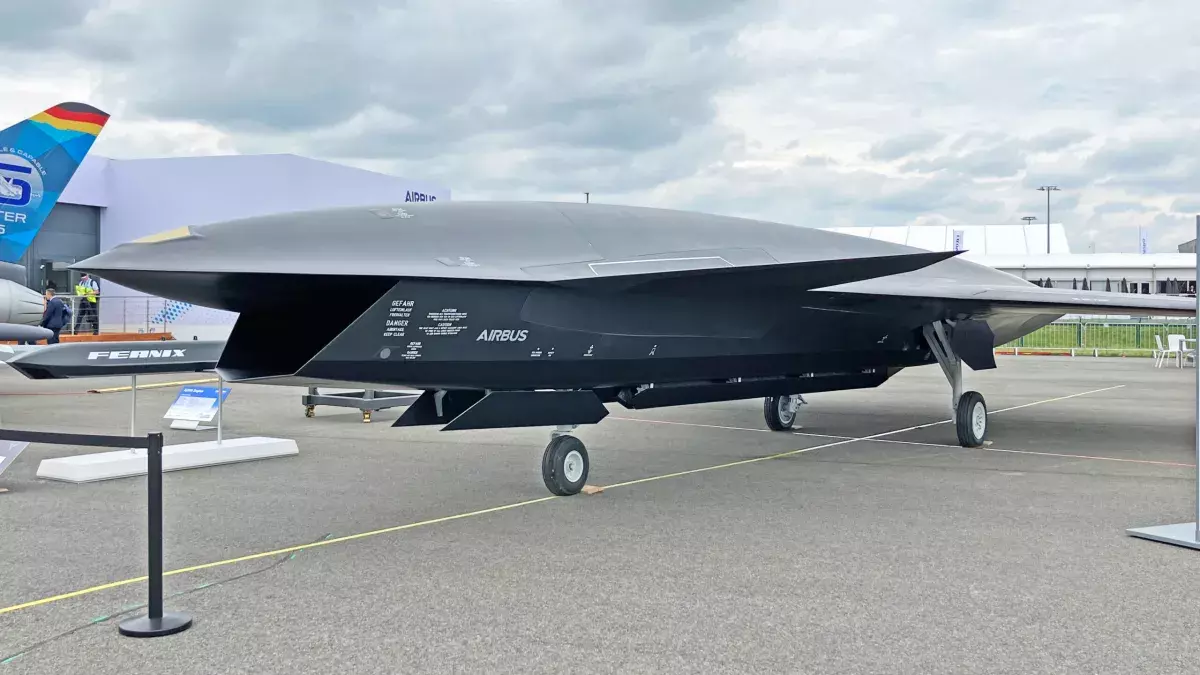
Berlin : Centre stage at last week's Berlin airshow was the "wingman" drone, Europe's latest-generation defence weapon designed to accompany fighter jets.
As the war in Ukraine in particular has underscored the growing importance of drones and electronic warfare, European and U.S. defence forces are rapidly developing their own AI-powered drones to complement their fighter jets and carry extra sensors, jammers and weapons.
In Berlin, four companies - Airbus, Boeing , Helsing and General Atomics - were looking to tout their latest designs of the technology to Germany's military and beyond.
Wingman drones, sometimes referred to as wingman aircraft, are known as collaborative combat aircraft (CCA) and range in size from small interceptors to being as big as planes. They fly in what is known as a "loyal wingman" system as they flank manned aircraft.
Investment in the technology comes as Europe faces a debate over the value of building its own sovereign defence industry and reducing reliance on the United States.
"The AI agent, of course, the brain of these systems, needs to be controlled in a sovereign fashion," Stephanie Lingemann, head of air domain at German defence startup Helsing, told Reuters at the airshow.
Germany and France this month shelved plans for a joint fighter jet but are now looking to salvage parts of the Future Combat Air System programme by developing a related drone system and data network.
NOT YET OPERATIONAL
The war in Ukraine has shown how disrupting sensors and communications can be as critical as kinetic attacks.
Helsing says its electronic attack drone is designed to operate alongside strike drones in autonomous swarms.
Boeing Australia's Managing Director Amy List insisted its MQ-28 Ghost Bat wingman was not a drone, but an unmanned jet designed "to enhance the capabilities, be a force multiplier for crewed platforms."
The company is collaborating with German firm Rheinmetall to build what it says is its tried and tested technology.
"It can go out ahead of crewed platforms, provide situational awareness, analyse data, it can fuse that data and provide decision-making quality information back to a human," List told Reuters.
As it stands, wingman drones or aircraft have not yet arrived on the battlefield. Boeing says its model can be in service for the German Luftwaffe by 2029, while Airbus' model, the U760b Ravenstorm, won't be available until the 2030s, the company says.
General Atomics' YFQ-42A is in testing and was selected in 2024 by the U.S. Air Force among other technologies to receive funding and other support for prototype development.
Lockheed Martin and U.S. defence technology startup Anduril are expected to display similar technologies at upcoming airshows, including Britain's Farnborough airshow starting on July 20.