Election officials and media reports said early results gave an edge to the BNP with its nominees leading in over 175 seats while Jamaat candidates leading in 30 seats.
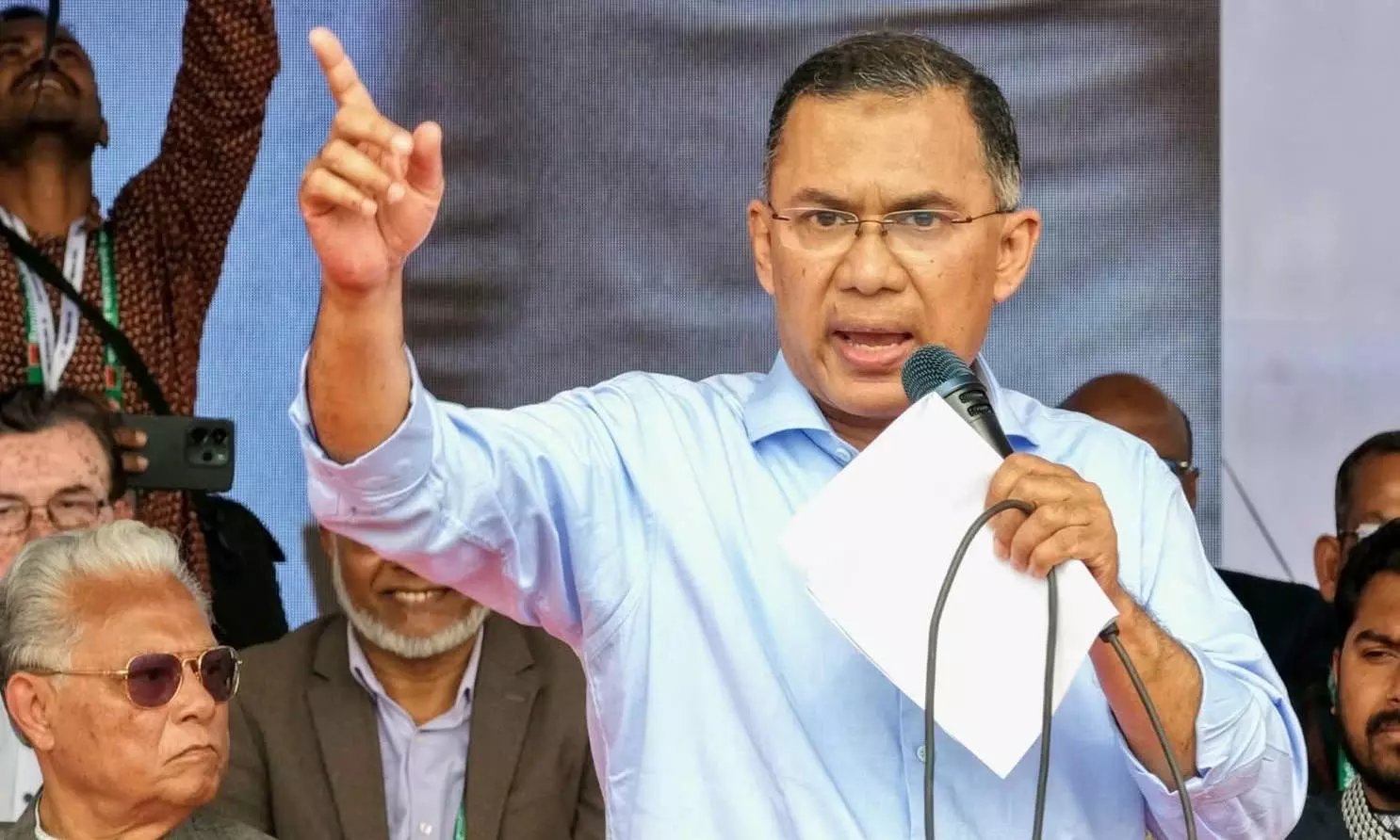
Dhaka: The Bangladesh Nationalist Party (BNP) appears to have the edge over its former ally Jamaat-e-Islami in the crucial general elections on Thursday to elect a government to replace the interim administration, which took charge after the collapse of the Awami League regime in August 2024.
Election officials and media reports said early results gave an edge to the BNP with its nominees leading in over 175 seats while Jamaat candidates leading in 30 seats.
The polling with a referendum on constitutional reforms running in parallel closed at 4.30 pm local time with an initial estimate suggesting the turnout to be 48 per cent at 2 pm.
In unofficial results, the Election Commission officials said BNP chairman and former premier Khaleda Zia's son Tarique Rahman won from Dhaka-17 and Bogra-6 constituencies.
Jamaat-e-Islami president Shafiqur Rahman was leading the race from a seat in the capital while Jamaat's secretary general Mia Golam Porwar lost the race to his BNP rival Ali Asghar Lobby in the southwestern Khulna constituency.
The voting for the 13th parliamentary elections was held along with a referendum on the implementation of a complex 84-point reform package, known as the July National Charter.
The counting of votes began soon after voting concluded. However, in places where voters were in line inside the polling station, voting continued until they voted.
The election is seen as a direct contest between the Bangladesh Nationalist Party (BNP) and its former ally Jamaat-e-Islami, in the absence of ousted premier Sheikh Hasina's now disbanded Awami League.
The Jamaat, which is leading an 11-party alliance, has described the voting as “excellent,” expressing hope that it would secure a “landslide victory”, despite alleging some isolated incidents of violence and irregularities.
BNP election steering committee spokesperson Mahdi Amin said that his party's victory is “inevitable and clear”.
Election Commission senior secretary Akhtar Ahmed said around 48 per cent voter turnout was recorded till 2 pm nationwide, state-run BSS news agency reported.
Soon after voting concluded, Chief Adviser Muhammad Yunus thanked people for their participation in the general elections and the referendum.
“I call upon political parties and candidates to uphold democratic decency, tolerance and mutual respect even after the final results are announced. Differences of opinion will exist, but in the national interest, we must remain united,” he said.
“We will move forward collectively toward building an accountable, inclusive and justice-based state,” he added. “Let's work together in this journey to strengthen democracy.”
Yunus earlier described the elections and the referendum as a historic opportunity and said, “Let's celebrate the birthday of Bangladesh today.”
Earlier, top leaders of both BNP and Jamaat raised fears of manipulation and said that they will accept the results of the elections if they are held in a “free, fair, impartial manner.”
Tarique Rahman, the prime ministerial candidate of BNP, said he was “confident” his party would regain power after over 15 years of political wilderness, but demanded the results be timely released.
“If the election is held in a free, fair, impartial manner and without controversy, then why shouldn't we accept it? We will accept it. However, of course, there is one condition that the election must be impartial and peaceful,” the 60-year-old leader said.
The Jamaat-e-Islami, which was opposed to Bangladesh's 1971 independence from Pakistan, hopes to form the first Islamist-led government in constitutionally secular Bangladesh under its 67-year-old chief Shafiqur Rahman.
“We want the results that will come through a fair process. If the vote is free and impartial, we will accept the outcome. Others must also accept it. That is the beauty of democracy. This is what we want,” he said.
He alleged that attempts were made to cast fake votes in different parts of the country, adding that in several places their polling agents were attacked and wounded.
Both BNP and Jamaat have asked their party workers to stay at polling stations until the results are in.
The Election Commission made elaborate security arrangements for the elections, deploying nearly 1 million security personnel -- the largest-ever in the country's electoral history.
Nearly 9 lakh law enforcement personnel were deployed to enforce the security vigil to prevent violence and maintain order during the voting. Authorities deployed Armoured Personnel Carriers and Rapid Action Teams across key areas of the capital.
For the first time, drones and body-worn cameras were used for election security.
Nearly 127 million voters were registered to cast their ballots, including five million first-time voters, across 42,779 polling centres in 299 out of 300 constituencies nationwide. The election in one constituency was cancelled due to the death of a candidate. A total of 1,755 candidates are in the fray.