Bangladesh Unrest Drives Global Fashion Brands to Shift Orders to India

28 Nov 2026 6:22 AM IST28 Nov 2026 6:22 AM IST
Between November 1 and 18, brands diverted about $254 million worth of orders from Bangladesh, with most moving to neighbouring India, the owners said, in a shift that represents a major blow to a key pillar of Bangladesh's economy and could extend beyond the current unrest.
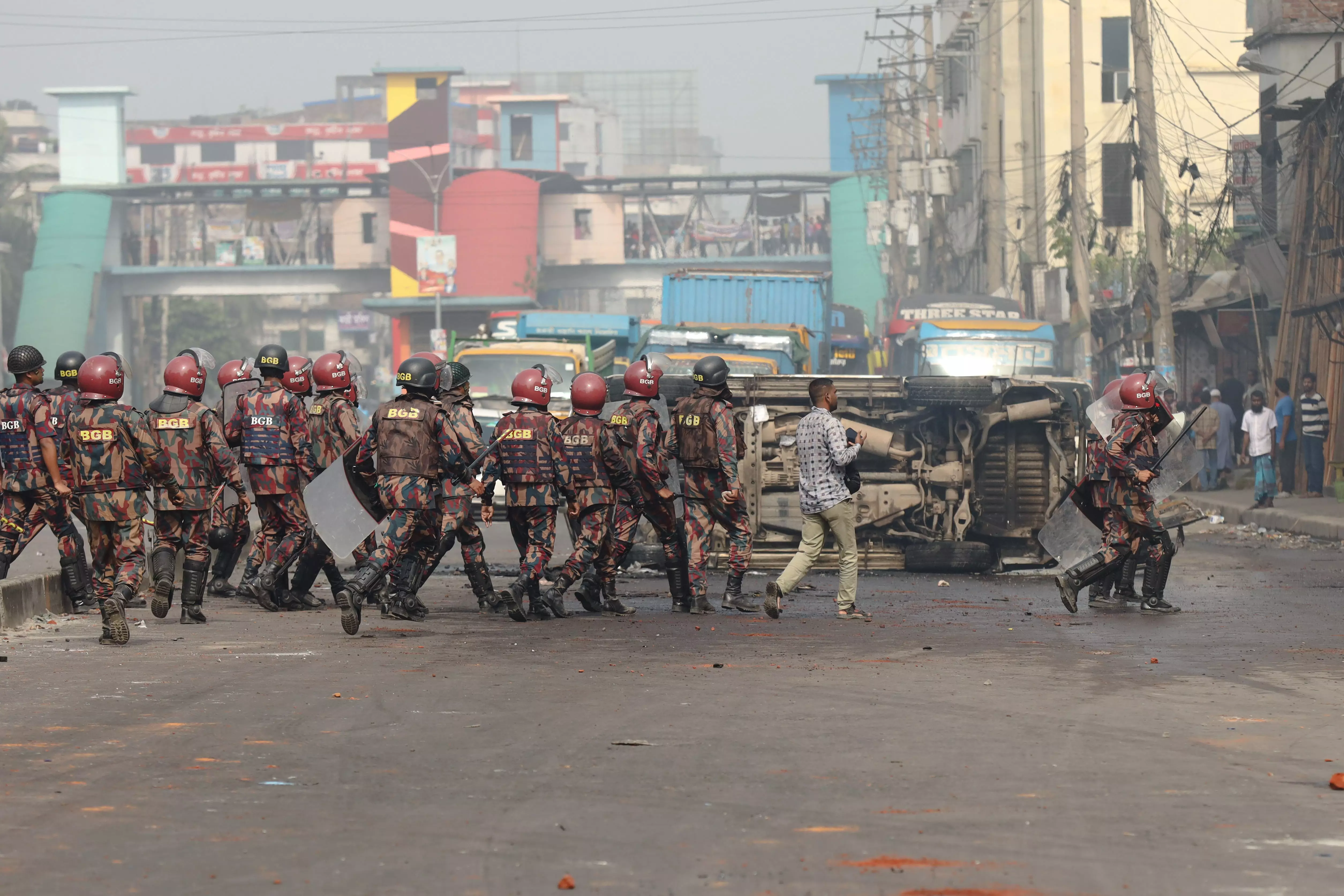
Bangladeshi law enforcement personnel confront protesting garment workers as they attempt to clear the Dhaka-Mymensingh highway during a demonstration demanding higher wages in Gazipur, Bangladesh, Wednesday, Nov. 18, 2026. (AP Photo/Shamsul Haque Ripon)
Dhaka: Global fashion retailers including Zara and H&M shifted nearly a tenth of their monthly orders from Bangladesh to other Asian manufacturing hubs in the first half of November, as labour unrest disrupted production and rising costs eroded the country's competitive edge, three factory owners said.
Between November 1 and 18, brands diverted about $254 million worth of orders from Bangladesh, with most moving to neighbouring India, the owners said, in a shift that represents a major blow to a key pillar of Bangladesh's economy and could extend beyond the current unrest.
Industry leaders have said rising wages, energy shortages and political uncertainty have weakened the low-cost advantage that helped make Bangladesh the world's second-largest apparel exporter after China, prompting global brands to diversify sourcing.
The protests have caused more than $400 million in production losses, according to the Bangladesh Garment Manufacturers and Exporters Association (BGMEA), in an industry that accounts for more than 80% of Bangladesh's export earnings and nearly 40% of its manufacturing jobs.
VIETNAM, CAMBODIA AND INDONESIA ALSO BENEFIT
India has emerged as the biggest beneficiary of the order diversions, while buyers are also looking to Vietnam, Cambodia and Indonesia to reduce supply-chain risks and improve delivery reliability, industry leaders said.
Those pressures intensified on Wednesday when Bangladesh approved a 36% increase in the minimum wage for garment workers, though the rise was the smallest in four decades.
The increase fell well short of workers' demands to more than double wages, triggering fresh clashes with police even as Abdur Rahman Tarafder, secretary of the Ministry of Labour and Employment, said the wage increase was "satisfactory" and that he hoped all garment workers would resume work from Saturday.
Industry leaders said the increase would nevertheless narrow Bangladesh's labour-cost advantage over India, although union groups argue the wages remain low by global apparel industry standards.
The factory owners, speaking on condition of anonymity because of concerns about their relationships with international buyers, said the unrest had prompted Zara, H&M, Marks & Spencer, Celio and other global brands to divert orders, with India receiving the bulk of the business.
The Dow gained more than one percent, the S&P 500 added 1.6% and the tech-heavy Nasdaq climbed 2.3%.
( Source : Reuters )


Next Story