US Energy Secretary Chris Wright Visits Venezuela To Assess Oil Industry Overhaul

Wright's visit follows last month’s enactment of a Venezuelan law that opened the nation’s oil sector to private investment,
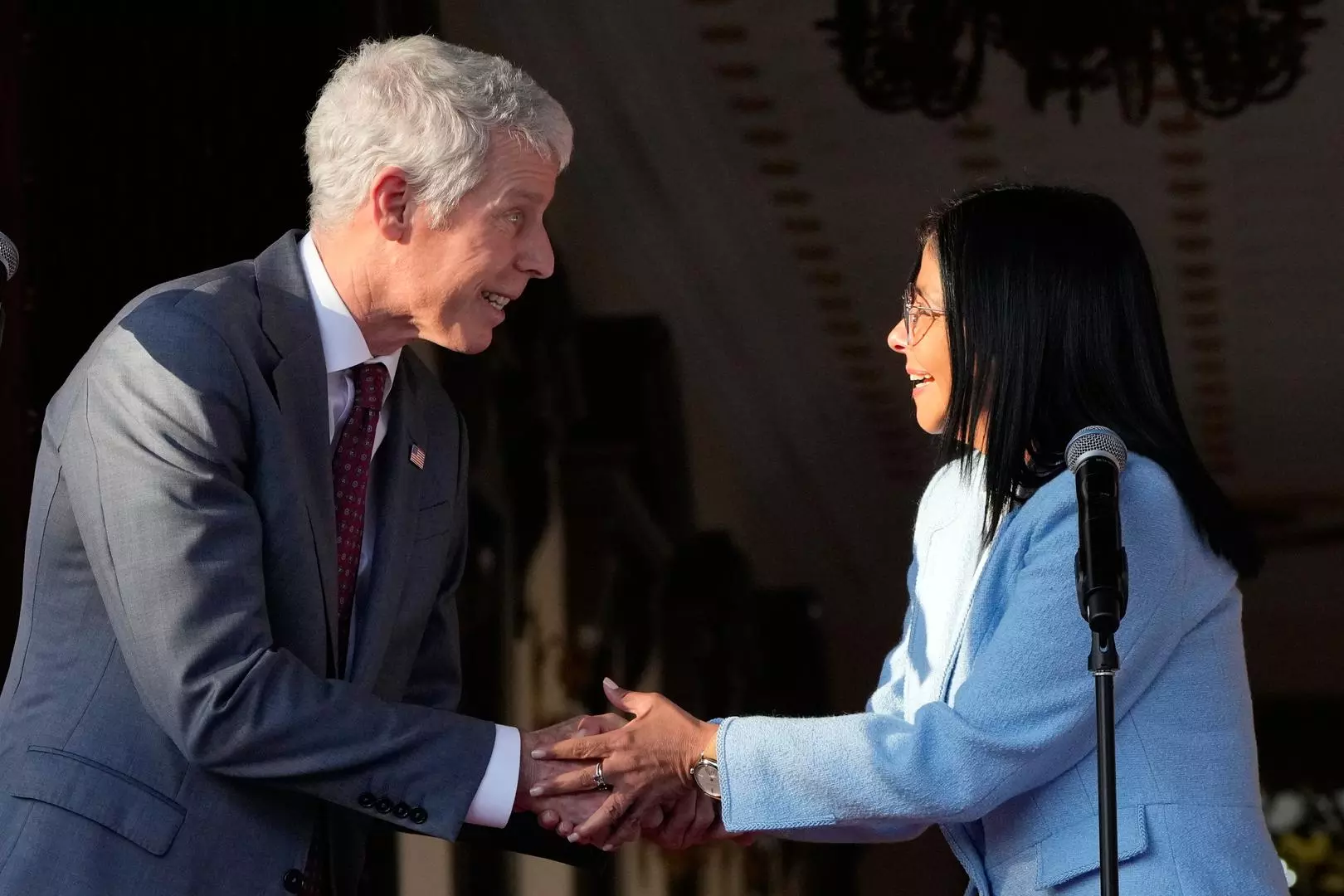
Caracas : United States Energy Secretary Chris Wright arrived Wednesday in Venezuela for a firsthand assessment of the country’s oil industry, a visit that further asserts the U.S. government’s self-appointed role in turning around Venezuela’s dilapidated energy sector.
Wright met Venezuela’s acting President Delcy Rodríguez at the Miraflores presidential palace in the capital, Caracas. He is expected to meet with government officials, oil executives and others during a three-day visit to the South American country.
Wright’s visit comes as the administration of U.S. President Donald Trump continues to lift sanctions to allow foreign companies to operate in Venezuela and help rebuild the nation’s most important industry. It follows last month’s enactment of a Venezuelan law that opened the nation’s oil sector to private investment, reversing a tenet of the self-proclaimed socialist movement that has ruled the country for more than two decades.
“I bring today a message from President Trump,” Wright told reporters as he stood next to Rodríguez with flags from both countries behind them. “He is passionately committed to absolutely transforming the relationship between the United States and Venezuela, part of a broader agenda to make the Americas great again, to bring our countries closer together, to bring commerce, peace, prosperity, jobs, opportunity to the people of Venezuela.”
Rodríguez was sworn into her new role after the brazen Jan. 3 seizure of then-President Nicolás Maduro in a U.S. military attack in Caracas. She proposed the overhaul of the country’s energy law after Trump said his administration would take control of Venezuela’s oil exports and revitalize the ailing industry by luring foreign investment.
Rodríguez on Wednesday acknowledged that Venezuela’s relationship with the U.S. has had “highs and lows” but said both countries are now working on a mutually benefiting “energy agenda.”
“Let diplomatic dialogue ... and energy dialogue be the appropriate and suitable channels for the U.S. and Venezuela to maturely determine how to move forward,” she said.
Rodríguez’s government expects the changes to the country’s oil law to serve as assurances for major U.S. oil companies that have so far hesitated about returning to the volatile country. Some of those companies lost investments when the ruling party enacted the existing law two decades ago to favor Venezuela’s state-run oil company, PDVSA.
The new law now grants private companies control over oil production and sales, ending PDVSA’s monopoly over those activities as well as pricing. It also allows for independent arbitration of disputes, removing a mandate for disagreements to be settled only in Venezuelan courts, which are controlled by the ruling party.
Foreign investors view the involvement of independent arbitrators as crucial to guard against future expropriation.
Wright told reporters the reform “is a meaningful step in the right direction” but “probably not far and clear enough to encourage the kind of large capital flows” the U.S. would like to see in Venezuela.
Wright planned to visit oil fields Thursday.
Venezuela, which has the world’s largest proven oil reserves and produces about 1 million barrels a day, has long relied on oil revenue as a lifeblood of its economy.
Trump imposed crippling sanctions on Venezuela’s oil industry during his first term, locking out the state-owned company Petróleos de Venezuela S.A. of the global oil markets in an attempt to topple Maduro. That pushed his government to rely on a shadowy fleet of unflagged tankers to smuggle deeply discounted crude into global supply chains.
In December, Trump ordered a blockade of all “sanctioned oil tankers” entering or leaving the South American country, ramping up pressure on Maduro in a move that seemed designed to put a tighter chokehold on Venezuela’s economy. U.S. forces that month also began seizing oil tankers off Venezuela’s Caribbean coast.
Since Maduro’s Jan. 3 ouster, the Trump administration set out to control the production, refining and global distribution of Venezuela’s petroleum products and oversee where the revenue flows. The administration also began lifting broad sanctions, but also continued seizing tankers — now in agreement with Venezuela’s government — including one this week in the Indian Ocean after it was tracked from the Caribbean Sea.
Wright on Wednesday told reporters the blockade is “essentially over” as the U.S. is “flowing Venezuelan crude out, selling it at a much higher price than Venezuela was selling it before,” and the revenue is being used in specific projects benefiting Venezuelans.
