Trump Credits Modi, Munir for Halting India-Pak Clash

19 Jun 2025 9:03 PM IST19 Jun 2025 9:03 PM IST
US President, in contrast with his often repeated claim, credited the leaders of the two countries with ending the May 7-10 hostilities
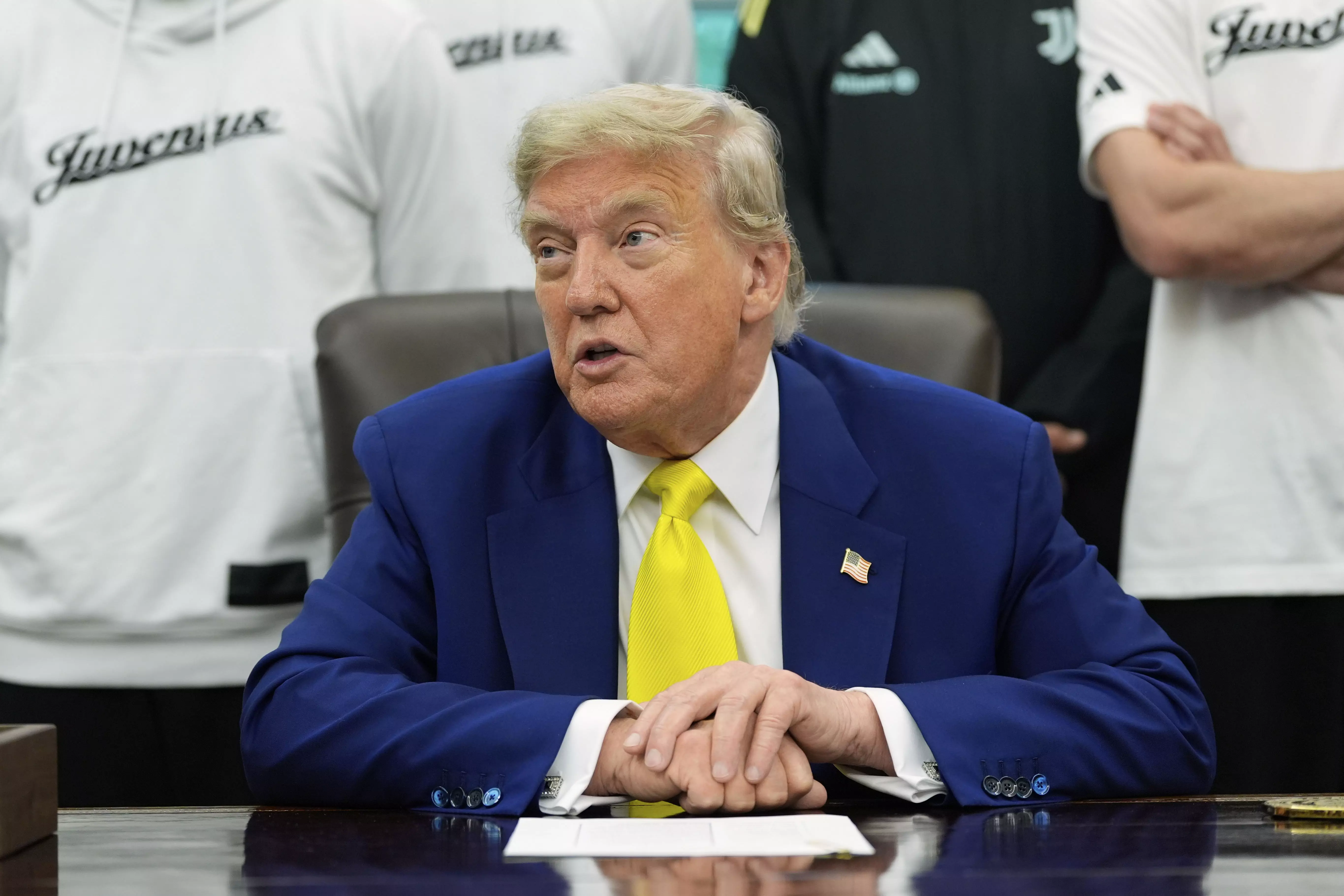
US President Donald Trump (AP Photo/Alex Brandon)
Hours after talking to Prime Minister Narendra Modi on the phone and meeting Pakistan Army Chief Field Marshal Asim Munir at the White House for lunch, United States President Donald Trump conceded before the media for the first time that it was both India and Pakistan that "decided" to halt their military confrontation last month.
Despite refutations by India that the ceasefire "understanding" last month was reached "directly" at the behest of Pakistan, Mr Trump persisted with his narrative that it was he who brokered the truce between the two neighbours as recently as Wednesday. However, on Thursday, the US President, in contrast with his often repeated claim, credited the leaders of the two countries with ending the May 7-10 hostilities.
The US President told the media: "… I'm so happy that two smart people, plus you know, people on their staff too, but two smart people, two very smart people, decided not to keep going with that war. That could have been a nuclear war. Those are two nuclear powers, big ones, big, big nuclear powers, and they decided that.”
Mr Trump also confirmed that he had discussed the Israel-Iran conflict at a closed-door lunch at the White House Cabinet Room with the Pakistan Army Chief and said he was "honoured" to meet him. He also said he had invited Gen. Munir to thank him for ending the military confrontation with India last month and added that the US wanted to do trade deals with both India and Pakistan.
The US President told the media, "Well, they (Pakistan) know Iran very well, better than most, and they're not happy about anything. It's not that they're bad with Israel. They know them both, actually, but they probably, maybe, know Iran better, but they see what's going on, and he agreed with me."
Mr Trump added: “The reason I had him here… I want to thank him for not going into the war, ending the war. And I want to thank, as you know, Prime Minister Modi just left a little while ago, and we're working on a trade deal with India. We're working on a trade deal with Pakistan."
Pakistan shares a long border with Iran and Islamabad has served previously as an American ally in Afghanistan. The invitation was also seen as an acknowledgement by Washington that Pakistan’s Chief of Army Staff (COAS) is the de facto ruler of his country, given that it is rare for a US President to invite a Pakistan Army Chief for a meeting, especially when there is a civilian government in Islamabad.
The meeting comes amid talks about Washington’s role in a possible bigger attack on the Iranian capital city, Tehran. Speculation is also rife about any clandestine assistance that Islamabad may be willing to provide to the Americans, although in public, the civilian government in Islamabad has backed Iran against the Israeli attack. The Pakistani military has often proven to be a crucial ally for Washington despite Islamabad’s dubious record in sponsoring terrorism against India.
Notably, Pakistan had thanked the United States last month after the US President claimed that it was his administration that had brokered a ceasefire between India and Pakistan despite India refuting the claim. Just on Wednesday, the Prime Minister slammed the global double standards on terrorism and told the G-7 bloc that nations supporting terrorism, a thinly veiled reference to Pakistan, should not be “rewarded”.
The Pakistan Army chief, who is reportedly on a five-day visit to the United States that started on Sunday, is seen as an anti-India hawk who was clamouring to take on India in a military conflict. The Pakistan military is also now heavily dependent on China for weaponry and defence platforms to the tune of more than 80 per cent.
The visit may also be intended to secure weaponry from the United States after the short military confrontation between India and Pakistan last month, in which Pakistan’s air defence systems proved wholly inadequate and could not prevent Indian missile attacks on prominent Pakistani airbases.
Pakistan, an erstwhile Cold War ally of the US, already has a fleet of American F-16 fighter aircraft.
According to reports, a Pakistani-origin businessman had facilitated the luncheon meeting on Wednesday, even as several in the Pakistani diaspora loyal to jailed former Prime Minister Imran Khan hurled invectives at Gen. Munir from afar and accused him of being a “killer” and “coward”.
There were also reports a few years earlier during the term of the previous Biden administration that Pakistan, at the request of the West, was clandestinely supplying ammunition to Ukraine. Pakistan was then on the grey list of the Financial Action Task Force (FATF) and soon exited the list to its relief, raising eyebrows globally, including in New Delhi.
Despite refutations by India that the ceasefire "understanding" last month was reached "directly" at the behest of Pakistan, Mr Trump persisted with his narrative that it was he who brokered the truce between the two neighbours as recently as Wednesday. However, on Thursday, the US President, in contrast with his often repeated claim, credited the leaders of the two countries with ending the May 7-10 hostilities.
The US President told the media: "… I'm so happy that two smart people, plus you know, people on their staff too, but two smart people, two very smart people, decided not to keep going with that war. That could have been a nuclear war. Those are two nuclear powers, big ones, big, big nuclear powers, and they decided that.”
Mr Trump also confirmed that he had discussed the Israel-Iran conflict at a closed-door lunch at the White House Cabinet Room with the Pakistan Army Chief and said he was "honoured" to meet him. He also said he had invited Gen. Munir to thank him for ending the military confrontation with India last month and added that the US wanted to do trade deals with both India and Pakistan.
The US President told the media, "Well, they (Pakistan) know Iran very well, better than most, and they're not happy about anything. It's not that they're bad with Israel. They know them both, actually, but they probably, maybe, know Iran better, but they see what's going on, and he agreed with me."
Mr Trump added: “The reason I had him here… I want to thank him for not going into the war, ending the war. And I want to thank, as you know, Prime Minister Modi just left a little while ago, and we're working on a trade deal with India. We're working on a trade deal with Pakistan."
Pakistan shares a long border with Iran and Islamabad has served previously as an American ally in Afghanistan. The invitation was also seen as an acknowledgement by Washington that Pakistan’s Chief of Army Staff (COAS) is the de facto ruler of his country, given that it is rare for a US President to invite a Pakistan Army Chief for a meeting, especially when there is a civilian government in Islamabad.
The meeting comes amid talks about Washington’s role in a possible bigger attack on the Iranian capital city, Tehran. Speculation is also rife about any clandestine assistance that Islamabad may be willing to provide to the Americans, although in public, the civilian government in Islamabad has backed Iran against the Israeli attack. The Pakistani military has often proven to be a crucial ally for Washington despite Islamabad’s dubious record in sponsoring terrorism against India.
Notably, Pakistan had thanked the United States last month after the US President claimed that it was his administration that had brokered a ceasefire between India and Pakistan despite India refuting the claim. Just on Wednesday, the Prime Minister slammed the global double standards on terrorism and told the G-7 bloc that nations supporting terrorism, a thinly veiled reference to Pakistan, should not be “rewarded”.
The Pakistan Army chief, who is reportedly on a five-day visit to the United States that started on Sunday, is seen as an anti-India hawk who was clamouring to take on India in a military conflict. The Pakistan military is also now heavily dependent on China for weaponry and defence platforms to the tune of more than 80 per cent.
The visit may also be intended to secure weaponry from the United States after the short military confrontation between India and Pakistan last month, in which Pakistan’s air defence systems proved wholly inadequate and could not prevent Indian missile attacks on prominent Pakistani airbases.
Pakistan, an erstwhile Cold War ally of the US, already has a fleet of American F-16 fighter aircraft.
According to reports, a Pakistani-origin businessman had facilitated the luncheon meeting on Wednesday, even as several in the Pakistani diaspora loyal to jailed former Prime Minister Imran Khan hurled invectives at Gen. Munir from afar and accused him of being a “killer” and “coward”.
There were also reports a few years earlier during the term of the previous Biden administration that Pakistan, at the request of the West, was clandestinely supplying ammunition to Ukraine. Pakistan was then on the grey list of the Financial Action Task Force (FATF) and soon exited the list to its relief, raising eyebrows globally, including in New Delhi.
( Source : Deccan Chronicle )

Next Story