U.S. Hammers Iran at Midnight, Bombards 3 Main Nuclear Sites

US airstrikes on Iran’s nuclear sites escalate tensions as Tehran weighs retaliation amid deepening conflict with Israel
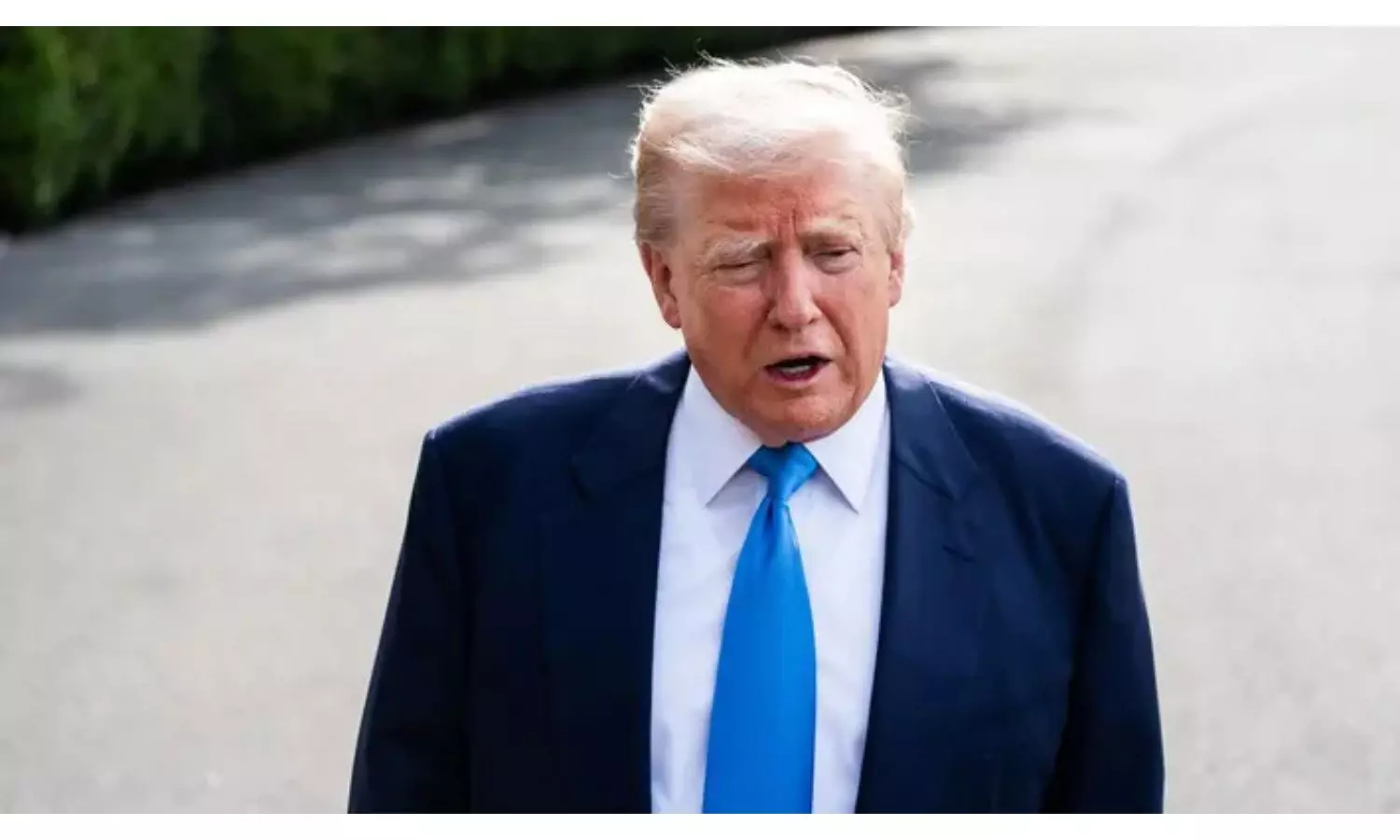
Washington: The US carried out airstrikes on three nuclear sites in Iran overnight with B-2 stealth bombers delivering 30,000-pound bunker-buster bombs for the first time in combat, directly entering Israel's war with Tehran.
The operation, dubbed “Midnight Hammer” hit all targets including Fordow, a uranium-enrichment site buried deep under a mountain, according to US Air Force General Dan Caine, the chairman of the Joint Chiefs of Staff. Natanz and Isfahan nuclear facilities were also struck with similar weapons and cruise missiles.
US President Donald Trump said Iran’s key nuclear enrichment facilities had been “totally obliterated” and warned of “far greater” attacks unless the Islamic Republic agreed to make peace.
The Pentagon described the extensive operation that included 125 aircraft overall, strikes by Tomahawk missiles launched from a US submarine, and the use of 14 Massive Ordnance Penetrator bombs.
Iran's Supreme National Security Council will take a final decision on whether to close the Strait of Hormuz following US bombing raids, Iran's Press TV said on Sunday.
Iranian officials said the attacks by Israel, now joined by the US, had left little room for diplomacy, arguing that negotiations are impossible while the country is under assault.
Tehran fired missiles at Israel in response but has so far stopped short of targeting American forces or assets in the region.
The Islamic Revolutionary Guards Corps said it would continue targeting Israel in response and cited American bases in the region as a vulnerability for the US, without openly threatening them. Tehran's nuclear regulatory agency said there was no sign of radiation contamination and that it had taken precautions in anticipation of an attack.
The world awaited Iran’s response on Sunday after the US attacks. In an effort to avert all-out war with the US, it had yet to follow through on its main threats of retaliation against the United States itself - either by targeting U.S. bases or trying to choke off global oil supplies.
US Vice-President J.D. Vance said Washington was not at war with Iran but with its nuclear programme, adding this had been pushed back by a very long time due to the US intervention.
Satellite images following the attack appeared to show damage both to the mountain above the site and to entrances nearby.
Iranians described their fear at the prospect of an enlarged war involving the United States.
"Our future is dark. We have nowhere to go - it's like living in a horror movie," Bita, 36, a teacher from the central city of Kashan, said before the phone line was cut.
Much of Tehran, a capital city of 10 million people, has emptied out, with residents fleeing to the countryside to escape Israeli bombardment. Iranian authorities say over 400 people have been killed since Israel's attacks began, mostly civilians.
Americans must receive a response for their 'aggression', Iran's Pezeshkian told France's Macron on phone.
Meanwhile, the US State Department ordered the departure of family members and non-emergency US government personnel from Lebanon citing the volatile security situation in the region, a State Department notice emailed to U.S. citizens in Lebanon showed on Sunday.
The Organisation of Islamic Cooperation said on Sunday it would set up a ministerial contact group to establish regular contact with international and regional parties to support de-escalation efforts and "stop the aggression against Iran".
In a joint declaration following a meeting of OIC foreign ministers in Istanbul, the 57-member group condemned "the aggression of Israel" against Iran, stressing "the urgent need to stop Israeli attacks and their great concern regarding this dangerous escalation".
It made no mention of the overnight US strikes on Iran.
The US will likely have to put its troops on high alert. It has around 50,000 service members in the region, the bulk being in Kuwait, Qatar, Bahrain, the United Arab Emirates, Iraq and Saudi Arabia.
In Yemen, the Houthis, a militant group backed by Iran, issued fresh threats against US commercial and naval ships. Until a ceasefire in early May, the Houthis were regularly firing drones and missiles at Western vessels and warships in the southern Red Sea.
It’s also possible that Tehran opts to leave the nuclear Non-Proliferation Treaty, according to Ali Vaez, the director of the International Crisis Group’s Iran Project and a long-time analyst of the country’s atomic programme.
Araghchi, the Iranian foreign minister, left the door open for such an eventuality, questioning the treaty’s effectiveness since it failed to “protect” Iran from attacks.
Live Updates
- 22 Jun 2025 12:27 PM IST
Iran’s Foreign Ministry condemned the U.S. attacks on its nuclear sites as a betrayal of diplomacy and an act of war, accusing America of supporting Israel’s aggressive actions. Tehran warned it “reserves all options” to resist the military aggression and defend its national interests, with Foreign Minister Abbas Araghchi calling the strikes “outrageous” and promising lasting consequences under the UN’s right to self-defense.
- 22 Jun 2025 11:58 AM IST
Iran Warns US of Everlasting Consequences, Vows to Retaliate
Iran’s top diplomat condemned the recent U.S. attacks on its nuclear sites, warning they “will have everlasting consequences” for regional stability. Tehran stated it “reserves all options” to respond, signaling potential retaliation amid escalating tensions. The strong warning underscores the deepening crisis following America’s unprecedented strikes on Iran’s Fordo, Natanz, and Isfahan facilities.
- 22 Jun 2025 11:57 AM IST
Israel Closes Airspace as US Unleashes Bunker-Buster Bombs on Iran Nuclear Sites
Following the US airstrikes on Iran’s nuclear facilities, Israel has closed its airspace amid heightened regional tensions. The Pentagon confirmed the use of the GBU-57 “bunker-buster” bomb for the first time in combat, targeting Iran’s heavily fortified Fordo enrichment plant deep within a mountain. U.S. submarines also launched around 30 Tomahawk missiles during the operation, though the specific targets remain unclear. While Iran reports no radioactive contamination at the affected sites—Fordo, Natanz, and Isfahan—the unprecedented military action marks a major escalation in the ongoing conflict and raises fears of wider fallout.
- 22 Jun 2025 11:55 AM IST
Trump Declares Iran Nuclear Strikes a 'Spectacular Success,' Warns of Further Action
US President Donald Trump confirmed a “very successful” strike on Iran’s key nuclear facilities at Fordow, Natanz, and Esfahan, declaring them “completely and totally obliterated” in a televised address from the White House. The attack, carried out with full military force, came just days after Trump offered a brief diplomatic window, now firmly closed. Calling Iran the “bully of the Middle East,” Trump warned Tehran against any retaliation, threatening far greater force if peace is not pursued. Joined by Vice President JD Vance and top cabinet officials, Trump hailed the mission as a major blow to Iran’s nuclear ambitions and a step toward regional stability.
- 22 Jun 2025 11:53 AM IST
Trump’s Iran Strike Stirs MAGA Divide but Key Allies Fall in Line
President Donald Trump's decision to strike Iranian nuclear sites has exposed tensions within his “America First” base, with several key allies initially opposing U.S. involvement in the Israel-Iran conflict. Influential figures like Steve Bannon, Tucker Carlson, Marjorie Taylor Greene, and Charlie Kirk had criticized any move toward foreign intervention, citing Trump’s long-held anti-war stance. However, after Trump’s Saturday announcement, many reversed course or softened their rhetoric—Carlson reportedly apologized, Bannon pledged reluctant loyalty, and Kirk praised Trump’s “decisiveness.” Though some dissent remains, especially among grassroots supporters wary of another Middle East war, the MAGA movement appears to be rallying behind Trump once again.
- 22 Jun 2025 11:50 AM IST
Iran Weighs Retaliation After US Strikes as Regional Tensions Soar
Following U.S. airstrikes on its key nuclear sites, Iran is considering a range of retaliatory options—from targeting American bases and oil infrastructure in the Gulf to disrupting the Strait of Hormuz or even advancing its nuclear ambitions. With Israel’s June 13 surprise attacks igniting the conflict, Iranian leaders have warned that U.S. involvement could trigger region-wide consequences. Despite losses among its regional allies, Iran still has access to drone-armed militias like the Houthis and Iraqi factions. Experts warn that while strikes may have delayed Iran’s nuclear progress, a complete withdrawal from global treaties remains a looming threat.


