Gabbard Dodges Questions on Whether Iran Was ‘Imminent Threat’

Gabbard, who was appointed by President Donald Trump to lead the US government’s 18 spy agencies as director of national intelligence, declined several times in a Senate hearing to say whether she thought Iran represented an “imminent nuclear threat” to the US, as the White House has claimed
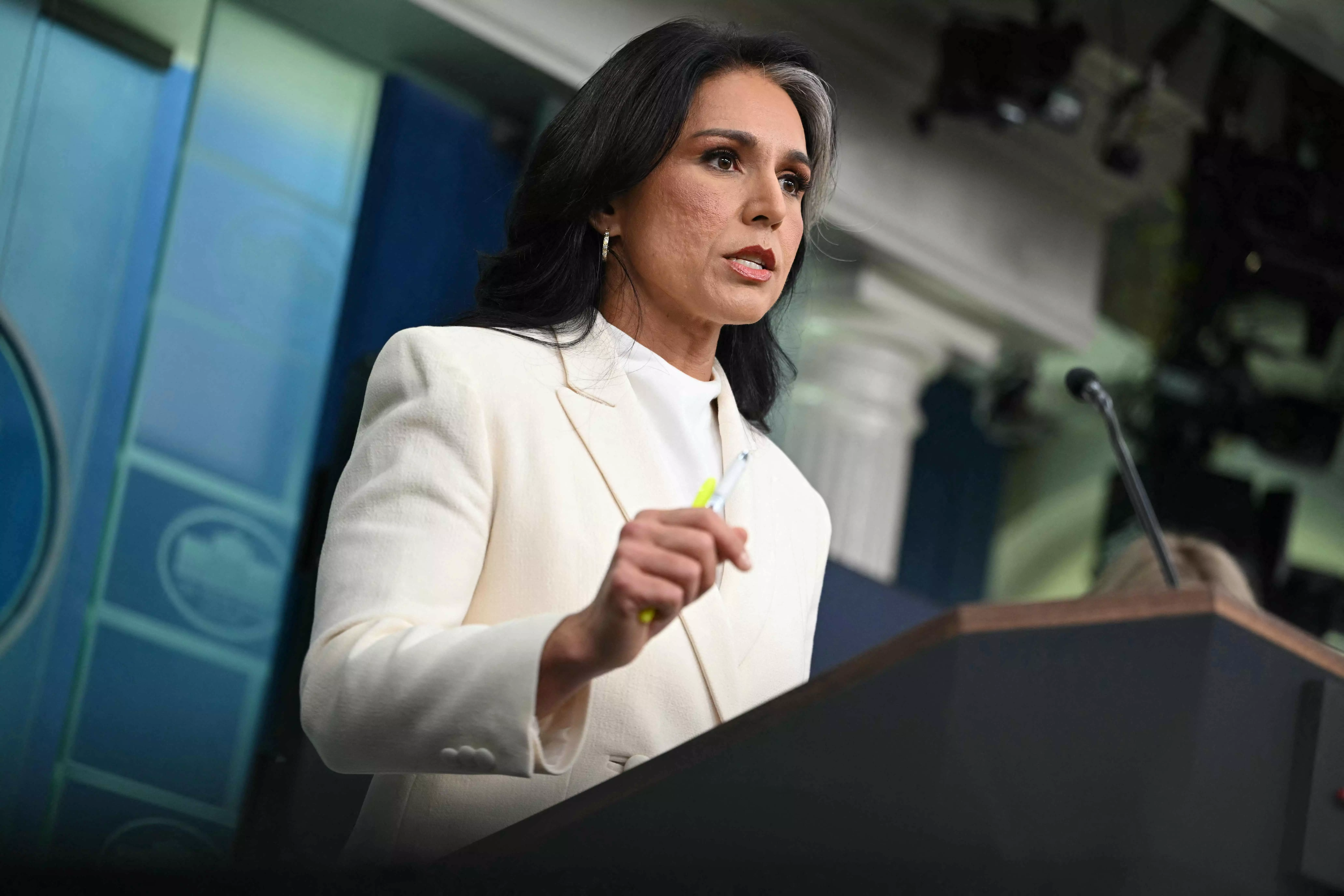
Spy chief Tulsi Gabbard dodged questions about the severity of the threat posed by Iran in Senate testimony on Wednesday, with the long-time skeptic of foreign interventions careful not to contradict either her own past beliefs or the Trump administration’s stance on the conflict.
Gabbard, who was appointed by President Donald Trump to lead the US government’s 18 spy agencies as director of national intelligence, declined several times in a Senate hearing to say whether she thought Iran represented an “imminent nuclear threat” to the US, as the White House has claimed.
She was also asked why she didn’t repeat out loud in the hearing a conclusion contained in her written testimony: that Iran’s uranium enrichment program had been “obliterated” in strikes last year, and that there “has been no efforts since then to try to rebuild their enrichment capability.”
That conclusion appeared to undercut the administration’s main rationale for the widening war, which has led to Iranian retaliation against several Gulf countries, strained US ties with allies in Europe and effectively closed the Strait of Hormuz.
But instead of reading out that conclusion, Gabbard told Senators that Iran was trying to recover from the attacks on its nuclear facilities.
The conflicting messages underscore tensions in the administration that surfaced this week with the resignation of a top counterterrorism official. Trump had campaigned on avoiding so-called forever wars in the Middle East and some of his senior officials — including Gabbard and Vice President JD Vance — have a history of criticizing US military action overseas.
“Was it the assessment of the intelligence community that there was an ‘imminent nuclear threat’ posed by the Iranian regime — yes or no?” Senator Jon Ossoff, Democrat of Georgia, asked Gabbard in a tense exchange during the hearing.
“Senator, the only person who can determine what is and is not an imminent threat is the president,” Gabbard replied.
While US officials haven’t addressed the specifics of Iranian uranium enrichment, Trump has said repeatedly since the war began that Iran was trying to rebuild its nuclear program. Senator Mark Warner, a Virginia Democrat, pointed out the omission on uranium enrichment when he questioned Gabbard on Wednesday.
“You omitted that paragraph from your oral opening — was that because the president had said there was an imminent threat?” Warner said.
Gabbard didn’t address the substance of the issue but rejected that characterization. “I recognized that the time was running long, and I skipped through some of the portions of my oral delivered remarks,” Gabbard said.
The omission is notable given Gabbard has long been skeptical of US military engagements overseas, including in both Iran and Venezuela — two places where Trump has ordered military operations since returning to the White House.
Gabbard had been excluded from months of planning ahead of the Jan. 3 ousting of Venezuelan strongman Nicolas Maduro as a result of her previous criticism of intervening there, people familiar with the matter said. As a Democratic congresswoman in 2019, Gabbard said the US should “stay out” of Venezuela. She held similar views on Iran, saying during the campaign that the US should not bomb the country.
Read more: US Spy Chief Gabbard Cut Out of Maduro Plan Over Past Views
Gabbard has refused to give ground on other issues. In her nomination hearing last year, she refused to renounce previous support for Edward Snowden, an intelligence contractor behind one of the biggest disclosures of top-secret programs in 2013.
Her testimony on Wednesday also came the day after one of her top advisers, the counterterrorism official Joe Kent, publicly resigned over the same conflict, saying “Iran posed no imminent threat to our nation,” and blamed Israel for misleading Trump into launching the war.
In her testimony, Gabbard focused on Trump priorities including his immigration crackdown. But she did praise the current war in the Mideast for degrading Iran’s ability to project power and menace US interests across the region.
In the hearing, Warner asked Gabbard about Trump’s public comments that he was surprised by both Iran’s retaliation against Gulf neighbors and the effort to choke off the Strait of Hormuz, a vital waterway for oil and gas coming out of the energy-rich Persian Gulf. He asked if she or others had briefed the president that Iran might do that in retaliation.
“Did you brief the president if he starts a war of choice that the likely result would be that Iran would strike adjacent Gulf nations and close the Strait of Hormuz, did you brief him on those two facts?” Warner asked.
“I’m not aware of those remarks,” she replied. “Those of us here at the table can point to the fact that, historically, the Iranians have always threatened to leverage their control over the Strait of Hormuz.”
Iran does have a stockpile of enriched uranium. One of the stated aims of the US and Israeli attacks on Iran has been to rid the Islamic Republic of any capability to produce nuclear weapons. But the attacks on atomic facilities last year complicated the task of tracking the uranium.
