Gene editing likely to pave way for pig to human organ transplants.
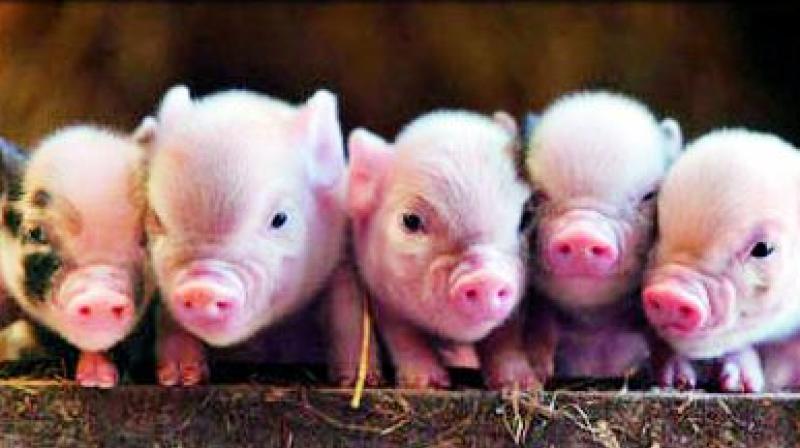
Scientists have successfully edited the genetic code of piglets to remove dormant viral infections, a breakthrough that could eventually pave the way for animal-to-human organ transplants.
Their work, documented in the US journal Science, could save lives by reducing organ donor waiting lists that have risen over the years, partly thanks to better road safety.
For decades, scientists have been pursuing the idea of pig transplants. But transplanting a baboon kidney or a pig heart into a person — also called xenotransplantation — has drawbacks. One problem is the risk of infection. The pig genome is riddled with infectious agents called porcine endogenous retroviruses, or PERVs which can infect humans if a pig organ is transplanted into a person, The Verge reported.
Scientists, however, seem to have come closer to the goal. Harvard University geneticists George Church and Luhan Yang placed edited embryonic cells into a chemical cocktail that encouraged growth and overcame the destructive effect inherent in the modification process.
They then used a standard cloning technique to insert the edited DNA into egg cells that were placed into a surrogate mother.
“Before our study, there was huge scientific uncertainty about whether the pig produced after this editing is viable,” Mr Yang said, adding the team had now produced 37 piglets free of PERVs.
“If this is correct, it’s a great achievement,” said virologist Joachim Denner of the Robert Koch Institute in Berlin, an expert in the retroviruses.
It is not clear whether PERVs would infect humans who receive pig organs, but lab studies have shown human cells can be infected by the viruses in a dish. The work is novel and “unpredictable”. It may be years before enough is known about the safety of pig organ transplants to allow them to be used widely.
Humans can already receive pig heart valves and pancreas, but scientists have long sought to make their entire organs, which grow to around human size, available for harvest.

