Who is Gholamreza Soleimani? Iran's Basij Force Commander Killed in Strike

The conflict across West Asia t continues to intensify following wide-ranging attacks on Iran by the United States and Israel
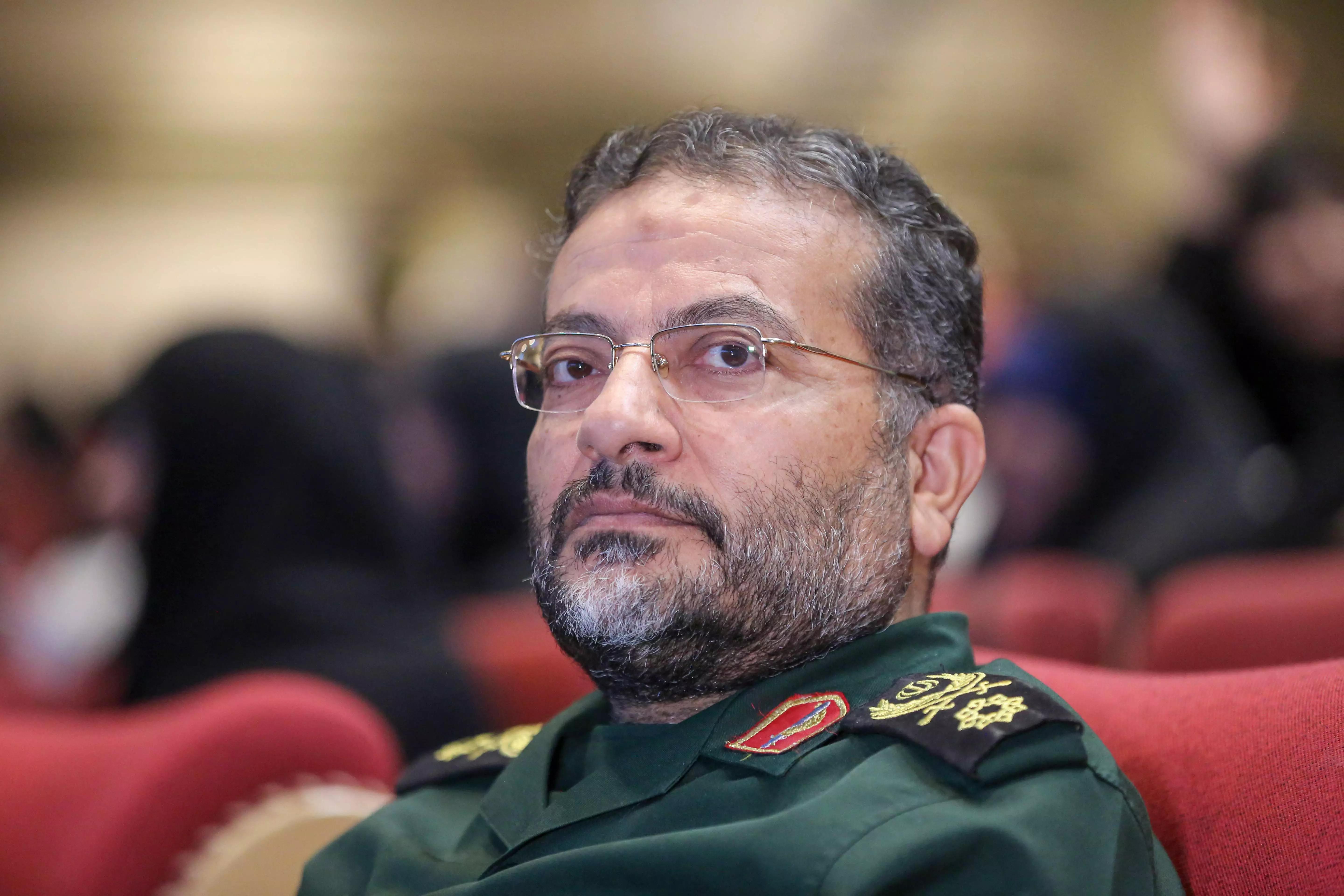
Gholamreza Soleimani was assassinated in a targeted Israeli airstrike in central Tehran overnight on March 16–17, with reports indicating broader US involvement in the campaign. The Israel Defense Forces (IDF) confirmed that he was eliminated while at a recently established Basij tent camp, set up after earlier Israeli strikes had damaged official headquarters. The same strike also killed his deputy commander and several other senior Basij officials.
The conflict across West Asia t continues to intensify following wide-ranging attacks on Iran by the United States and Israel, which killed the country’s Supreme Leader, Ayatollah Ali Khamenei, on February 28.
The IDF described the operation as part of its strikes against “terror operatives” allegedly responsible for repressing Iranian civilians. Iranian state media and the Islamic Revolutionary Guard Corps (IRGC) quickly confirmed Soleimani’s death, attributing it to US-Israeli strikes.
Soleimani was among several high-profile IRGC and regime figures killed in the ongoing campaign, alongside national security chief Ali Larijani, who died in a separate strike the same night. The IRGC has vowed intensified retaliation, stating that the “blood of the martyrs” would strengthen resistance and that “combatant Basijis will never abandon seeking revenge.”
Soleimani’s Background:
Gholamreza Soleimani was a Brigadier General in Iran’s Islamic Revolutionary Guard Corps and the longtime commander of the Basij paramilitary organization, also known as the Basij Resistance Force. He led this powerful internal security militia from his appointment in July 2019 until his death.
Born in 1964 in Farsan, in Iran’s Chaharmahal and Bakhtiari Province, Soleimani earned a bachelor’s degree in history from the University of Isfahan and was a doctoral candidate in Iranian/Islamic history. He joined the IRGC in 1982 during the Iran-Iraq War (1980–1988).
As a young fighter, he rose quickly through the ranks, serving as a company and battalion commander and participating in major operations such as Tariq al-Quds, Fath al-Mubin, Bayt al-Muqaddas, Karbala-4 and 5, and the Valfajr series.
Supreme Leader Ayatollah Ali Khamenei appointed him as Basij commander on July 2, 2019, succeeding Gholamhossein Gheybparvar. His mandate focused on strengthening the Basij, promoting a “culture of resistance,” expanding armed groups, and instilling revolutionary values among youth.
The Basij is a vast volunteer paramilitary network under the IRGC Ground Forces, formed after the 1979 Islamic Revolution. Estimates of its mobilized strength range from 450,000 to over 700,000 members. It is responsible for internal security, enforcement of morality laws, mobilization during war or disasters, and, most controversially, the suppression of dissent.
Under Soleimani, the Basij played a central role in crackdowns on the 2009 Green Movement protests, the November 2019 nationwide economic unrest, and the 2022–2023 protests following Mahsa Amini’s death.
Critics and Western governments have accused the force—and Soleimani in particular—of using lethal force, carrying out mass arrests, and committing widespread human rights violations against unarmed civilians.
International media have described Soleimani’s death as a major blow to Iran’s wartime leadership and internal security structure. The killing highlights the intensity of the US-Israeli campaign targeting Iran’s command network, while Tehran has framed it as aggression and vowed retaliation. The conflict continues, with ongoing missile exchanges and rising regional tensions.
This article was authored by Aditya Kumarr Singh, an intern with Deccan Chronicle, Hyderabad
