LIVE: Next Days Will Be Decisive: Hegseth as US Drops Bomb on Isfahan

A portion of Iran’s highly enriched uranium is believed to be entombed there — something America has suggested it could seize with ground forces
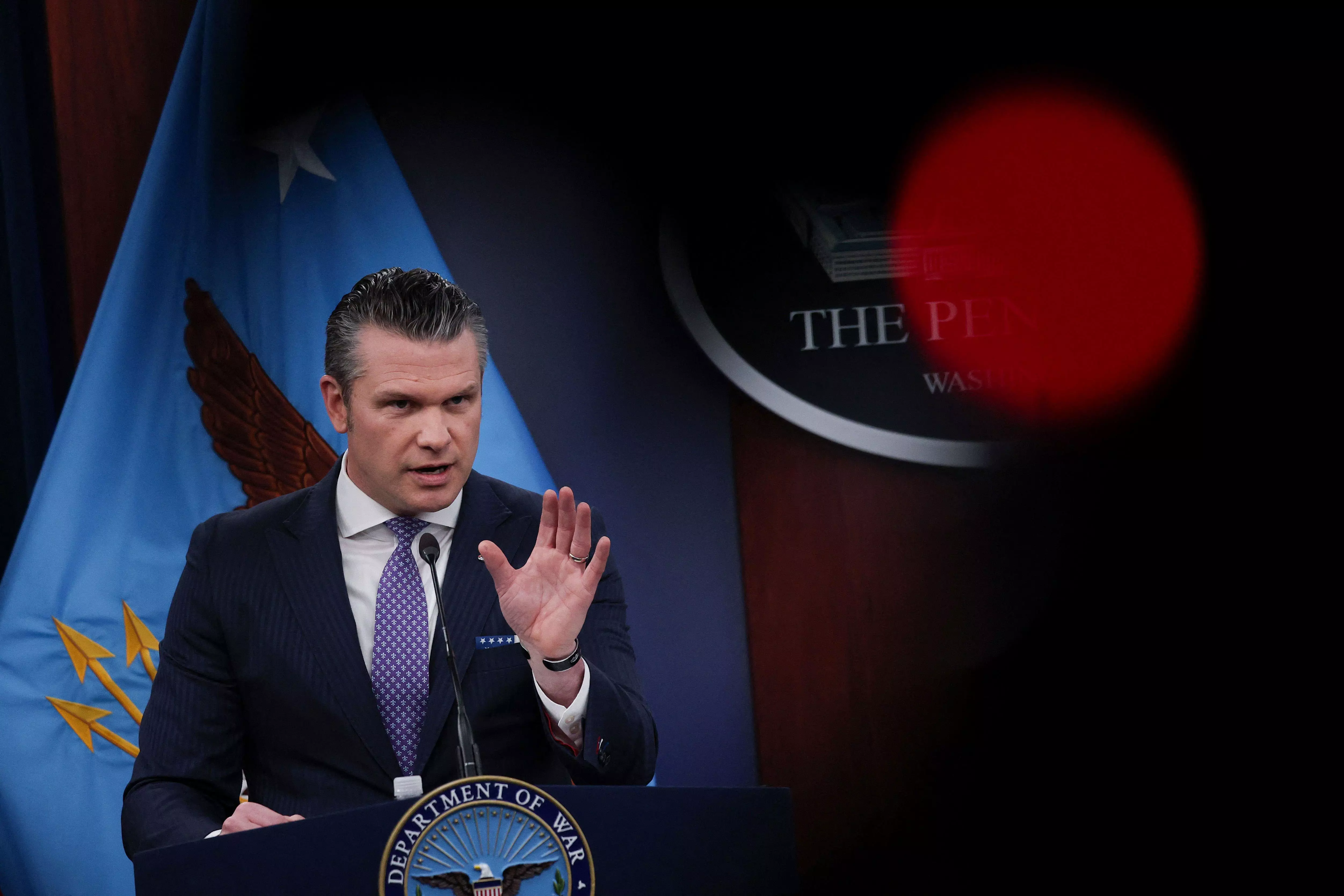
The next days of the Iran war will be "decisive," Pentagon chief Pete Hegseth -- who revealed he had visited US troops in the Middle East over the weekend -- said Tuesday.
"The upcoming days will be decisive. Iran knows that, and there's almost nothing they can militarily do about it," Hegseth told a news conference, his first in nearly two weeks.
US attacks Iranian nuclear site while Tehran hits oil tanker off the Dubai coast: The video of a massive explosion shared without comment early Tuesday by U.S. President Donald Trump appears to be of a major strike conducted outside of the central Iranian city of Isfahan.
The Baluch advocacy group HalVash shared the same video and others from the ground outside of Isfahan. Fire-tracking satellites from NASA suggest the explosions happened near Mount Soffeh, an area believed to have military positions.
The videos show massive fireballs and secondary explosions common with ammunition igniting in a blaze.
Iran has not formally acknowledged the attack.
Isfahan is home to one of three uranium enrichment sites bombed by the U.S. in the 12-day between Iran and Israel in June. A portion of Iran’s highly enriched uranium is believed to be entombed there — something America has suggested it could seize with ground forces.
A likely strike by the United States hit the central Iranian city of Isfahan early Tuesday, sending a massive fireball into the sky, and Tehran struck a fully loaded Kuwaiti oil tanker in the Persian Gulf.
Authorities brought the fire under control and extinguished it, the Dubai Media Office said. All 24 crew members are safe, and no injuries have been reported, the office said.
The United Kingdom Maritime Trade Operations center, run by the British military, reported the strike, saying the vessel was 31 nautical miles (57 kilometers) northwest of Dubai.
The attacks were testament to the intensity of the monthlong war the U.S. and Israel launched against Iran, which has maintained its chokehold on the Strait of Hormuz, closing off the vital waterway for global energy shipments, sending oil prices skyrocketing and roiling world markets.
It said an unknown projectile struck their tanker on the starboard side, causing a fire on the vessel. No environmental impact has been reported, the center said.
Live Updates
- 31 March 2026 12:10 PM IST
Iran’s foreign minister claims Gulf Arab attacks target US
Iran’s foreign minister early Tuesday insisted that Tehran’s attacks on the Gulf Arab states only target U.S. forces, even after assaults have hit civilian targets throughout the region.
Iranian Foreign Minister Abbas Araghchi’s comments, addressed to Saudi Arabia, come as growing Gulf Arab anger has those states encouraging America to continue to prosecute the war.
“Iran respects the Kingdom of Saudi Arabia and considers it a brotherly nation,” Araghchi wrote on X, sharing a photo purportedly showing damage to an American aircraft at Prince Sultan Air Base in the kingdom. “Our operations are aimed at enemy aggressors who have no respect for Arabs or Iranians, nor can provide any security. ... High time to eject U.S. forces.”
- 31 March 2026 10:35 AM IST
Netanyahu Suggests Mediterranean Pipeline to Bypass Hormuz
Israeli Prime Minister Benjamin Netanyahu has suggested that rerouting energy pipelines toward the Mediterranean could serve as a long-term solution to the vulnerabilities surrounding the Strait of Hormuz, according to an interview with Newsmax. Read more:
- 31 March 2026 9:19 AM IST
Iran Plane Hit in US Strike Before India Aid Mission
A US airstrike at Iran's Mashhad airport on Monday damaged a Mahan Air aircraft, potentially disrupting a mission to India to collect humanitarian aid, Iranian officials claimed. Read more:
- 31 March 2026 9:13 AM IST
US Credits Talks with Iran for Tanker Movement in Hormuz
The White House on Monday (local time) claimed that the recent movement of oil tankers through the Strait of Hormuz, despite a virtual blockage amid the West Asia conflict, is the result of ongoing direct and indirect talks between the United States and Iran. It credited diplomatic efforts led by US President Donald Trump.


