Iran Threatens to Close Strait of Hormuz Over Trump Ultimatum

Trump late Saturday set a 48-hour deadline to open the strait
The United States and Iran threatened to target critical infrastructure Sunday as the war in the Middle East, now in its fourth week, puts lives and livelihoods at risk throughout the region.
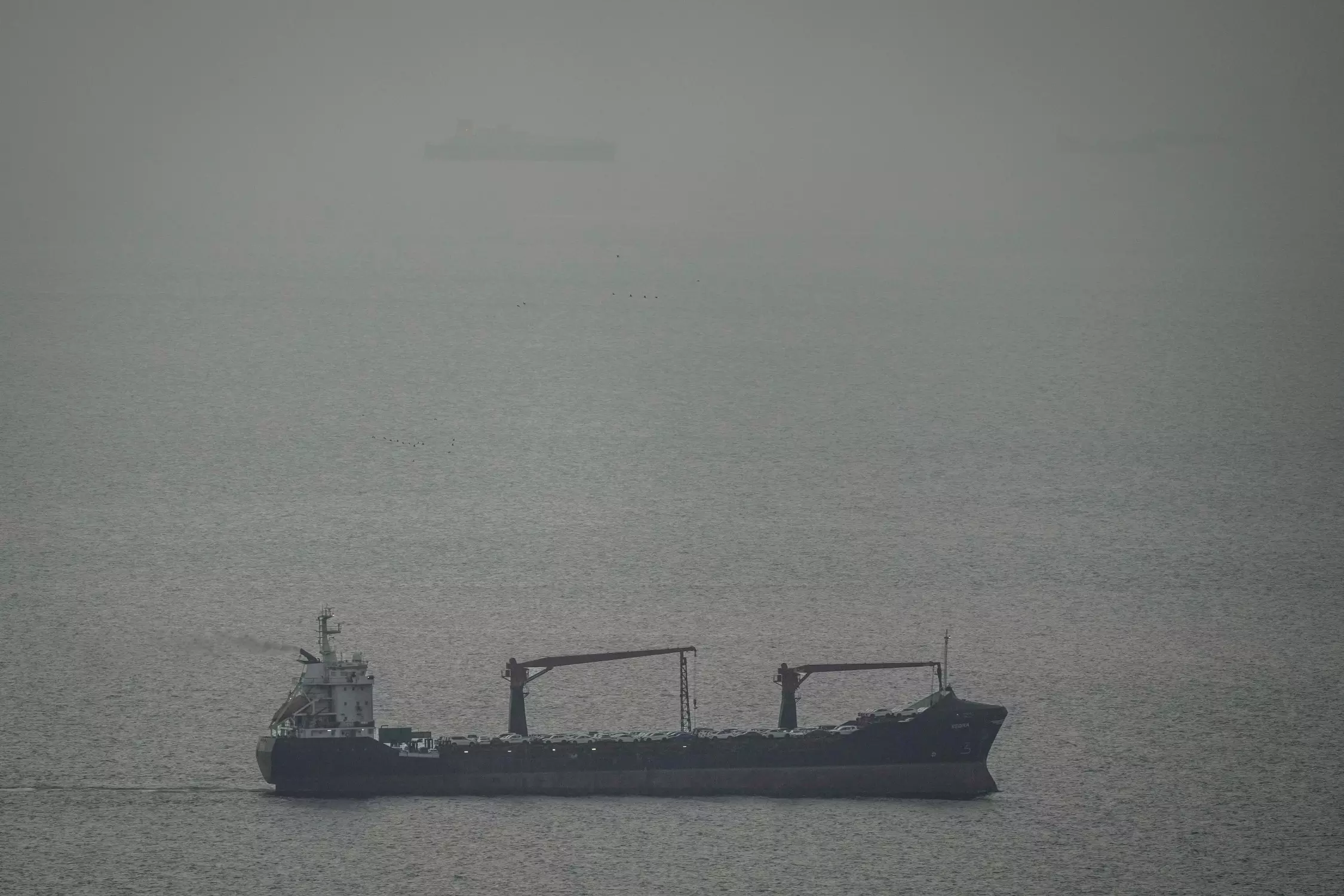
Iran said the Strait of Hormuz, crucial to oil and other exports, would be "completely closed" immediately if the US follows up on President Donald Trump's threat to attack its power plants. Trump late Saturday set a 48-hour deadline to open the strait.
Israeli leaders visited one of two southern communities near a secretive nuclear research site struck by Iranian missiles late Saturday, with scores of people wounded. Prime Minister Benjamin Netanyahu said it was a "miracle" no one was killed. Israel detected more Iranian missiles fired toward the area Sunday evening.
Netanyahu also claimed Israel and the US were well on their way to achieving their war goals. The aims have ranged from weakening Iran's nuclear program, missile program and support for armed proxies to enabling the Iranian people to overthrow the theocracy.
The developments signalled the war, which the US and Israel launched Feb. 28, was moving in a dangerous new direction, despite Trump's comment last week he was considering "winding down" operations. It has killed over 2,000 people, rattled the global economy and sent oil prices surging.
Live Updates
- 22 March 2026 11:20 PM IST
Are Iran's power plants the next targets in the war?
Are Iran's power plants the next targets in the war?
TEHRAN, March 22, 2026 (AFP) - More than three weeks into the Middle East war, key infrastructure across the region -- from gas and oil facilities to nuclear sites -- has come under fire.Now, the conflict could spill over to power plants.US President Donald Trump has threatened to strike those located in Iran if Tehran does not reopen the strategic Strait of Hormuz, vital to global oil supplies, by Monday night.Iran has more than 90 power plants, some of them on the Gulf coast at the heart of the hostilities that began on February 28 with US-Israeli strikes on Tehran.About 38 percent of its electricity comes from combined-cycle plants, followed by gas-fired stations (26 percent).Renewables make up 13 percent of output and nuclear energy only about one percent, according to the state IRNA agency, citing officials in December 2024.Iran currently has just one operational nuclear power plant at Bushehr, with a capacity of 1,000 megawatts -- only a fraction of the country's needs.Russia helped build the plant.Iran and Russia signed a $25-billion deal in September 2025 to build four nuclear plants in southern Iran, each with a capacity of about 1,255 MW, according to IRNA.- Rationing electricity -An arid country, Iran regularly faces drought and sweltering summers, which push up electricity demand for air conditioning.Despite its vast oil and gas resources, the country suffers from energy shortages due to ageing infrastructure and international sanctions.Iran therefore sometimes has to ration electricity for lack of sufficient gas and fuel to run its plants.The country's largest power plant is in Damavand, on the outskirts of Tehran province.It covers around 193 hectares and generates roughly 2,900 megawatts of electricity, according to MAPNA, a company involved in the construction of power plants and energy infrastructure.The second largest is the Shahid Salimi Neka plant, in northern Mazandaran province, with a capacity of of 2,214 megawatts.The third, the Shahid Rajaee Combined Cycle Power Plant, is in northern Qazvin province, with a total capacity of 2,042 megawatts. - 22 March 2026 10:03 PM IST
Son of Iran’s last shah asks US and Israel to spare civilian infrastructure
Exiled Crown Prince Reza Pahlavi called on the U.S. and Israel to “continue targeting the regime and its apparatus of repression, while sparing the civilian infrastructure Iranians will need to rebuild our country.”
“Iran’s civilian infrastructure belongs to the Iranian people and to the future of a free Iran,” he wrote on X.
Trump has threatened to “obliterate” Iran’s power plants if the country does not open the Strait of Hormuz.
Meanwhile, Iranian President Masoud Pezeshkian said on X that “delirious threats on the battlefield” are having the opposite impact by strengthening Iran’s unity and illustrating Trump’s desperation. — AP
- 22 March 2026 10:02 PM IST
Israeli hospital treated more than 150 people after Iranian strikes
Dr. Roy Kessous, deputy director of the Soroka Medical Center in the southern Israeli city of Beersheba, says the hospital treated shrapnel wounds, severe physical trauma and a few cases of acute anxiety.
He says the hospital is trained for such events, but the scale, including entire families wounded together and in some cases left homeless, added to the pressure. Still, he said the hospital remains prepared.
“We are ready to receive wounded from the area again right now,” he told The Associated Press. — AP
- 22 March 2026 9:04 PM IST
Lebanon’s president condemns Israeli strikes on bridges as ‘unjustified’
President Joseph Aoun’s statement comes hours after Israel blew up another key highway bridge in southern Lebanon.
Israel says it is striking bridges to hinder Hezbollah’s movements. The strikes have increasingly cut off large parts of the south as fighting continues.
“They are a prelude to a ground invasion,” said Aoun, adding that Lebanon has raised concerns through diplomatic channels. The president has vowed to disarm Hezbollah and offered direct negotiations with Israel to end the ongoing war. — AP
- 22 March 2026 8:59 PM IST
War between Israel and Hezbollah has killed 1,029 people in Lebanon
Lebanon’s Health Ministry said Sunday that 118 children and 79 women are among those killed, and at least 2,786 others have been wounded.
The country’s death toll as of Saturday was 1,024 people. — AP
- 22 March 2026 8:28 PM IST
Trump is using ‘the only language the Iranians understand,’ US Treasury chief says
U.S. Treasury Secretary Scott Bessent says Trump is using “the only language the Iranians understand” by threatening to destroy the country’s power plants unless Tehran fully opens he Strait of Hormuz.
The combative rhetoric offers a glimpse into how the Trump administration is framing and defending the war effort.
Bessent told NBC’s “Meet the Press” that Trump “will take whatever steps it takes” to achieve his goals in the war with Iran.
The secretary was asked about the comment last week that Trump was considering “winding down” military operations and whether the president is now escalating the conflict.
“They are not mutually exclusive,” Bessent said. “Sometimes you have to escalate to deescalate.” — AP
- 22 March 2026 8:27 PM IST
US ambassador to the UN suggests Iran’s power plants are valid military targets
On Fox News on Sunday, Mike Waltz defended Trump’s threat to attack power plants if Iran does not open the Strait of Hormuz.
Waltz said Iran’s Revolutionary Guard controls much of the country’s infrastructure and uses it to power its war effort. He said Trump would start by destroying “one of Iran’s largest power plants” without identifying it.
“There are gas-fired thermal power plants and other type of plants,” Waltz said, adding that “the president is not messing around.”
Under international law, power plants that benefit civilians can be targeted only if the military advantage outweighs the suffering it cases to civilians, legal scholars say. — AP
- 22 March 2026 8:23 PM IST
WHO chief says war reached ‘perilous stage’ with attacks near nuclear facilities
The United Nations’ top health official says the war has reached a “perilous stage” following strikes on Iran’s Natanz nuclear facility and in the city of Dimona not far from an Israeli nuclear research center.
“Attacks targeting nuclear sites create an escalating threat to public health and environmental safety,” said World Health Organization Director-General Tedros Adhanom Ghebreyesus.
He called on warring parties to “exercise maximum military restraint and avoid any actions that could trigger nuclear incidents.” — AP
- 22 March 2026 7:42 PM IST
Israel destroys a bridge on the southern Lebanese coastal highway over the strategic Litani River
The Israeli military has been destroying bridges over the river, which link large swaths of southern Lebanon to the rest of the country.
Israel says Hezbollah militants have been using these routes to move into southern Lebanon, where fighting has intensified in recent days as Israel keeps up its ground operations and airstrikes.
Israeli military spokesperson Avichay Adraee issued a warning an hour before the Qasmiyeh bridge near the coastal city of Tyre was struck. —AP
- 22 March 2026 7:09 PM IST
NATO chief downplays Trump’s rift with alliance
Mark Rutte, NATO’s secretary-general, acknowledged that Trump has been angry at other countries over his push to get allies more involved in reopening the Strait of Hormuz.
But Rutte stressed during an interview with Fox News Sunday that more than 20 countries now are “coming together to implement his vision” to ensure the shipping channel can function.
Rutte, who said he spoke with Trump several times this week, said it was “crucial” that the U.S. was taking military action in Iran since its nuclear and ballistic missile programs posed an “existential” threat to the world. — AP


