Trump Says Iran Ceasefire Proposal Not Good Enough

Citing US, Israeli, and regional sources, the report said chances of reaching even a partial deal within the next 48 hours remain slim
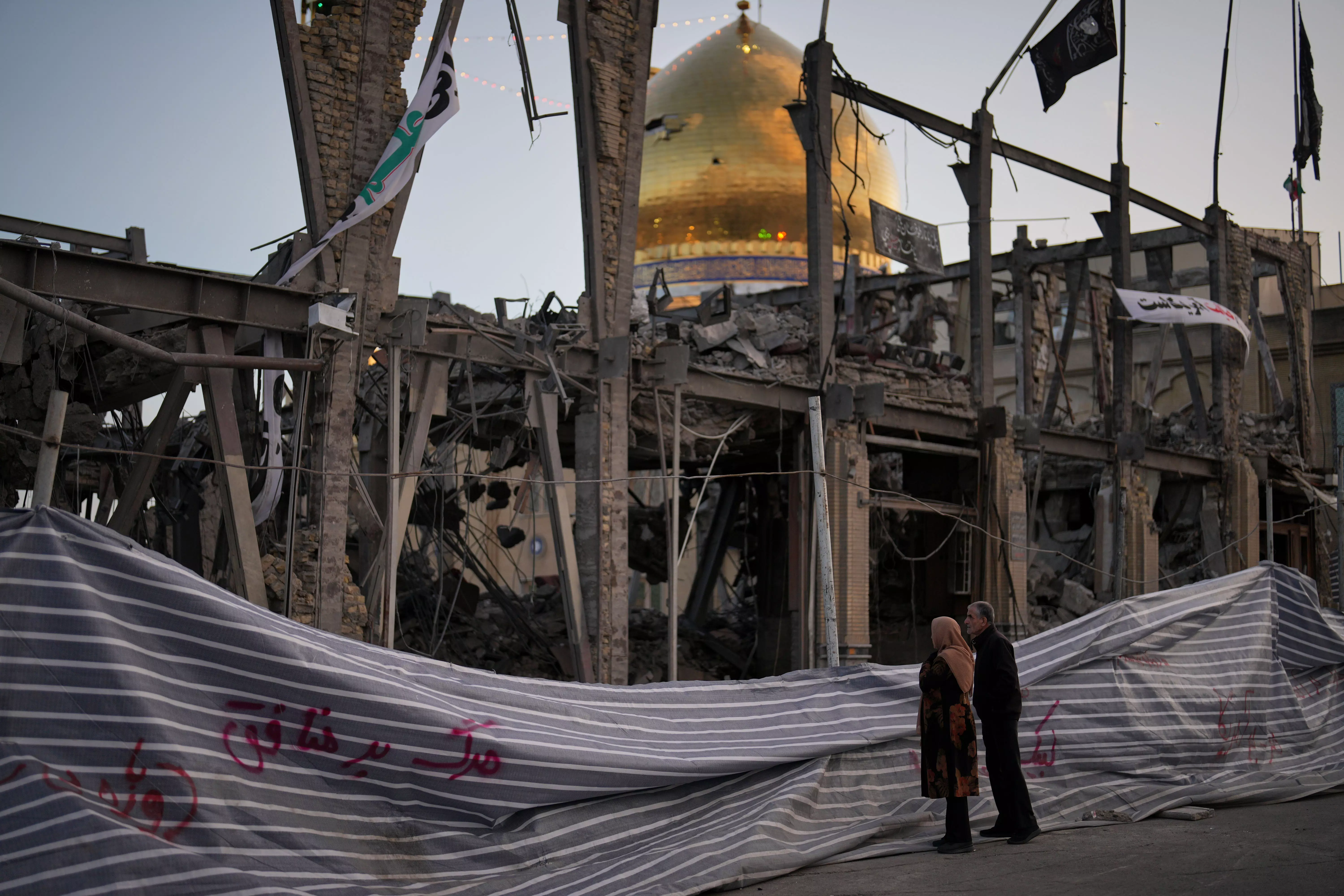
WASHINGTON, United States: US President Donald Trump said Monday that a proposed 45-day ceasefire with Iran was a "very significant step" but "not good enough" for him to sign, as Iranian officials vowed to keep fighting.
Talk of a ceasefire came as the US and Israel struck targets across Iran, including major petrochemical facilities, while time ticked down to Trump's Tuesday deadline for Iran to reopen the Strait of Hormuz or face attacks on its civilian infrastructure.
Meanwhile Iran continued missile and drone attacks around the region.
Trump said intermediaries between the US and Iran "are negotiating now" on improving the ceasefire proposal, which US media reported was being mediated by Pakistan, Egypt and Turkey.
"It's not good enough, but it's a very significant step," he told reporters at the White House.
Trump added that he would still go through with his threat against civilian targets if a deal is not reached.
Iran's IRNA state news agency said Tehran "has rejected a ceasefire and insists on the need for a definitive end to the conflict" in a message relayed to America via Pakistan.
Neither Trump nor IRNA named any specifics of the proposed ceasefire.
Iran's military would "continue the war as long as the political authorities see fit", army spokesman Mohammad Akraminia told the ISNA news agency. — AFP
Tehran Rejects Latest Ceasefire
TEHRAN: Iran’s state-run IRNA news agency says Tehran has rejected the latest ceasefire proposal and wants a permanent end to the war.
The report comes shortly before U.S. President Donald Trump’s deadline for Tehran to open the Strait of Hormuz or see its power plants and bridges attacked.
The news agency said Iran had conveyed its response to the U.S. through Pakistan.
“We won’t merely accept a ceasefire,” Mojtaba Ferdousi Pour, head of the Iranian diplomatic mission in Cairo, told The Associated Press on Monday. “We only accept an end of the war with guarantees that we won’t be attacked again.”
On the Strait of Hormuz, Ferdousi Pour said Iranian and Omani officials were working on a mechanism for administrating the shipping chokepoint.
Israel Says It Killed The Head Of Intelligence For Iran’s Revolutionary Guard
The head of intelligence for Iran’s paramilitary Revolutionary Guard, Maj. Gen. Majid Khademi, was killed, according to Iranian state media. Israel claimed the killing Monday. Israeli Defense Minister Israel Katz said: “Iran’s leaders live with a sense of being targeted. We will continue to hunt them down one by one.”
Israel and the United States carried out a wave of attacks on Iran on Monday, killing more than 25 people. Iran responded with missile fire on Israel and its Gulf Arab neighbors.
U.S. President Donald Trump’s deadline for Tehran to reopen the Strait of Hormuz loomed. Trump gave Tehran a deadline that expires Monday night Washington time, saying if no deal was reached to reopen the strait, the U.S. would hit Iran’s power plants and other infrastructure targets and set the country “back to the stone ages.” Following Trump’s expletive-laced threat on Easter Sunday, Iran’s parliamentary Speaker Mohammad Bagher Qalibaf called the threats of targeting Iran’s infrastructure “reckless.”
US, Iran Discuss 45-Day Ceasefire: Report
With a deadline set by US President Donald Trump fast approaching, the US, Iran, and regional mediators are discussing terms for a possible 45-day ceasefire that could eventually lead to a permanent end to the war, according to Axios.
Citing US, Israeli, and regional sources, the report said chances of reaching even a partial deal within the next 48 hours remain slim. Mediators have warned Iranian officials that time is running out and that this window represents the last opportunity to avoid large-scale destruction.
These urgent negotiations come amid fears of a major escalation, including potential US-Israeli strikes on Iran’s civilian infrastructure and possible retaliatory attacks on energy and water facilities in Gulf countries.
The original 10-day deadline given to Iran was set to expire Monday evening but was extended by 20 hours, with a new deadline of Tuesday at 8 pm ET announced by Trump on Truth Social. Sources say plans for a large-scale bombing campaign targeting Iran’s energy facilities are ready, though the extension aims to allow one final chance for diplomacy.
Negotiations are being conducted through mediators from Pakistan, Egypt, and Turkey, along with direct message exchanges between US envoy Steve Witkoff and Iran’s Foreign Minister Abbas Araghchi. However, Iran has not accepted any of the proposals put forward so far.
The proposed deal involves two phases. The first would be a 45-day ceasefire, during which further negotiations toward a permanent resolution would take place. This ceasefire could be extended if needed.
The second phase would focus on ending the war completely. Key issues include reopening the Strait of Hormuz and addressing Iran’s stockpile of highly enriched uranium, either through removal or dilution.
Iran considers these issues major bargaining chips and is unlikely to fully concede them in exchange for only a temporary ceasefire. Mediators are exploring whether Iran can take partial steps during the initial phase while also seeking assurances from the US that the ceasefire will lead to a lasting peace.
Iranian officials have emphasized they do not want a situation similar to Gaza or Lebanon, where ceasefires exist on paper but are frequently broken. Mediators are also working on confidence-building measures from Washington to address Iran’s concerns.
The White House has declined to comment on the negotiations. Meanwhile, regional mediators remain concerned that any military escalation could severely impact Gulf nations’ critical infrastructure.
Amid the rising tensions, Iran’s Revolutionary Guard Corps Navy stated that conditions in the Strait of Hormuz will “never return” to their previous state, particularly for the US and Israel.
Airstrike in Irani City of Eslamshar Kills At Least 13
An airstrike early Monday struck a residential building in a city southwest of Iran’s capital, Tehran, killing at least 13 people, Iranian media reported.
The semiofficial Fars news agency and Nour News reported the strike near Eslamshar.
It wasn’t clear why the building had been struck.
Neither Israel nor the United States claimed the strikes early Monday, but they came after Trump issued a profanity-laced threat to Iran that it must reopen the Strait of Hormuz.
Airstrike in Irani City of Qom Kills At Least 5
The state-run IRAN daily newspaper said in an online message that an airstrike in a residential area of Qom killed at least five people. Qom is a holy Shiite seminary city just south of Tehran.
It wasn’t unclear what the target of the strike was.
Iran has not provided overall casualty figures from the war in days. It also hasn’t discussed its materiel losses.
Live Updates
- 6 April 2026 5:17 PM IST
Israeli military says it killed leader of Quds Force undercover unit
Israel’s military said Monday it killed the leader of the paramilitary Revolutionary Guard’s undercover unit in its expeditionary Quds Force.
Lt. Col. Nadav Shoshani, a military spokesman, confirmed the killing of Asghar Bakeri in a briefing to reporters.
He said Bakeri had planned attacks on Israeli and American targets as well as operations in Israel, Syria and Lebanon. — AP
- 6 April 2026 5:16 PM IST
Israeli strike kills anti-Hezbollah politician in Lebanon
The hilly Christian town of Ain Saadeh, east of Beirut, was in shock Monday after an Israeli missile crashed into an apartment building, killing an anti-Hezbollah politician, his wife and another woman.
Israel said it targeted a Hezbollah militant, but the third-story apartment was empty.
The strike blew out the walls and windows of the floor below, killing Pierre Mouawad, an official in the Lebanese Forces, a Christian political party opposed to the Iran-backed Hezbollah group, and his wife, Flavia Mouawad. — AP
- 6 April 2026 5:15 PM IST
UN watchdog confirms strikes close to Bushehr nuclear facility
The United Nations nuclear watchdog on Monday confirmed recent strikes struck close to Iran’s Bushehr nuclear power plant, with one hitting just 75 meters (82 yards) from the facility’s perimeter.
The International Atomic Energy Agency said in a social media post that its own analysis showed the plant was not damaged as of Sunday.
IAEA Director General Rafael Grossi called for ceasing such attacks, which cause “a very real danger to nuclear safety.”
Iran’s Atomic Energy Organization has reported four attacks close to the facility since the war started Feb. 28. The last strike Saturday killed a security guard and damaged a support building, the organization said.
The Bushehr nuclear power plant uses low-enriched uranium from Russia, along with Russian technicians, to supply about 1,000 megawatts of power for Iran. — AP
- 6 April 2026 5:13 PM IST
Israel says it attacked South Pars plant at Asaluyeh
Israel’s defense minister said Monday that Israel attacked the South Pars petrochemical plant at Asaluyeh.
Israel Katz made the announcement in a statement after Iran said the facility had been attacked.
Katz said Israel had “just carried out a powerful strike on the largest petrochemical facility in Iran, located in Asaluyeh, a central target responsible for about 50% of the country’s petrochemical production.”
An Israeli attack in March on South Pars facilities sparked major Iranian attacks targeting oil and gas infrastructure across the Gulf Arab states.
When asked about the South Pars strike, Lt. Col. Nadav Shoshani, Israel’s military spokesperson, said only that there would be “no immunity” for Iran as talks progress.
The White House did not immediately respond when asked about the South Pars strike Monday morning. — AP
- 6 April 2026 5:12 PM IST
Iranian media says attacks target South Pars natural gas field
Attacks targeted facilities Monday at Iran’s South Pars natural gas field, Iranian media outlets reported.
The semiofficial Fars news agency and the judicary’s Mizan news agency both reported the attack, blaming the U.S. and Israel.
Neither country immediately claimed any attack at Asaluyeh in Iran’s southern Bushehr province.
Iran condemned the first Israeli strike on South Pars in March, with Iranian President Masoud Pezeshkian warning of “uncontrollable consequences” that “could engulf the entire world.” The attack on South Pars saw Iran increasingly target Gulf Arab oil and natural gas sites.
U.S. President Donald Trump has warned of possible attacks on power plants and bridges this week if the Strait of Hormuz is not opened.
After Israel’s earlier attack, Trump said Israel would not attack South Pars again, but warned on social media that if Iran continued striking Qatar’s energy infrastructure, the United States would retaliate and “massively blow up the entirety” of the field.
Iran shares the South Pars field with Qatar, which refers to its part of the massive offshore field as the North Field.
The field is the world’s largest gas field and sits under the waters of the Persian Gulf. — AP
- 6 April 2026 4:14 PM IST
Airstrikes on Iran kill more than 25 as new ceasefire proposal is shared
DUBAI, UAE: Israel and the United States carried out a wave of attacks on Iran on Monday, killing more than 25 people, and Iran responded with missile fire on Israel and its Gulf Arab neighbors. U.S. President Donald Trump’s deadline for Tehran to reopen the Strait of Hormuz loomed as mediators circulated a new ceasefire proposal.
Explosions rang out in Tehran and low-flying jets could be heard for hours as the capital was pounded. Thick black smoke rose near the city’s Azadi Square after one airstrike hit the grounds of the Sharif University of Technology.
Among those killed in one of the attacks on Tehran was the head of intelligence for Iran’s paramilitary Revolutionary Guard, Maj. Gen. Majid Khademi, according to Iranian state media and Israel's defense minister.
Iranian missiles hit the northern Israeli city of Haifa, where three people were found dead in the rubble of a residential building, and searchers looked for one more.
Kuwait, the United Arab Emirates and Saudi Arabia all activated their air defenses to intercept incoming Iranian missiles and drones, as Tehran kept up the pressure on its Gulf neighbors. Iran's regular attacks on regional energy infrastructure and its stranglehold on the Strait of Hormuz , through which a fifth of the world's oil is shipped in peacetime, has sent global energy prices soaring .
Under pressure at home as consumers are growing increasingly concerned, Trump gave Tehran a deadline that expires Monday night Washington time, saying if no deal was reached to reopen the strait, the U.S. would hit Iran's power plants and other infrastructure targets and set the country “back to the stone ages.”
“Tuesday will be Power Plant Day, and Bridge Day, all wrapped up in one, in Iran,” he threatened in a social media post, adding that if Iran did not open the strait “you'll be living in Hell.”
In an effort to stop the fighting, Egyptian, Pakistani and Turkish mediators have sent Iran and the U.S. a proposal calling for a 45-day ceasefire and the reopening of the Strait of Hormuz to give time to try and find a way to end the war, two Mideast officials have told The Associated Press.
Iran and the U.S. have not responded to the proposal, sent late Sunday night to both Iranian Foreign Minister Abbas Araghchi and U.S. Mideast envoy Steve Witkoff, the officials said. The officials spoke on condition of anonymity to discuss the private negotiations.
Trump's deadline to open Hormuz strait looms but no signs of Tehran backing off Trump has at times demanded that Iran reopen the strait or face a significant escalation in bombing from the U.S. while at other times said it was not up to Washington to force the waterway open or even that the war could end without it being reopened.
He has also given multiple deadlines to Iran on the issue, and after the threat he posted Sunday he later posted a single line saying “Tuesday, 8:00 P.M. Eastern Time!” It was not clear whether that meant he had extended the deadline another day.
Tehran has shown no signs of backing down from its stranglehold on shipping through the strait, which was fully open before Israel and the U.S. attacked Iran on Feb. 28 to start the war .
Following Trump’s expletive-laced posts on Easter Sunday, Iran’s parliamentary Speaker Mohammad Bagher Qalibaf called the threats of targeting Iran’s infrastructure “reckless.”
“You won’t gain anything through war crimes,” Qalibaf wrote on X. “The only real solution is respecting the rights of the Iranian people and ending this dangerous game.”
Brent crude oil, the international standard, rose to $109 in early Monday spot trading, some 50% higher than it was when the war started.
Iran has let some vessels through the strait since the war began, but none belonging to the U.S., Israel or countries perceived as helping them. Some have paid Iran for passage and the overall flow of traffic is down more than 90% over the same period last year.
Airstrikes kill more than 25 across Iran
One of Monday's morning airstrikes targeted Tehran's Sharif University of Technology, where Iranian media reported damage to the buildings as well as a natural gas distribution site next to the campus.
It wasn’t immediately clear what had been targeted on the grounds of the university, which is empty of students as the war has forced all schools into the country into online classes. However, multiple countries over the years have sanctioned the university for its work with the military, particularly on Iran’s ballistic missile program, which is controlled by the country’s paramilitary Revolutionary Guard.
Following the confirmation that the Guard's intelligence chief had been killed in one strike, Israeli Defense Minister Israel Katz vowed to keep targeting top-ranking Iranian officials. “Iran’s leaders live with a sense of being targeted," Katz said. "We will continue to hunt them down one by one.”
A strike near Eslamshar, southwest of Tehran, killed at least 15 people, authorities said. Five others were killed when a residential area in the city of Qom was hit, and six more were killed in strikes on other cities, the state-run IRAN daily newspaper reported.
Three more people were killed when an airstrike hit a home in Tehran, Iranian state television reported.
War's death toll in the thousands More than 1,900 people have been killed in Iran since the war began, but its government has not updated the toll for days.
In Lebanon, which Israel has invaded by ground, more than 1,400 people have been killed and more than 1 million people have been displaced . Eleven Israeli soldiers have died there while targeting Iranian-backed Hezbollah militants.
In Gulf Arab states and the occupied West Bank, more than two dozen people have died, while at least 19 have been reported dead in Israel and 13 U.S. service members have been killed. — AP
- 6 April 2026 2:44 PM IST
US-Israeli strikes kill Iran Guards intelligence chief: Guards
TEHRAN: US-Israeli strikes killed on Monday the intelligence chief of Iran's Revolutionary Guards, the Guards said.
"Major General Majid Khademi, the powerful and educated head of the Intelligence Organisation of the Islamic Revolutionary Guard Corps, was martyred in the criminal terrorist attack by the American-Zionist enemy... at dawn today," said the Guards in a post on their Telegram channel. — AFP
- 6 April 2026 1:47 PM IST
Iran and US receive draft proposal for war ceasefire
Iran and the United States have received a draft proposal that calls for a 45-day ceasefire and the reopening of the Strait of Hormuz as a possible way to end the war, two Mideast officials told The Associated Press.
The proposal comes from Egyptian, Pakistani and Turkish mediators working to halt the fighting, according to two officials who spoke on condition of anonymity to discuss private negotiations.
They hope the 45-day window would provide enough time for extensive talks between the countries to reach a permanent ceasefire.
Iran and the U.S. have not responded to the proposal, which was sent late Sunday night to Iranian Foreign Minister Abbas Araghchi and U.S. Mideast envoy Steve Witkoff, the officials said.
It remains unclear whether the sides would agree to such terms. Iran has insisted it will keep fighting until it receives financial reparations and a promise it won’t be attacked again. U.S. President Donald Trump has threatened to bomb Iranian bridges and power stations this week.
The news website Axios first reported terms of the proposal.
- 6 April 2026 12:07 PM IST
South Korea plans to send ships and special envoys to Saudi Arabia
South Korea plans to send at least five ships to Saudi Arabia’s Yanbu port in the coming weeks to establish new oil transport routes in the Red Sea.
The Ministry of Trade, Industry and Resources said Monday the ships will be deployed in phases beginning in mid-April and the number of vessels could increase depending on contracts with Saudi partners.
Officials did not disclose the companies involved but said some domestic refiners may use non-Korean shipping firms.
South Korea also plans to send special envoys to Saudi Arabia, Oman and Algeria to step up diplomatic efforts to secure alternative fuel supplies, ruling party lawmaker Ahn Do-geol said.
The foreign ministry did not immediately reveal when the envoys would be sent.
- 6 April 2026 12:07 PM IST
1 person wounded in UAE after missile interception
In the United Arab Emirates’ capital of Abu Dhabi, authorities said a Ghanaian man suffered wounds from shrapnel after the interception of an Iranian missile over the city’s Musaffah neighborhood.
That’s near Al Dhafra Air Base, which hosts U.S. forces and has been repeatedly targeted by Iran in the war.


