Arab Nations Denounce Iran Strikes, Urge End to Threats

The meeting was attended by foreign ministers from Azerbaijan, Bahrain, Egypt, Jordan, Kuwait, Lebanon, Pakistan, Qatar, Saudi Arabia, Syria, Türkiye, and the UAE
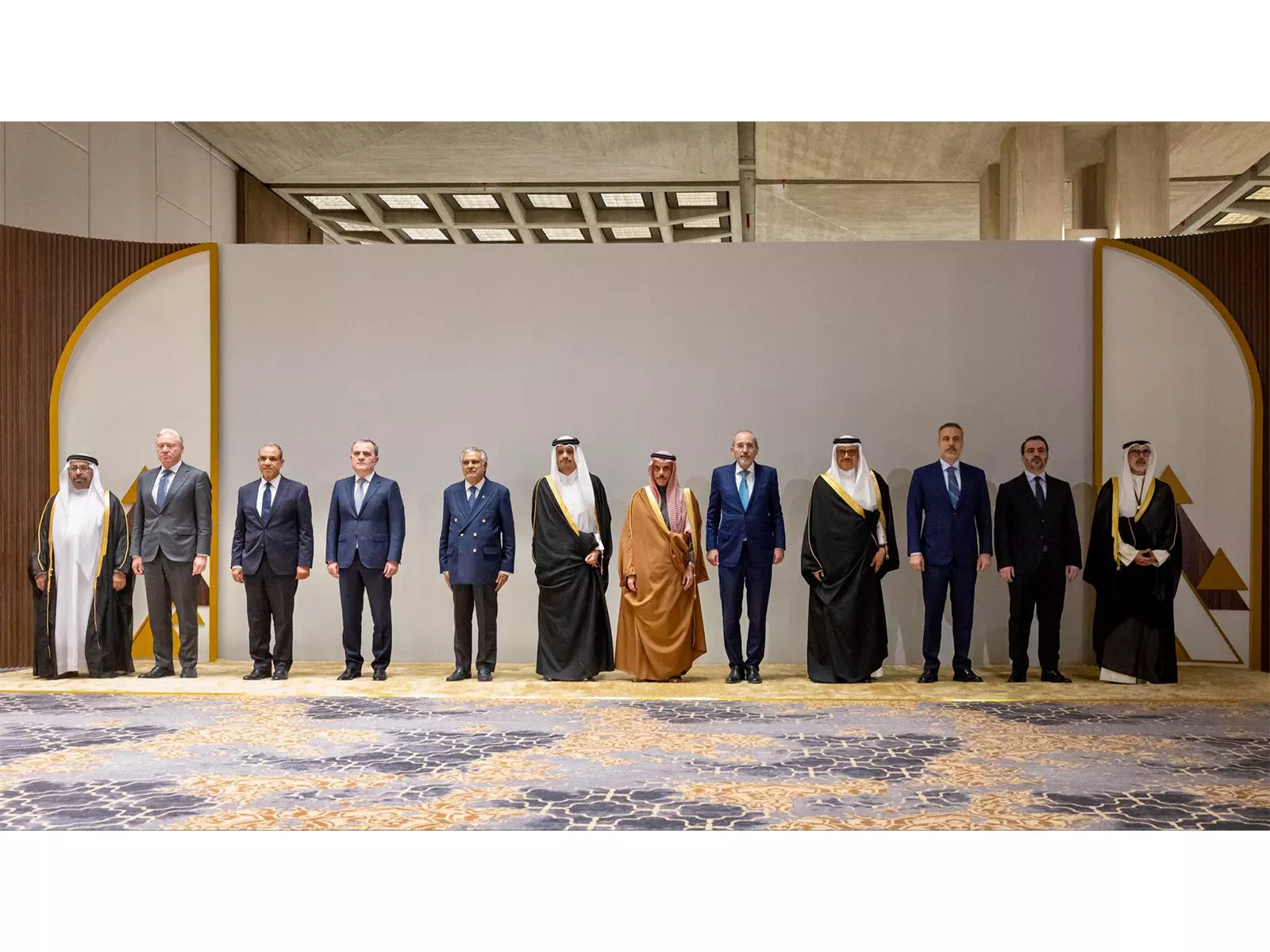
Riyadh: As tensions continue to rise in West Asia and the Gulf amid the evolving security situation, foreign ministers of key Arab and Islamic countries held a consultative ministerial meeting in Riyadh regarding the Iranian attacks, according to a statement by Saudi Arabia’s Foreign Ministry.
The meeting, held on Wednesday, was attended by foreign ministers from Azerbaijan, Bahrain, Egypt, Jordan, Kuwait, Lebanon, Pakistan, Qatar, Saudi Arabia, Syria, Türkiye, and the UAE.
According to the statement, the ministers stressed the need for Iran to comply with UN Security Council Resolution 2817 (2026), which calls for an immediate halt to all attacks, an unconditional cessation of provocative acts or threats against neighbouring states, and an end to support, financing, and arming of affiliated militias in Arab countries.
They also urged Iran to refrain from any measures or threats aimed at closing or obstructing international navigation in the Strait of Hormuz or threatening maritime security in the Bab al-Mandab.
The ministers discussed the Iranian attacks on Gulf Cooperation Council countries, as well as Jordan, Azerbaijan, and Türkiye. They strongly condemned what they described as deliberate attacks using ballistic missiles and drones targeting residential areas and civilian infrastructure, including oil facilities, desalination plants, airports, residential buildings, and diplomatic premises.
They stated that such attacks cannot be justified under any circumstances and reaffirmed the right of states to defend themselves in accordance with Article 51 of the United Nations Charter.
The ministers called on Iran to immediately halt its attacks and emphasised the importance of respecting international law, international humanitarian law, and the principles of good neighbourliness as a first step toward de-escalation and regional stability. They also stressed the need to promote diplomacy as a means to resolve the crisis.
They further noted that the future of relations with Iran depends on its respect for the sovereignty of states, non-interference in internal affairs, and refraining from using or developing military capabilities to threaten regional countries.
The ministers also expressed support for the security, stability, and territorial integrity of Lebanon and condemned Israel’s actions against the country.
The statement concluded by reaffirming the ministers’ commitment to continued consultation and coordination to monitor developments, address emerging issues, and adopt necessary measures to protect their security, stability, and sovereignty, and to halt what they described as Iranian attacks on their territories.
