Trading Smart: How Intelligent Algorithms Navigate International Tariff Complexities

For businesses, this means that the integration of intelligent technologies is no longer optional; it is an essential step toward building resilient and future-ready operations.
Global trade is now an opportunity and a challenge in the contemporary interrelated economy. With tariff policies constantly changing in different areas, companies are becoming more and more at a loss as to how to keep up with the rules and regulations, and nonetheless, remain efficient in their operations. In such sectors as semiconductors where supply chains are international, complex and very sensitive tariff issues directly can affect customer promises, manufacturing timelines and the overall profitability. It is on this platform that smart algorithms incorporated into contemporary enterprise systems are becoming a disruptive influence. With the combination of functionalities like product segmentation and enhanced order fulfillment software, now organizations are able to handle tariffs more efficiently and still take care of the needs of the customers at all times.
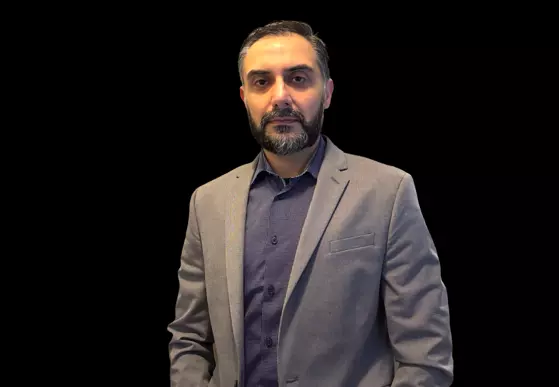
Ritesh Thakur, an expert in enterprise transformation and supply chain optimization, has been at the forefront of applying such solutions. Early in his career, he worked on large-scale transformation initiatives that showcased his ability to merge technological innovation with operational precision. One of his notable achievements was leading the design and implementation of advanced solutions within enterprise systems that not only aligned with tariff requirements but also strengthened order reliability. This experience positioned him as a critical contributor in addressing the challenges companies face when navigating international trade complexities.
Building on these foundations, Thakur’s recent work has centered on leveraging intelligent algorithms within enterprise architecture to mitigate the risks posed by fluctuating tariffs. By combining advanced product segmentation with Available-to-Promise (ATP) functionality, he enabled businesses to make reliable order commitments even during supply constraints. This approach ensured greater accuracy in meeting demand, streamlined compliance with tariff laws, and improved collaboration across global supply chains. Such innovations helped reduce lapses caused by tariff-related disruptions, proving the value of embedding intelligence directly into core business processes.
The influence of this work cannot be overlooked. With the improvement of the standard SAP framework, organizations that implemented these solutions have saved cost without having to buy costly custom technologies. Increment in efficiency has also been remarkable as demand forecasting, order accuracy and inventory management has enhanced customer trust and retention. In addition to concrete financial indicators, these improvements have made businesses more resilient and businesses can now predict instead of just responding to fluctuations in trade policy.
Thakur acknowledges that the path has not been without obstacles. One of the most formidable challenges has been accommodating the varied supply chain models across different product lines and industries. Each required a tailored algorithmic approach that could balance compliance with operational realities. By applying a deep understanding of both business processes and technology, Thakur helped bridge this gap ensuring that the solutions were not only technically sound but also practical for real-world adoption. His published research further underscores his expertise, offering insights into how industries can adapt their enterprise systems to meet tariff challenges with innovation and efficiency.
Looking ahead, Thakur emphasizes that the role of intelligent algorithms in trade management will only expand. As global supply chains grow more complex, enterprises will need to harness the full potential of advanced planning and segmentation tools to stay competitive. “Tariff challenges are here to stay, but so are the opportunities to transform how we manage them,” he observes. For businesses, this means that the integration of intelligent technologies is no longer optional; it is an essential step toward building resilient and future-ready operations.
