SAP’s Arin Bhowmick on Why AI Gives Wings to Design Thinking

A candid conversation with SAP’s Chief Design Officer Arin Bhowmick on how AI is reshaping design while keeping humanity at its core.
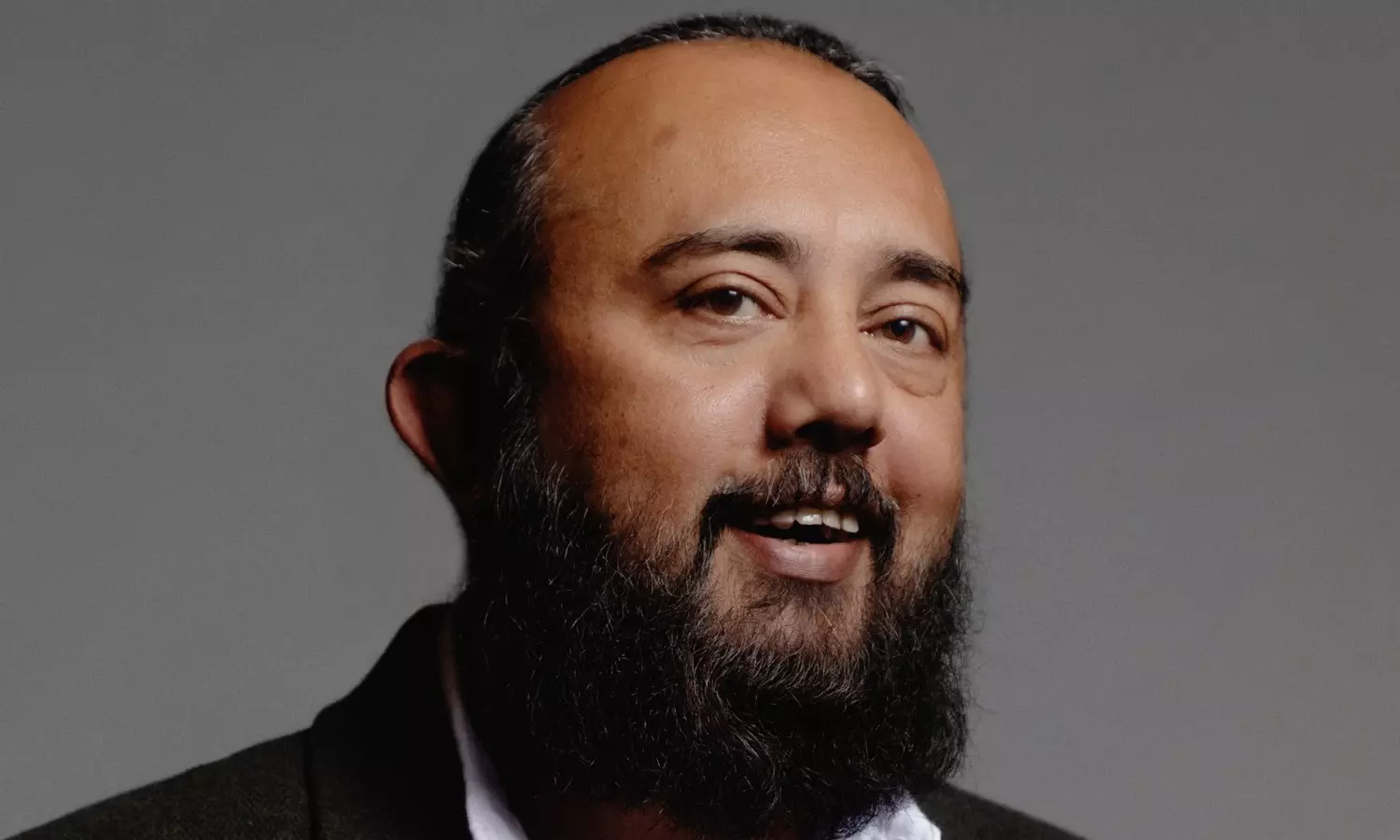
As Arin Bhowmick talks about his role, he begins with where he stands today — the Chief Design Officer at SAP and the path that brought him here. He has spent his entire career in the tech industry, moving across big global businesses and products in different countries. He started at Oracle, went on to IBM, and now leads design at SAP. Across these companies, the constant in his journey has been the drive to build products and solutions that are meaningful to users. With a Master’s degree in design and years as a practitioner and leader, he now carries the responsibility for design, quality, excellence and innovation of products through end-user experiences at SAP. “My goal,” he says simply, “has always been to help build products that truly matter to people.”
When asked how AI is changing the definition of design impact, he doesn’t see it as a past-tense moment at all. For him, this is an ongoing reinvention. Designers have always used tools and artifacts to get work done, but AI is shifting what those tools can do. It is taking away the low-minutia work, the administrative tasks and freeing designers to spend more time on higher-order strategic thinking. What problem are we trying to solve? How do we help the end user get their job done? How do we help them be successful? He explains that the thinking behind design has always mattered more than the artifact itself. In that sense, AI gives wings to what he calls the spirit of design. “We didn’t become designers to churn out artifacts,” he says. “We came into this field to solve complex problems.”
But design is still deeply human. Even in a creative field where tools evolve every year, there are aspects that remain uniquely ours. Humans don’t use products purely out of necessity; they use them because of emotional connection, because of how something makes them feel. That sense of perception, motivation and experience is something AI cannot replicate. AI may shape how designers approach problems, but, as he puts it, “the end problem is still the same — we are designing for humans.” For him, AI becomes a thought partner, not a replacement.
This evolution inevitably changes what design leadership looks like. For Arin, leadership is about momentum, pro-activeness and strategic foresight — traits that matter even more in an era where innovations arrive rapidly. Design leaders now have the opportunity to act as curators of differentiation. They must think not only about what is being built today but what the next generation of users will expect. It is easy, he says, to get caught in designing for the next business quarter. Instead, leaders need to initiate innovation and validate future ideas through user research. Another responsibility now sits on their shoulders: influencing and using unbiased AI in ethical ways. The question isn’t only how we design products, but how we apply AI to the right use cases, how we pass the right context to the system, and how we ensure it doesn’t harm users. “The pivot,” he says, “is from just designing products to also understanding how AI is being applied.”
Ethics, in his view, isn’t just about frameworks. Most people who build products naturally want to build responsibly. But AI brings an added layer of uncertainty. Designers must double down on fair and explainable AI — opening the black box so users can understand what the system is doing, what data it looks at and whether it can be trusted. In the business domain especially, decisions have consequences, and users need to be in control of which AI features they rely on. While ethical principles matter, transparency and traceability matter just as much. “Users should always know what the AI is doing for them,” he says, “and they should always have the choice to use it or not.”
For design teams trying to stay relevant amid rapid AI adoption, he believes the very first step is to understand the technology. Designers cannot design for AI without knowing how it works. The lines between roles are blurring, and the advantage designers have lies in thinking, connecting and forming shared language with product and engineering partners. As their roles evolve into more strategic spaces, designers need to be the shepherds who bring disciplines together. Their future role is not limited to building products but enabling collaboration. “We have to connect the dots,” he says. “That’s where our real value lies.”
With tools now capable of creating outputs instantly, he reflects on what design value looks like. AI can generate ideas, concepts, even entire products. But it cannot reason like humans do. It cannot understand context, pain points, environments of use or the emotional curve a user goes through. That is where designers come in, shaping how something will be used, not just how it is made. Usage, adoption and satisfaction are the metrics that matter. Satisfaction is uniquely human, and connecting latent needs to technological possibilities remains the designer’s core value.
The next generation of impactful designers will still need all the fundamentals—interaction design, user experience, information architecture, user research, color theory. But they will also need to strengthen storytelling, scenario building and understanding how AI picks up context. Some data literacy helps too, not to become data scientists, but to interpret usage patterns and explain them to the business. Designers will continue to represent end users, and now they will also deepen their understanding of ethical practices.
Even with AI accelerating learning, he believes mentoring remains human. Learning new skills is one part of mentorship, but coaching, understanding someone’s context and giving meaningful career guidance is something AI cannot do. AI can be a sparring partner to expand ideas, but the human mentor holds irreplaceable value. “Mentoring isn’t just teaching,” he says. “It’s about understanding where someone is in their journey.”
He calls himself fortunate to be part of this transformation. AI, to him, is an enabler…a tool we can apply across social, consumer and scientific spaces to help humanity serve its purpose. His view is philosophical: designers must hold on to human values while embracing technology, understand how it can help, and design the future with it. “We should not be afraid of technology. We should embrace it and design the future around it,” he signs off.
