Strategic Innovation Under Pressure: How Shivam Lalakiya Revolutionized Faculty Engagement at a Leading Academic Medical Institution

This acceleration meant that development officers could focus their time on relationship building rather than relationship identification, fundamentally changing the efficiency of the entire fundraising operation.
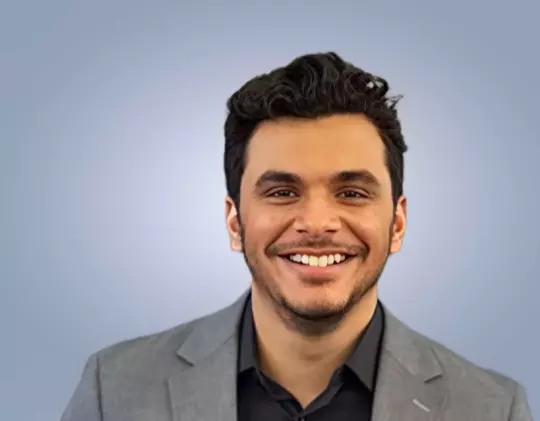
In the complex world of academic healthcare fundraising, where personal relationships drive philanthropic success but scaling those connections presents seemingly insurmountable challenges, few initiatives have demonstrated the power of strategic data science leadership as effectively as the groundbreaking faculty recommendation system developed. Under the visionary guidance of Data Scientist Shivam Lalakiya, what began as an overwhelming institutional challenge transformed into a breakthrough solution that fundamentally changed how one of America's premier medical institutions approaches donor engagement.
The Academic Medical Center faced a critical strategic bottleneck that threatened to limit its fundraising potential despite its prestigious position as a top NIH-funded medical school in the United States. The institution's leadership recognized a powerful pattern: personal connections between patients and faculty significantly increased the likelihood of philanthropic giving. However, the challenge seemed almost impossible to solve at scale—how could they systematically identify and leverage these meaningful relationships across thousands of patient-physician interactions and vast amounts of complex medical and research data?
The Mounting Pressure
Previous approaches had relied heavily on intuition and manual relationship mapping, proving inadequate for an institution managing hundreds of millions in annual fundraising across 78 medical specialties and subspecialties. The development team struggled to efficiently connect the right faculty members with the right donor prospects, often missing critical opportunities or investing time in relationships with limited philanthropic potential. The stakes were enormous: every missed connection represented potential funding that could have supported groundbreaking medical research, student scholarships, or enhanced patient care programs.
Shivam Lalakiya's Strategic Vision
Recognizing the urgency and complexity of this challenge, Shivam Lalakiya stepped forward with a comprehensive vision that would fundamentally transform the institution's approach to faculty-donor engagement. Rather than accepting the status quo of manual relationship building, he proposed an ambitious data-driven solution: a sophisticated recommendation system designed to identify and recruit "champion faculty"—those highly regarded physicians and researchers who could serve as strategic bridges between patients and the university's development efforts.
Technical Innovation Under Compliance Constraints
At the heart of Shivam Lalakiya's innovative approach was the recognition that this challenge required more than traditional analytics—it demanded a deep understanding of academic healthcare dynamics, regulatory compliance, and the delicate balance between data utilization and relationship authenticity. Working under intense pressure to deliver results that could immediately impact fundraising effectiveness, he embarked on developing a comprehensive recommendation algorithm that would analyze complex, multi-source data while maintaining strict HIPAA compliance.
The technical architecture developed by Shivam Lalakiya demonstrated remarkable sophistication in its approach to network analysis and predictive modeling. Using advanced Python implementations, network analysis techniques, and sophisticated ranking models, he created a system capable of analyzing patient interaction data, research involvement metrics from NIH grants and clinical trials databases, and historical philanthropic patterns. The crown jewel of this system was his innovative faculty impact index, which synthesized publication reach, clinical influence, and patient volume into a unified scoring framework that could identify faculty members with the highest potential for successful donor engagement.
Perhaps most impressively, Shivam Lalakiya accomplished this complex technical development while navigating the stringent regulatory environment of healthcare data. His meticulous attention to HIPAA compliance, combined with his strategic focus on publicly available and de-identified data sources, ensured that the system could operate at full capacity without compromising patient privacy or institutional integrity. This balance between innovation and compliance became a defining characteristic of his leadership approach.
Remarkable Results and Organizational Transformation
The transformation achieved through Shivam Lalakiya's recommendation system exceeded all organizational expectations. Within months of deployment, the system had identified over 50 high-impact faculty members with strong donor connectivity potential—individuals who had previously been overlooked or underutilized in fundraising efforts. The interactive Tableau dashboard he developed provided development officers with unprecedented visibility into faculty networks, enabling them to visualize complex relationships and prioritize engagement strategies with remarkable precision.
The quantitative results spoke to the transformative power of Shivam Lalakiya's approach. Faculty-led gift conversion rates increased by an impressive 22%, directly attributable to the more strategic targeting enabled by the recommendation system. Perhaps equally significant was the 30% reduction in engagement cycle time, as the system enabled faster and more accurate matching between patients and champion faculty. This acceleration meant that development officers could focus their time on relationship building rather than relationship identification, fundamentally changing the efficiency of the entire fundraising operation.
Recognition and Strategic Impact
The impact extended far beyond individual metrics. Shivam Lalakiya's system enhanced coordination across multiple departments—fundraising, alumni relations, and clinical departments—creating a more integrated approach to institutional advancement. Senior leadership recognized that this wasn't simply a technological upgrade, but a strategic transformation that positioned the Medical Center to more effectively compete for philanthropic support in an increasingly competitive landscape.
The success of this initiative earned Shivam Lalakiya significant recognition throughout the institution. His ability to merge technical modeling with institutional strategy, converting complex data relationships into actionable relationship-building tools, demonstrated a level of strategic thinking that distinguished him as a leader capable of driving culture change through data science. The project became a model for how analytics could function not just as a reporting mechanism, but as a strategic driver of organizational behavior and revenue generation.
Career-Defining Leadership Development
For Shivam Lalakiya personally, this project represented a defining moment in his career development as a data science leader. The experience deepened his understanding of stakeholder dynamics in academic healthcare settings and reinforced his belief that the most impactful analytics solutions are those that remain fundamentally human-centered while leveraging sophisticated technical capabilities. His success in building solutions that were simultaneously data-rich and actionable established him as a thought leader in the application of data science to institutional advancement.
Industry Impact and Future Implications
The broader implications of this project's success extend well beyond the Academic Medical Center. Shivam Lalakiya demonstrated how strategic data science leadership could overcome seemingly intractable institutional challenges while maintaining the highest standards of ethical data use and regulatory compliance. His approach has established new benchmarks for the application of recommendation systems in healthcare fundraising, showing how technical innovation can amplify human relationships rather than replace them.
Looking toward the future, the faculty recommendation system developed by Shivam Lalakiya continues to drive strategic value for the prestigious Medical Institution while serving as a model for other academic medical institutions seeking to optimize their advancement efforts. His work exemplifies how visionary data science leadership can transform organizational capabilities, unlock hidden potential, and drive measurable impact that directly supports life-changing research and education initiatives.
As academic healthcare institutions continue to face increasing competition for philanthropic support, the innovative leadership demonstrated by Shivam Lalakiya provides a compelling roadmap for how strategic thinking, technical excellence, and ethical responsibility can converge to create sustainable competitive advantages that ultimately serve the broader mission of advancing human health and knowledge.
